
SPARK Interview | earth day 2026: “sustainability is an ongoing process of adjustment, observation & learning”

2026 earthday.org poster
"Our Power, Our Planet."— This is the theme of this year's Earth Day, emphasizing the power of every individual converging to safeguard our shared planet. With sustainability once again becoming a global focus, SPARK, participated in the "Absolute Plan x 4.22 Earth Day" event initiated by [iDesign], where SPARK Director, Stephen Pimbley, shared his thoughts and explorations on sustainable design throughout his years of architectural practice.
From early, challenging attempts in previous projects to later achieving synergy between architecture and the environment through a series of innovative strategies, Stephen’s thinking and practice have been constantly evolving. He candidly notes that sustainability is not a goal that can simply be "achieved," but rather an ongoing process of adjustment, observation, and learning.
In the interview, he also shared several exploratory projects.
idesign: Do you still remember the specific situation in which you first became clearly aware of "environmental protection and sustainability"? Was it triggered by an event, an experience, or a particular person?
SPARK DIRECTOR, STEPHEN PIMBLEY: When I began studying architecture, we were asked to read Small Is Beautiful by E. F. Schumacher. At the time, I didn’t fully understand its significance, but it certainly stayed with me.
What it suggested, very clearly, and perhaps quite provocatively, was that society could organise itself differently, away from the logic of mass consumption. It was a simple idea, but also a powerful one, and well, articulated. Even if I didn’t grasp it entirely then, it planted an early seed.
The real awareness came later, through practice. Working in rapidly urbanising contexts, particularly in Asia, I became increasingly conscious of the scale at which we were building and the demands this placed on resources and environment. At that point, Schumacher’s ideas began to resurface, not as abstract theory, but as something much more immediate and relevant.
So rather than a single moment of awakening, it was a kind of delayed recognition. The book had framed a way of thinking early on, but it took years of experience to fully understand what it was really asking.
idesign: From the moment of "becoming aware" to truly "starting to change your lifestyle," was there a key turning point? What was the very first change you made?
SPARK DIRECTOR, STEPHEN PIMBLEY: There were three related turning points in my career, both centred on climate and the question of whether architecture could work with the environment rather than defaulting to mechanical solutions.
The first was an early project, the Hôtel du Département des Bouches-du-Rhône in Marseille. We explored the idea of harnessing the prevailing Mistral wind, drawing it across the roof to assist with the building’s natural cooling and ventilation. It was a simple but, at the time, quite ambitious strategy.
The proposal was ultimately rejected. The client didn’t believe it would work and reverted to a conventional air-conditioning solution. It was a useful lesson, less about failure, and more about the difficulty of shifting established expectations.
The second point came with the Earth Centre Millennium Project in Doncaster, where I met project champion Jonathan Smales. His determination to create a project that demonstrated, through built form, the advantages of sustainable design strategies had a profound impact on my thinking. It introduced a much deeper understanding of embedded carbon, life cycles, and the broader responsibilities of architecture. More importantly, it provided a level of confidence, that these ideas were not only valid, but could be articulated and realised if properly pursued.
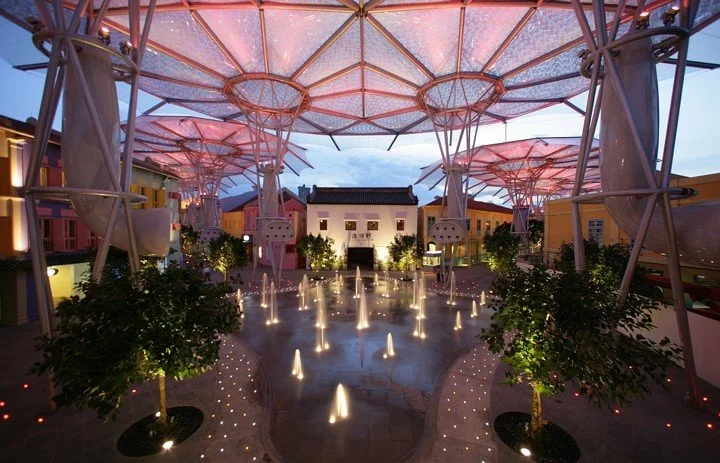
clarke quay, singapore
The third point came later at Clarke Quay in Singapore. Here, we were able to revisit similar ideas, but in a more developed and persuasive way. Instead of enclosing and air-conditioning the streets, we proposed that they could be climate-moderated, shaded by large canopy structures, known as “Angels,” and cooled by carefully directed air movement using high-level fans, sometimes referred to as “whale tail fans.”
This combination reduced ambient temperature by approximately five degrees, making the environment significantly more comfortable without relying on air-conditioning.
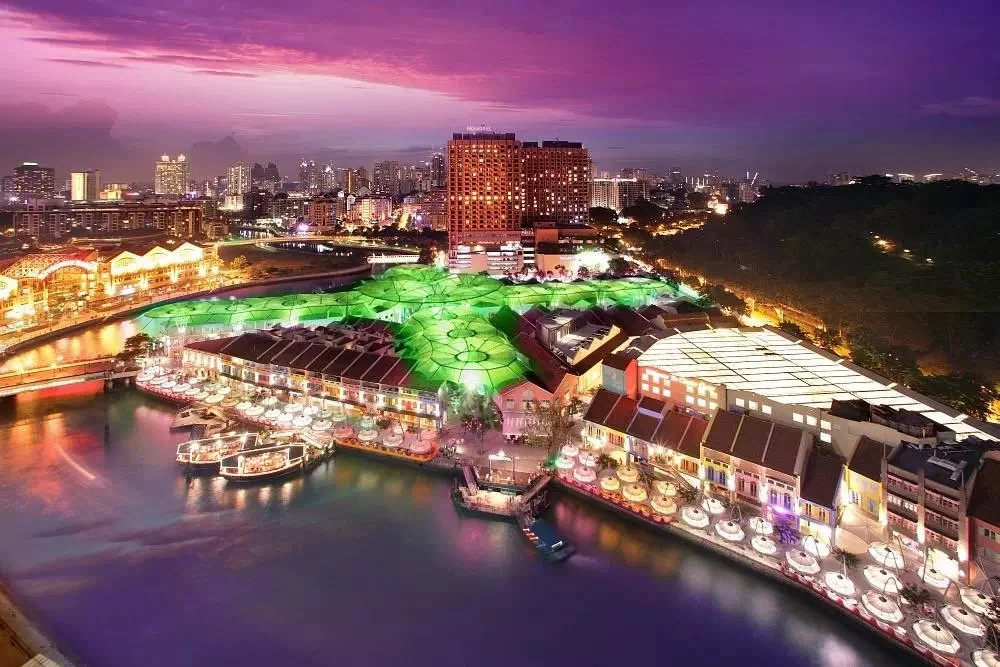
clarke quay, singapore
In a sense, the second project redeemed the first. It demonstrated that these ideas were not only possible, but effective, provided they could be communicated, tested, and ultimately trusted. That was a key turning point: moving from speculation to real, measurable impact.
idesign: How did these lifestyle changes, in turn, influence your design judgment? Was there a moment when you realized that your way of living was already determining your way of designing?
SPARK DIRECTOR, STEPHEN PIMBLEY: Over time, it became clear that the way one lives inevitably begins to shape the way one designs. There wasn’t a single moment of realisation, but rather a gradual convergence of interests, environmental, social, and spatial.
This began to take form in a series of exploratory projects that I have grouped under the idea of City Metabolism. These were not conventional commissions, but speculative works, propositions, really, that asked how cities might operate more like living systems: absorbing waste, generating energy, supporting life.
One of the most complete expressions of this thinking is BARE, a Bio-Anaerobic Rubbish Eater, which reimagines waste not as something to be removed, but as a resource to be processed, transformed, and reintegrated into the urban environment. In many ways, BARE crystalises the broader ambition: architecture as an unusual participant in urban metabolism.
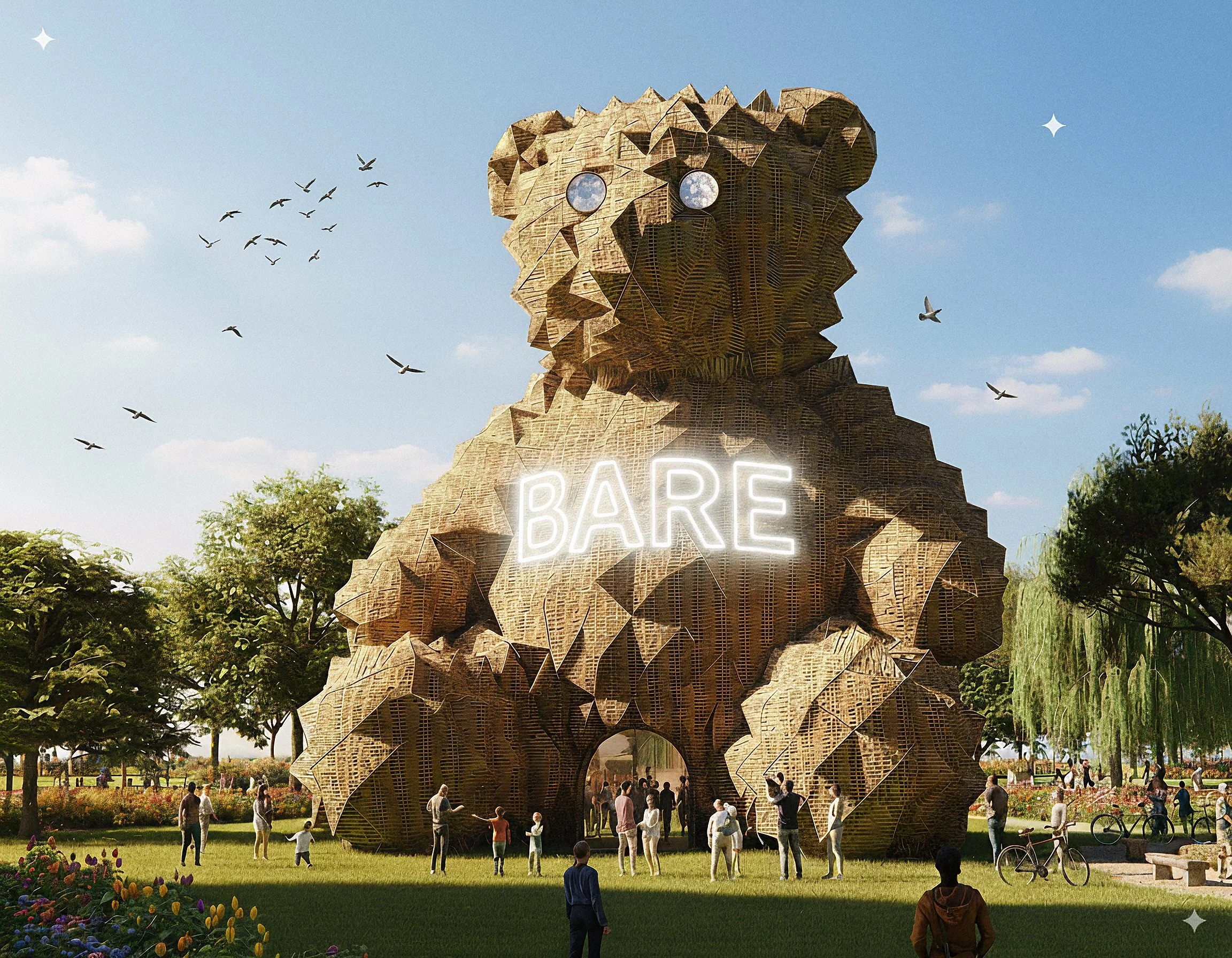
bare: Bio-Anaerobic-Rubbish-Eater by spark
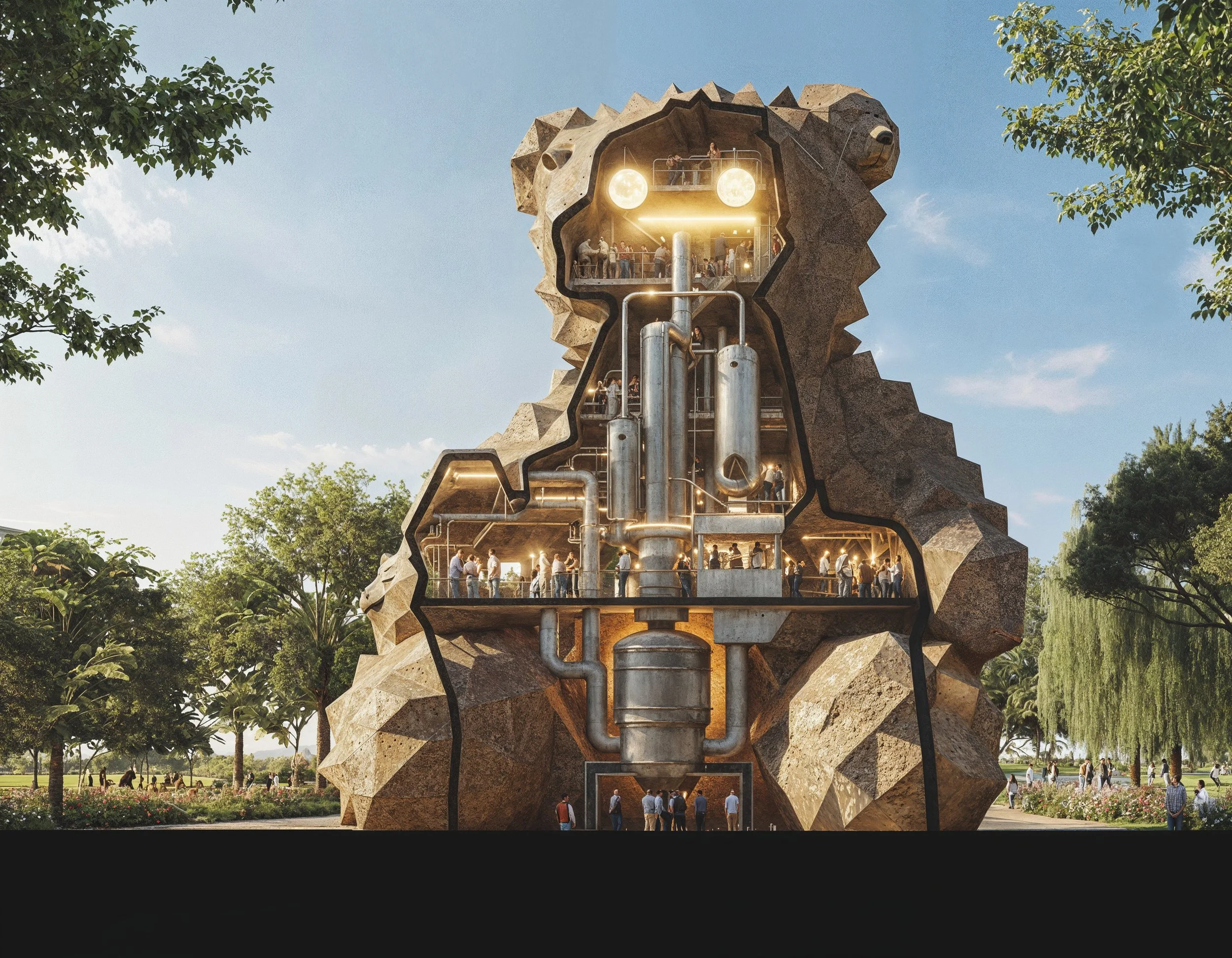
bare: Bio-Anaerobic-Rubbish-Eater by spark
Projects such as the Beach Hut, which reimagines coastal shelter through recycled ocean plastics; London FOG, which explores the transformation of fatbergs into energy infrastructure; R Mutt, a small but pointed intervention around care, hygiene, and urban life; Big Arse Toilet, which confronts sanitation and waste more directly; and Home Farm, which links food production with intergenerational living, all reflect this line of thinking.
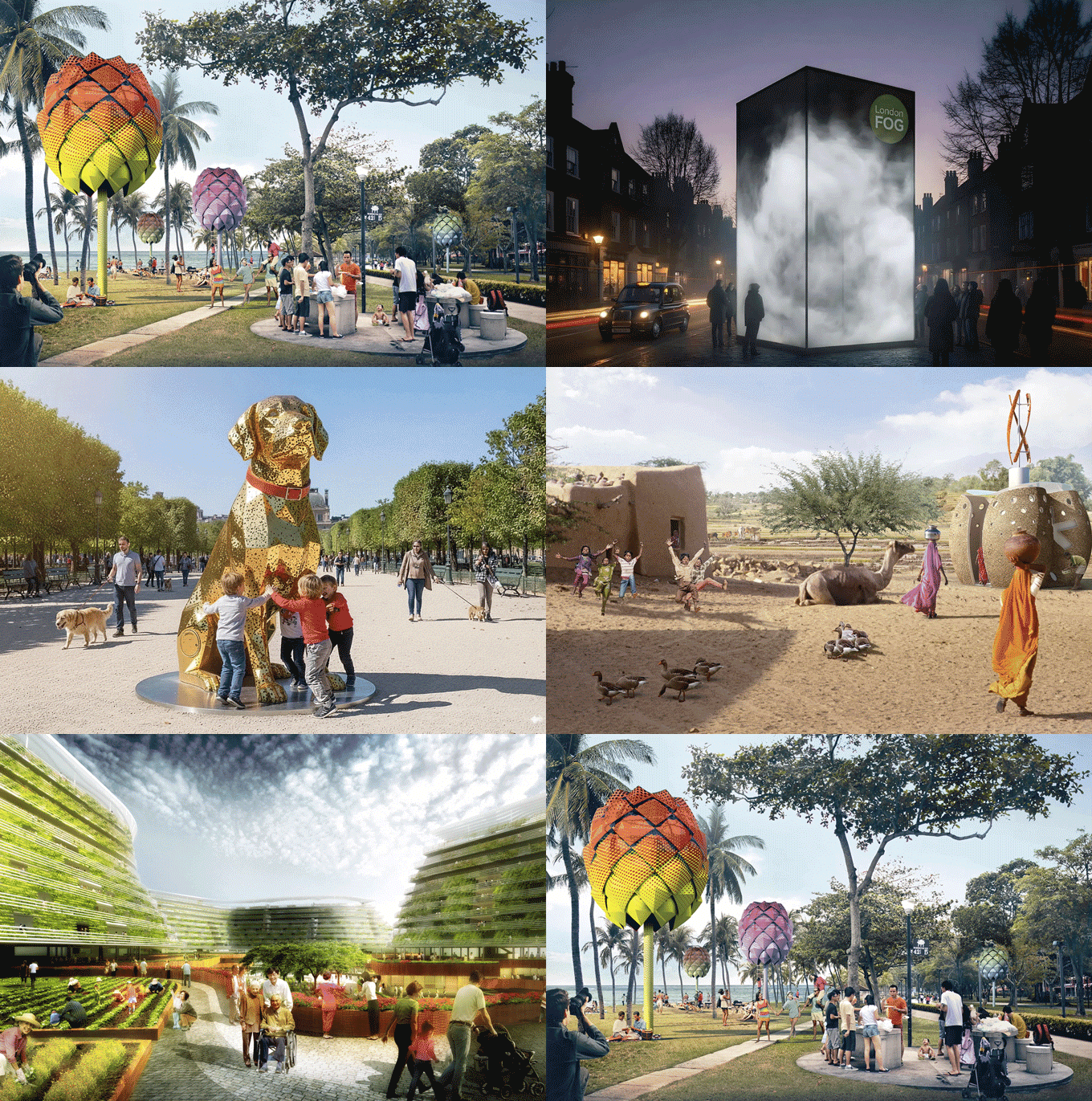
SPARK’S EXPLORATIVE PROJECTS: BEACH HUT, LONDON FOG, R-MUTT, BIG ARSE TOILET, HOMEFARM
What became apparent through these projects was that sustainability is not simply about efficiency or reduction. It is about reframing relationships, between waste and resource, building and landscape, individual and community.
In that sense, these explorations began to influence more conventional work as well. The landscape strategies at Suzhou, for example, or the climate moderation at Clarke Quay, can be understood as part of the same continuum. The scale and expression may differ, but the underlying question remains consistent: how can architecture participate more intelligently in the systems that sustain it?
Looking back, there wasn’t a clear dividing line between living and designing. The two gradually merged into a shared way of thinking, one that continues to evolve.
IDESIGN: In retrospect, what achievements do you feel you have gained from consistently pursuing sustainability?
SPARK DIRECTOR, STEPHEN PIMBLEY: I’m not sure that “achievement” is quite the right lens through which to view sustainability. Given the scale and urgency of the climate crisis, and the equally complex challenges around social sustainability, it would feel misplaced to frame this in terms of individual success.
What seems more important is a gradual shift in awareness and responsibility: a growing understanding of how we act, how we fit within larger systems, and where we might be able to make a meaningful contribution.
In practice, this has meant paying closer attention to the gaps, those moments or conditions where small, well-considered interventions can have a disproportionate impact. It is less about grand gestures and more about connecting things: joining up environmental, social, and spatial thinking in a way that feels coherent and grounded.
If there is any value in the work, it lies perhaps in maintaining that line of enquiry over time, continuing to question, to test ideas, and to look for ways in which architecture can respond more intelligently and responsibly.
Sustainability, in that sense, is not something that can be “achieved.” It is an ongoing process of adjustment, observation, and learning.
[INTERVIEW CONTENTS FROM IDESIGN]