
The Medium Is the Emission: The Hidden Environmental Cost of AI Images

The 2025 Paris Photo exhibition (Image source: ParisPhoto)
The Myth of the Digital Images
For most of this digital age we have lived with the comforting illusion that images, once liberated from film and chemistry, became weightless. A photograph became a file, a file became a pixel, and the pixel floated frictionlessly across screens, devices, and clouds. The world’s visual culture of billions of images per day is to most insignificant as it has become a normalised aspect of daily life.
The shift towards all things AI continues this myth, as witnessed at the 2025 Paris Photo exhibition held at the Grand Palais where the prompt has become the shutter release: a phrase, a suggestion, an idea, a narrative is whispered into a generative AI model.
The machines respond instantly with a fully formed image, as though imagination itself has become automated, and infinitely abundant.
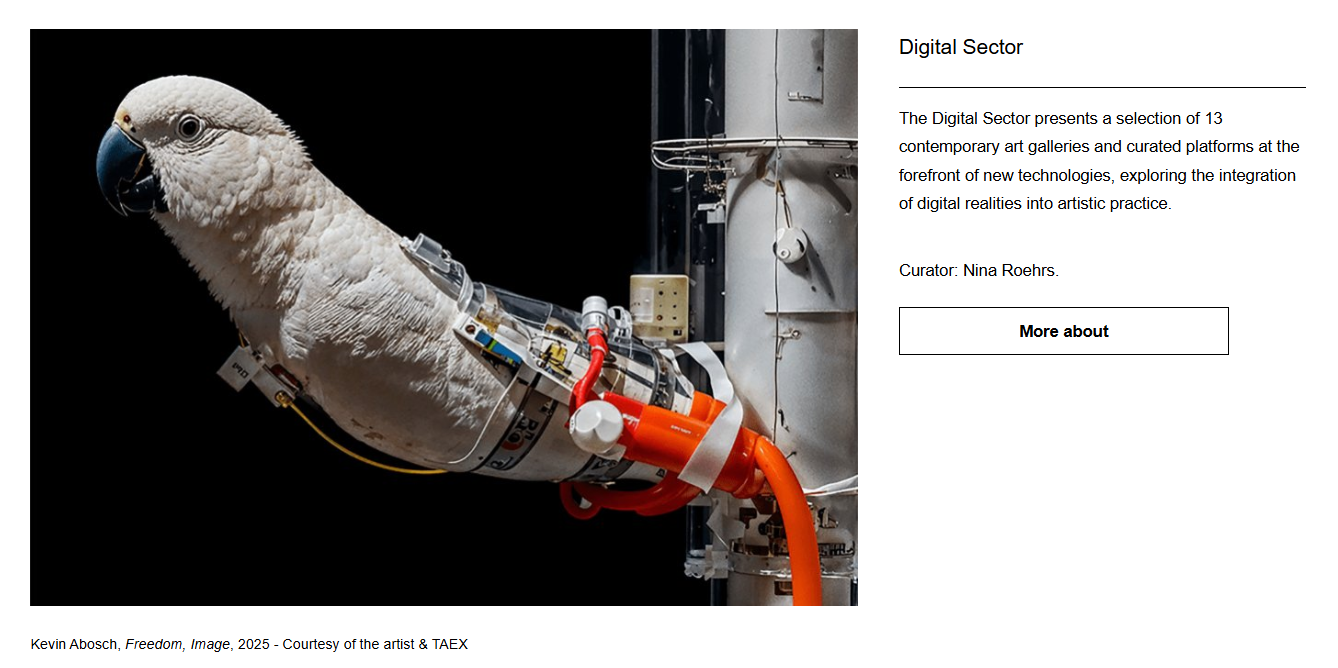
2025 Paris Photo Digital Image Section (Image source: ParisPhoto)
But these AI works on display in Paris no matter how beautifully executed and interactive are a dangerous hallucination; a violation of the 2015 Paris Agreement.
Every AI-generated image leaves a carbon footprint, and behind every operation lies a massive infrastructure. The image may be virtual but its consequences are physical and profound.
Everything changes the moment we acknowledge this.
Every image has a temperature
A photograph used to be a scattering of light on a surface. An AI image, however is an act of data computation. Behind each output is a network of processors consuming megawatts of electricity, servers radiating heat like furnaces, and cooling towers evaporating millions of litres of freshwater.
If Canadian philosopher, Marshall McLuhan, taught us that “the medium is the message,” then AI can be understood as “the medium is the emission”.

Marshall McLuhan: The medium is the message (Image source: Wikipedia)
Every image represents a tiny exhaust and every prompt is a carbon pulse.
Every prompt generates heat somewhere in the world, often in a desert, a remote industrial park, or a region already suffering water stress. When an AI model dreams, something in the physical world quietly heats up.
The Neglected Infrastructure Behind AI
We rarely notice the infrastructure that enables AI generation. A walk through a mega-scale data centre makes it clear just how consequential these buildings truly are.
Football-field–sized halls of servers, stacked like industrial organs
Cooling pipes scaled to rail tunnels, threading through the building
Cooling towers releasing plumes of steam like miniature power plants
Electrical rooms and substations operating at megawatt scale
Armed perimeter fencing guarding a giant heat generating, billion-dollar “brain”
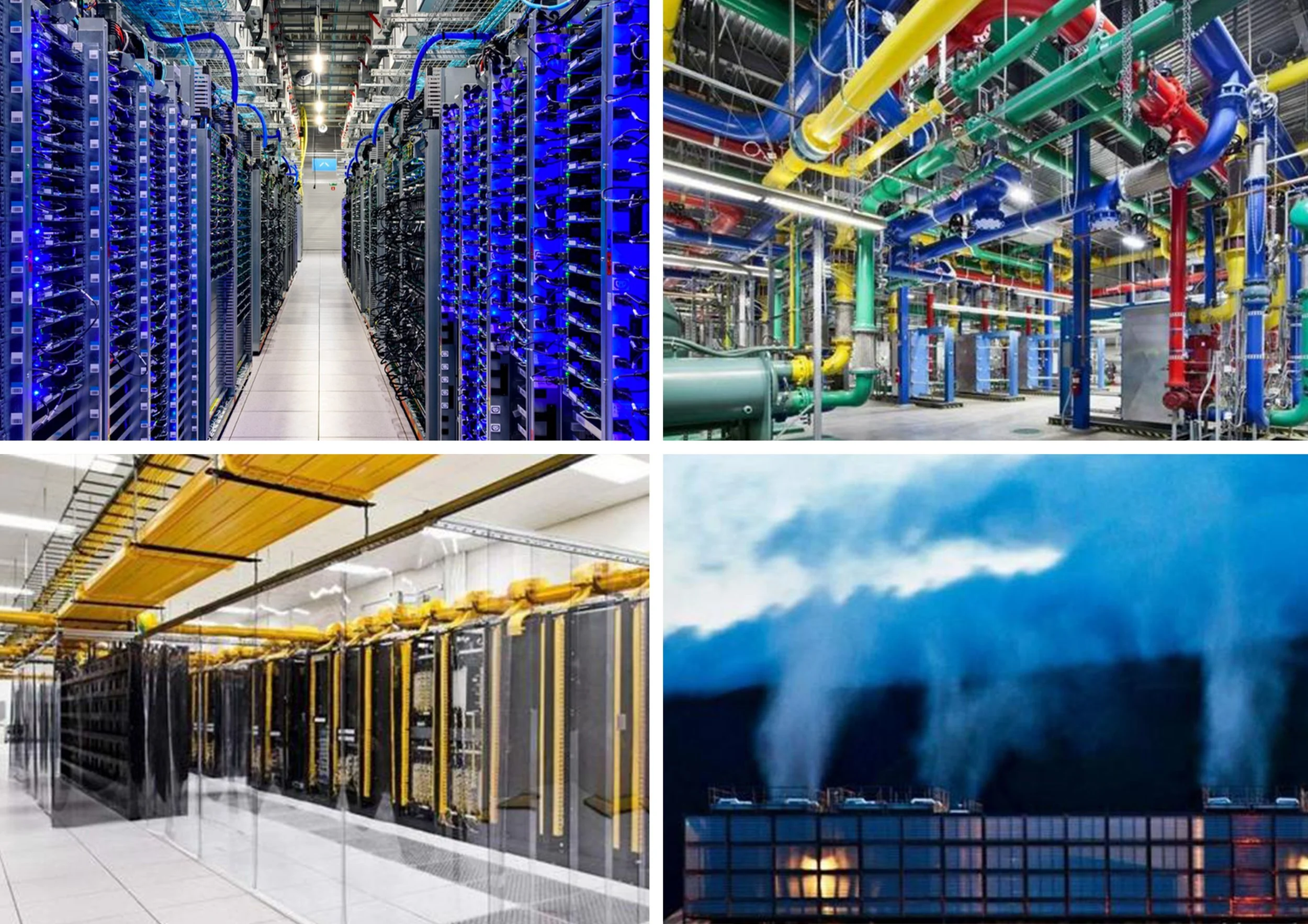
The infrastructure behind AI technology (Image source: Top left - IThome, Top right, Bottom left, Bottom right - Jiniannet)
This is the architecture of AI: a new global typology, necessary but almost invisible. In the imagination of the Parisian artists, AI is an ethereal intelligence; in reality, it is a sprawling network of buildings consuming more power than some nations. Behind AI images lies a vast physical apparatus of steel, air-conditioning, cables, and water, lots of water.
The Fantasy of Renewable Energy
Tech companies often claim that their data centres run on 100% renewable energy. It is an appealing idea, but the physics of electricity tell a different story. Solar and wind are intermittent; GPU clusters are not. Computing networks cannot run on a cloudy day and models cannot pause on windless days.
The reality is more constrained:
Even under favourable conditions, data centres typically receive only 30–40% renewable power
In regions reliant on coal or natural gas, that figure may fall below 10%
True 24/7 clean energy remains an aspiration rather than an achievement
This is not a moral failing, but a structural one. Computation requires stability, and stability today still, unfortunately, means fossil fuels. Each time an image is generated, a turbine may turn, a gas plant may fire up, or a cooling tower may hiss, affirming the adage “the medium is the emission”.
The Costs to Operate the Machine
If obtaining renewable electricity is difficult, then water resources are even more is irreplaceable. The more powerful the GPUs become, the more heat they generate. That heat must continuously be dissipated over and over again, creating a significant demand for cooling which is a water story.
Some of the world’s largest data centres consume millions of litres of water per day, enough to supply entire towns. Some operate in regions already defined by drought. Some draw water from underground aquifers that sustain communities while some evaporate more in a day than farms do in a week.
This creates a paradox: even if an AI campus were hypothetically powered by 100% solar energy, it would still consume real rivers, reservoirs, and ecosystems.
The environmental cost of the AI technology lies not only in carbon emissions but also in the massive consumption of water resources.
The Responsibility of the Parisian Culture Creators
So, what does this mean for the artists at Photo Paris, for architects, designers, and anyone working in the field of visual culture?
It means that the uncritical use of AI will perpetuate the illusion that once shrouded industrialized agriculture, plastics, or fossil fuels: the belief that the harms is elsewhere, invisible, and someone else’s problem.
But cultural work is diagnostic. Artists and architects are early warning systems for civilization's development; we make the unseen visible. The rapid usage of AI urgently demands this social visibility.
What would it mean for AI technology to acknowledge the environmental cost of its existence?
How can we design works that reveal, rather than conceal, the true energy consumption of infrastructure? Not as a gimmick, but to rediscover a sense of reality in a cultural medium that deliberately hides its costs.
AI generation is the “coal mines” of the new era; we need to examine it with the same clarity.
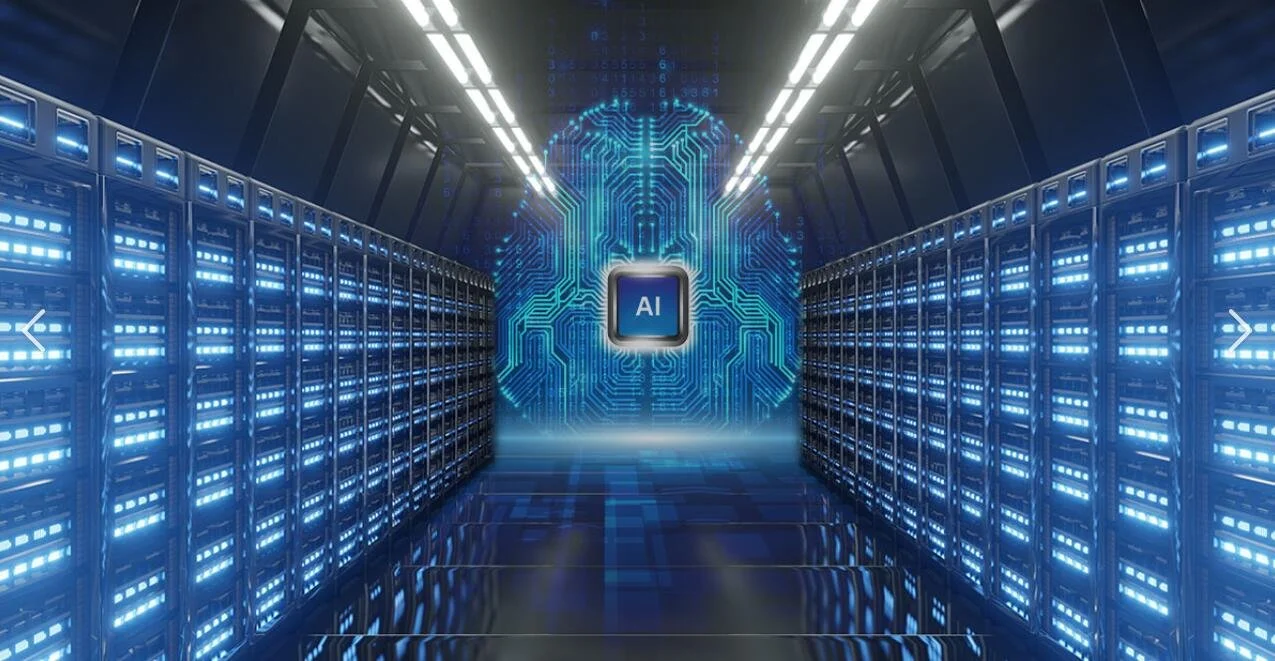
Users need to understand the environmental costs of AI (Image source: Chinaaet)
A New Visual Ethic
AI is expanding a visual universe at an astonishing pace, while simultaneously compressing our ecological margins. The next generation of artists and architects will have to confront this paradox: imagination is no longer immaterial; creativity is limitless, but energy is finite.
We need a new environmental literacy, one that concerns not only materials and architecture, but also data, computing, and digital development. If every AI image is an emission, then every act of seeing is an ecological act, and the ethics of creation must strive to adapt to this new reality. And this, perhaps, will make the works and their narratives more meaningful.
The Emission as the Message
We live in a peculiar era: AI can generate unimaginable images in seconds, yet we remain completely unaware of the ecological resources consumed behind it.
Our task is neither to reject AI nor to worship it to the extreme, but to treat it critically and use it appropriately. If we can understand the cost of an AI-generated image, we might be able to ask better questions, input prompts more carefully, design more thoughtfully, and realize AI's vision with a greater sense of responsibility.