
3 Core science pavilions: in huqiu science popularisation education base
Situated in the Huqiu Wetland Park of Suzhou, the Huqiu Science Popularisation Education Base is a major science complex covering 980 hectares. SPARK's masterplan organises the site into three zones, seamlessly connecting a series of thematic pavilions, outdoor science installations, and landscape amenities, creating a space where research, exhibition, recreation, and ecological management coexist and interact.
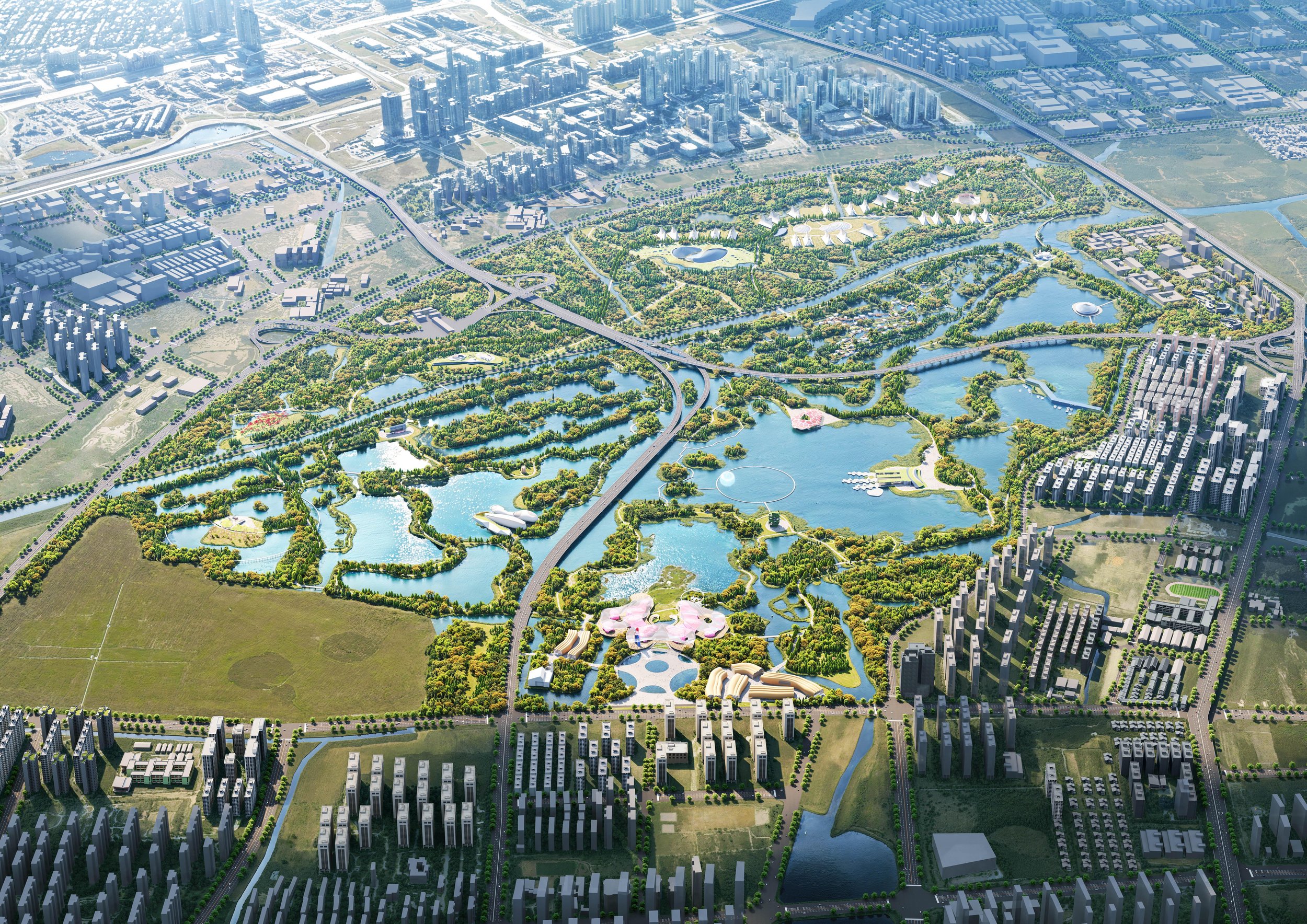
Master Plan of Huqiu Science Popularization Base (Please click on the image to view detailed details of the competition proposal)
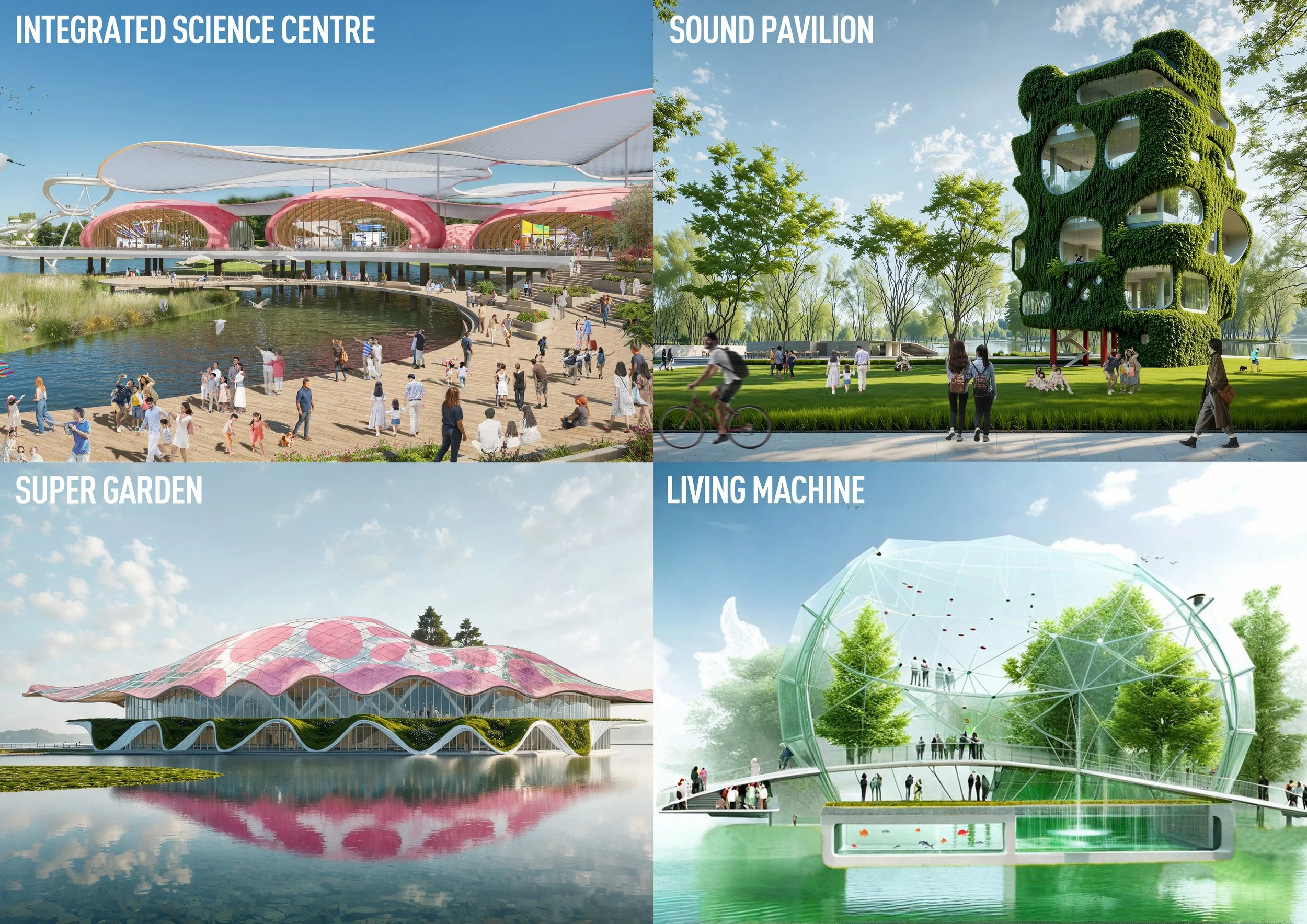
In this issue, we will highlight three core science pavilions, along with a featured science installation.
Nature does it better
The source of inspiration for the buildings is the multi-layered and complex huqiu wetland in Suzhou. Our buildings have been designed to react to their place by employing natural materials, human scale, and attention to their embodied carbon and general levels of sustainability. This guides and holds the disparate components of the project’s identity together.
Many call this Biomimicry where the design is obviously fuelled by the utility, efficiency, and beauty of nature perhaps now more important than ever. This competition is an extraordinary opportunity to realise the important convergence of design and biological science, this relies on “innovation” where in effect the buildings become part of and demonstrative components of the education base installations.
Organically distributed throughout the site, the ten science pavilions form a science exploration pathway connecting the three zones. Here, we will introduce three of the core pavilions: the Integrated Science Centre, Sound Box, and Super Garden.
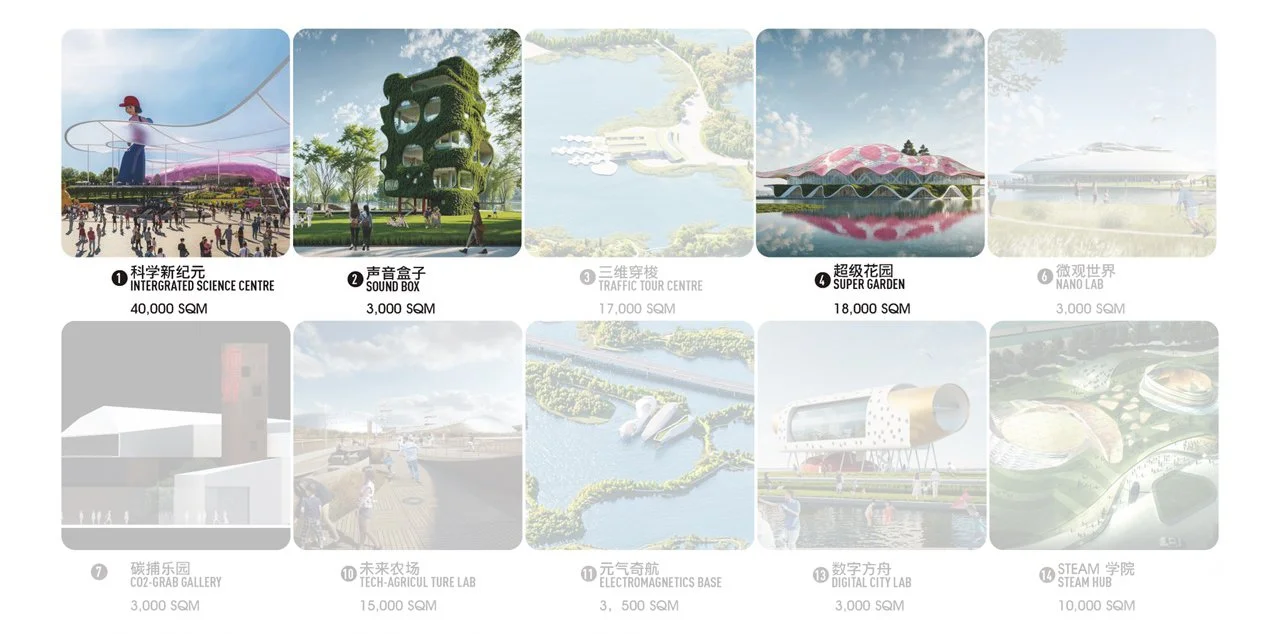
The Ten Major Science Pavilions in the Base
Integrated Science Centre
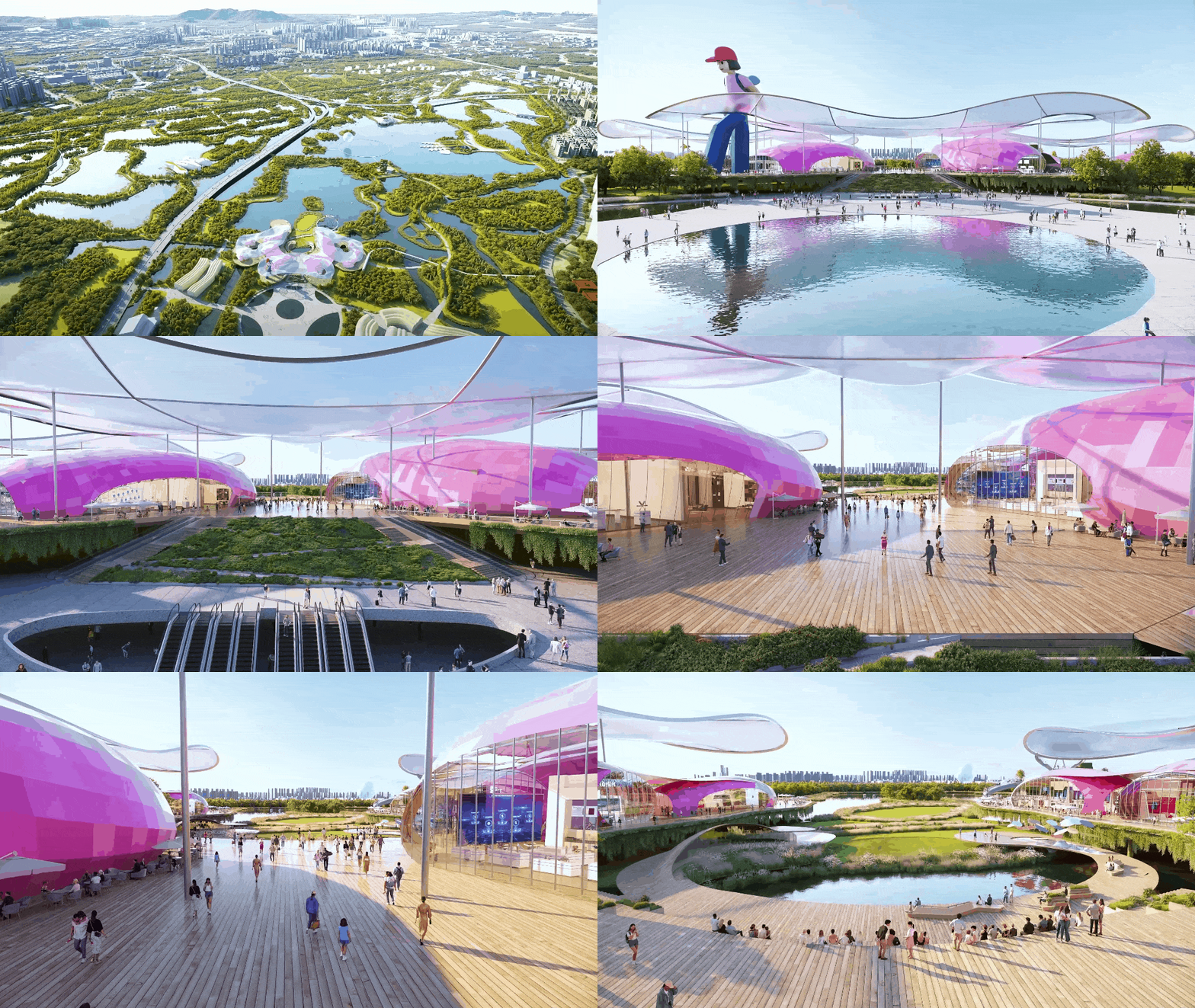
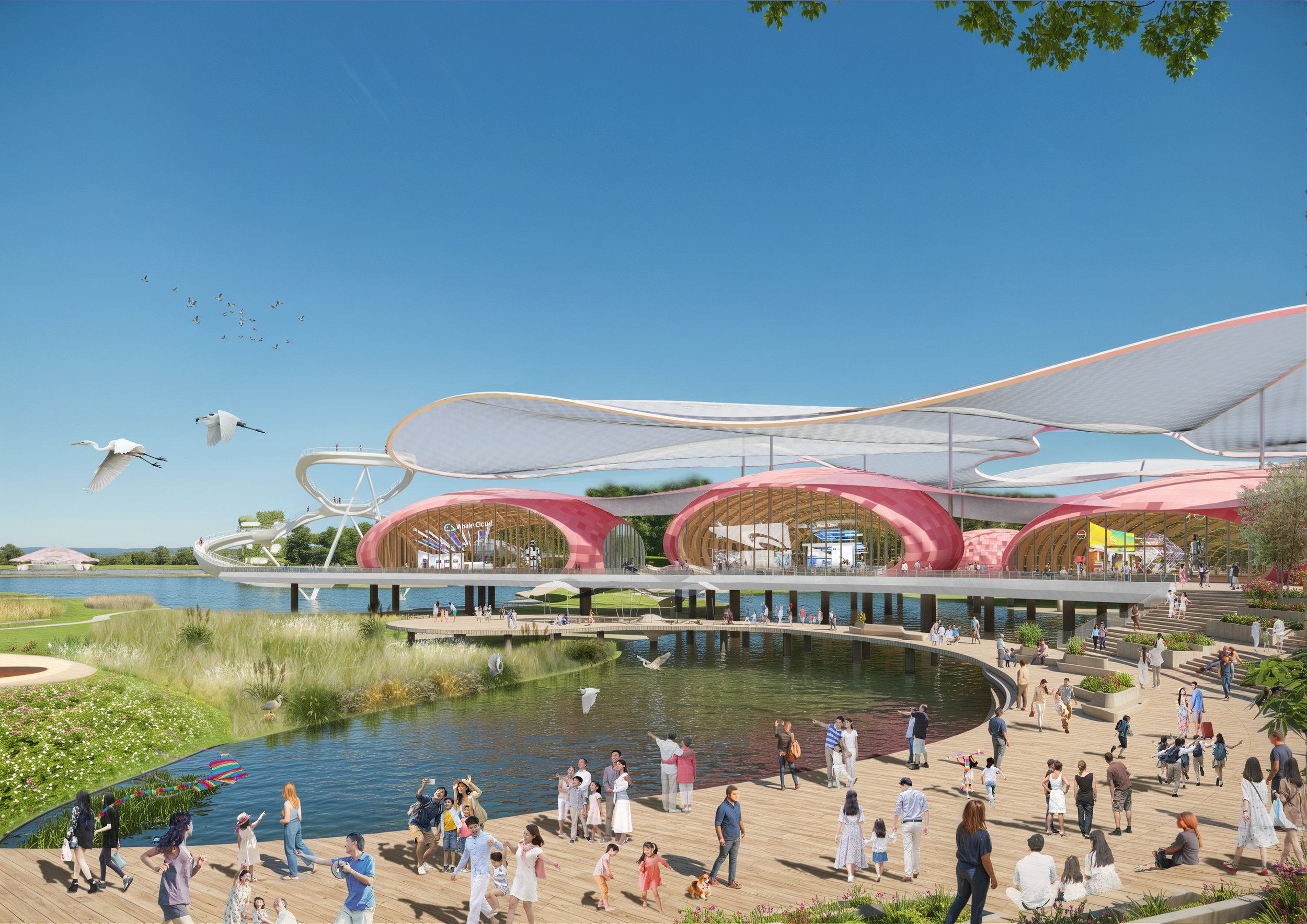
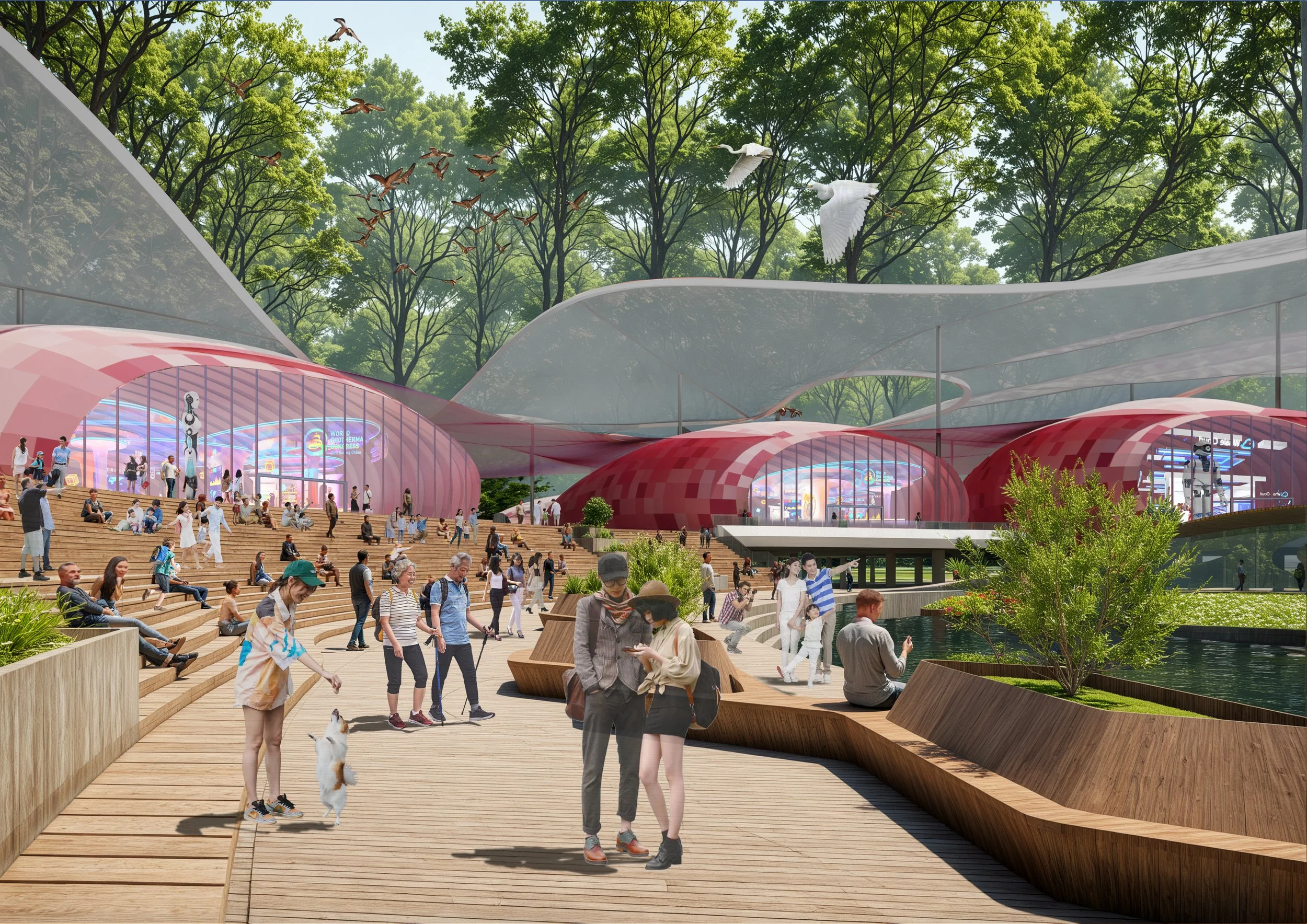
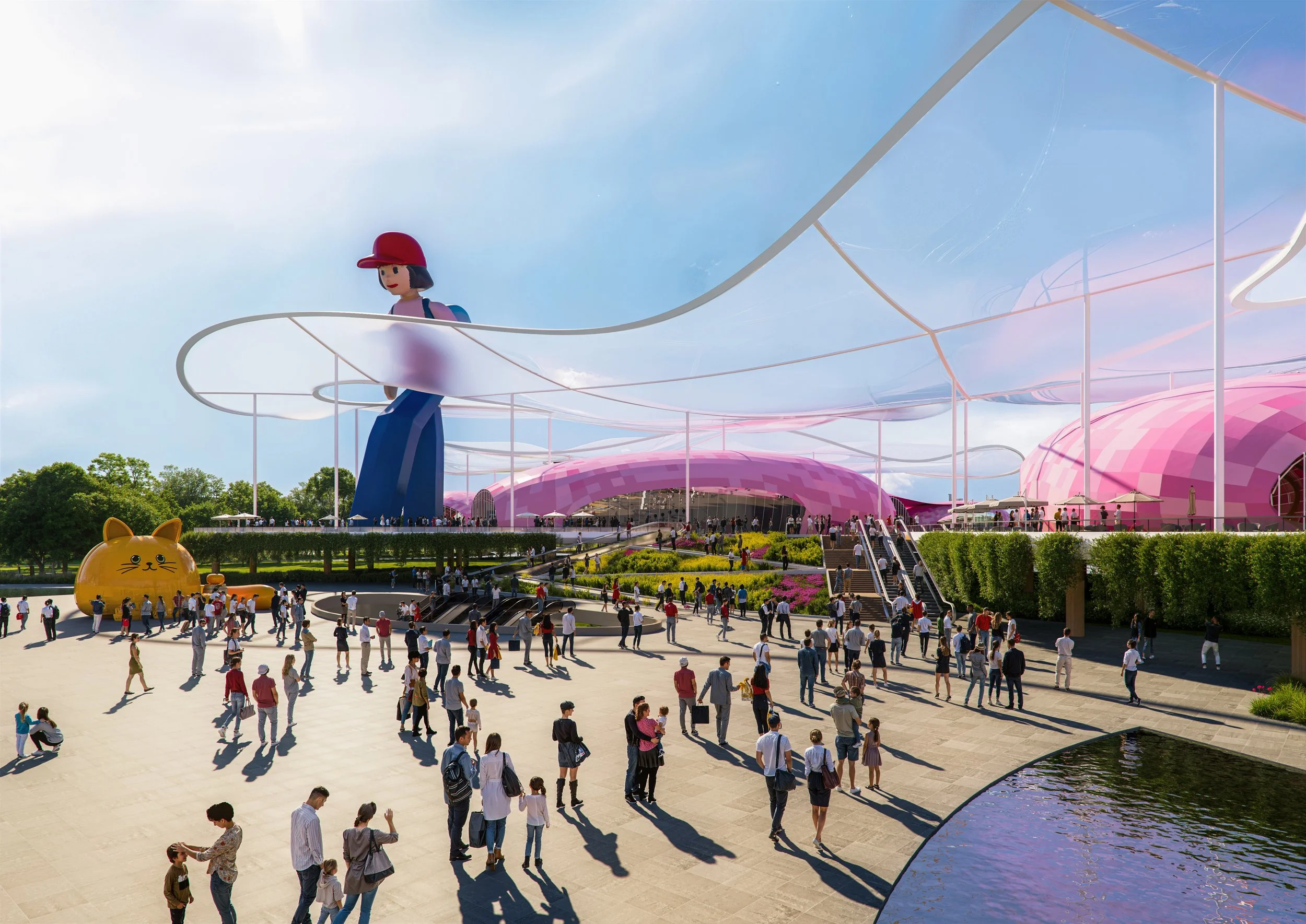
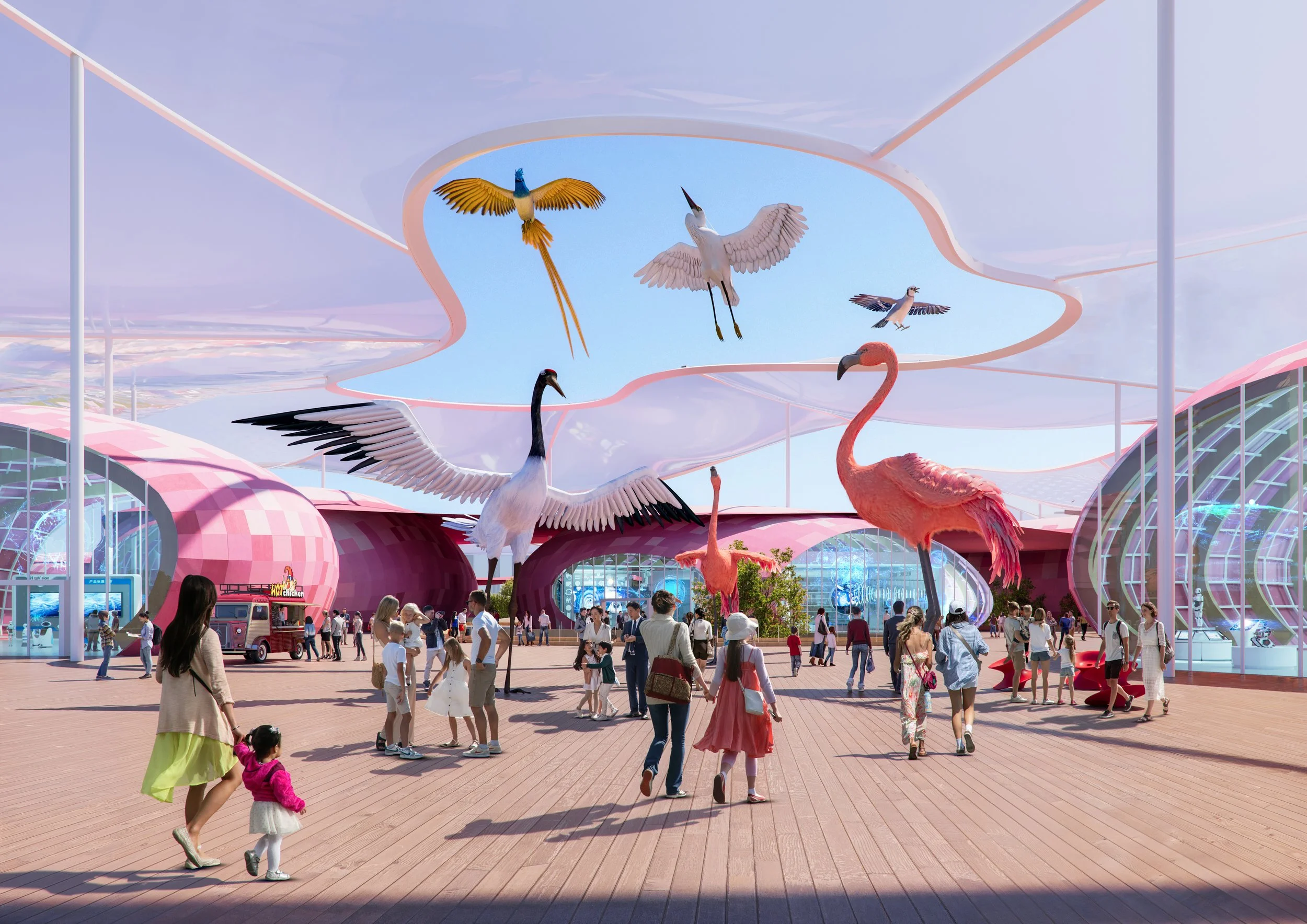
The Integrated Science Centre houses themed exhibition halls, a special effects cinema, and AI experience pavilions. A large organic platform integrates the various volumes, while its three-dimensional circulation and layout allow it to blend naturally into the natural environment.
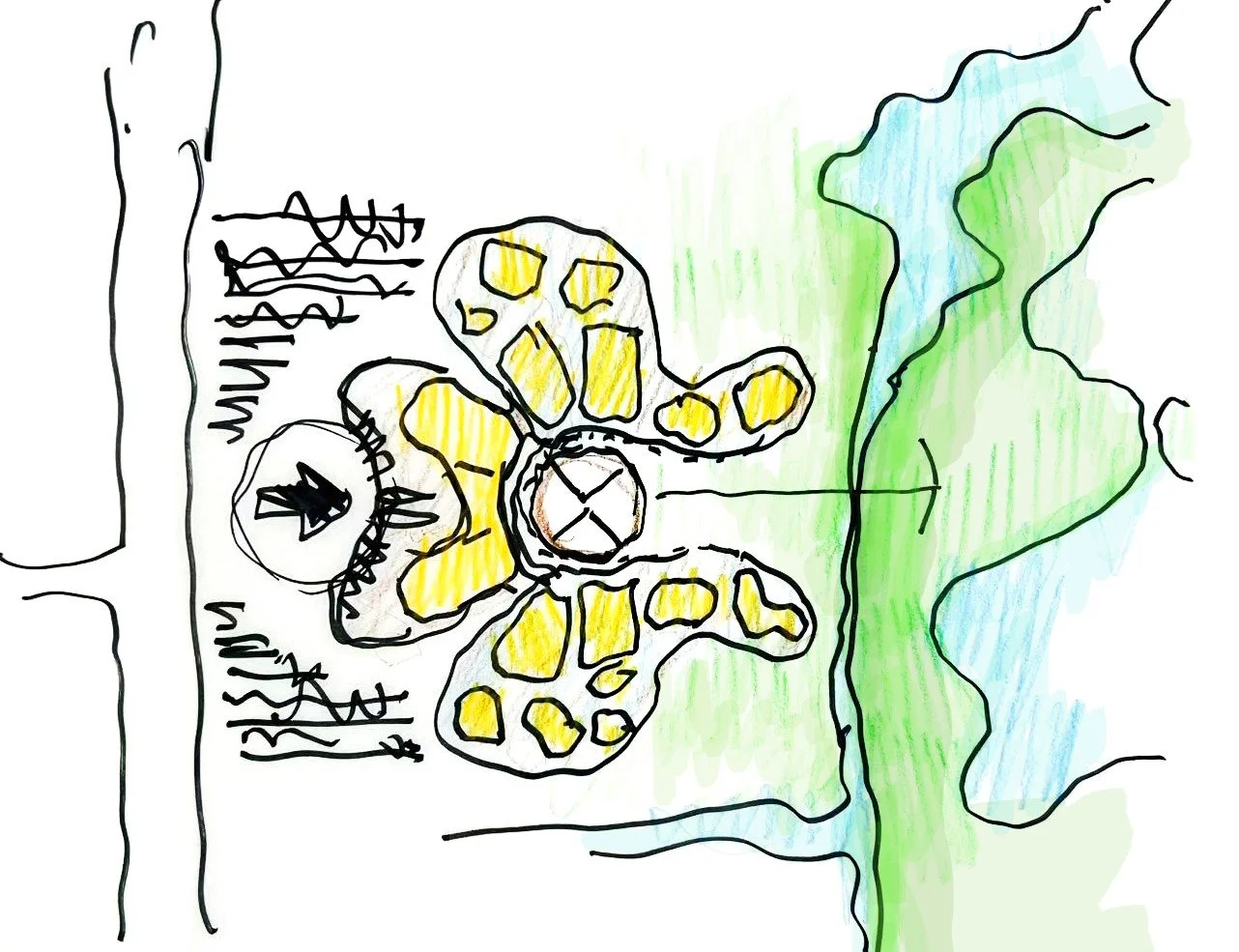
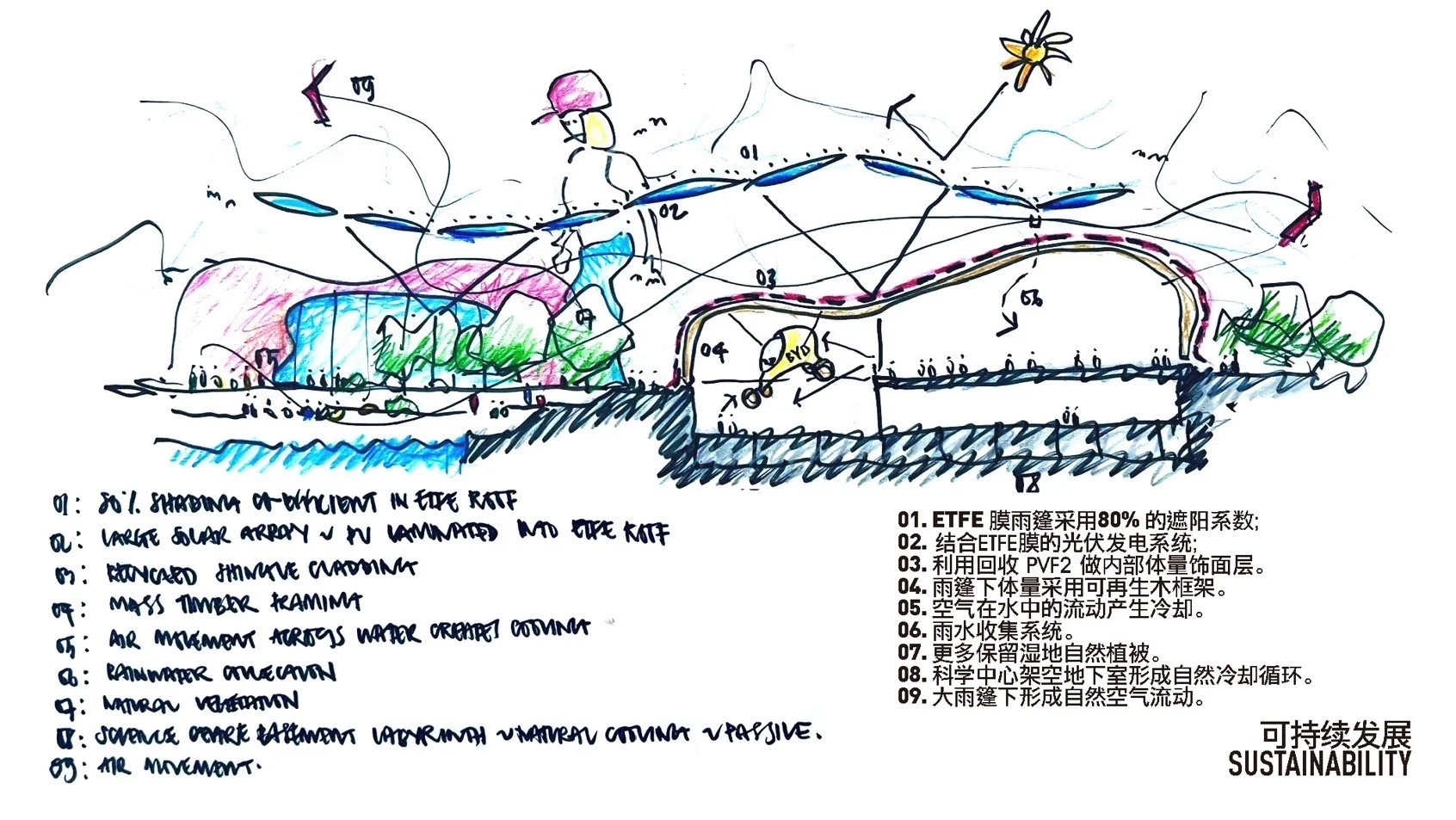
A New Era of Science: Conceptual Hand Sketches by Stephen Pimbley, Founding Director of SPARK
The architectural form of the centre draws inspiration from aquatic organisms. The morphology of the Integrated Science Centre posits a series of lightweight buildings working together as an organism. Constructed of mass timber with a skin of thermoformed recycled plastic polymers that look like traditional shingles. The building’s organic geometry can be ostensibly prefabricated and assembled on-site.
The Integrated Science Centre is covered by a single layer ETFE foil monocoque canopy. The canopy has an integrated rainwater collection system and whilst having outstanding transparency it is printed with silver thin film PV to create a vast solar power generating surface. The PV printed surface also provides the canopy with an 80% shading coefficient.
Sound Pavilion
The Sound Pavilion is an innovative acoustic centre where visitors can enjoy the Soundwave Theatre and discover the soundscape of the wetland. It uses the co-option of a living material, a form of bio-utilisation where a growing skin that transforms the external appearance of the building shrouding it in a living green skin with apertures to a continuous viewing terrace.
The pavilion takes the hedge seriously as architecture. Instead of applying vegetation as decoration to a building, the relationship is reversed. The planted mass becomes the architecture itself, while space is carved from within it. Circular openings reveal rooms, terraces and small pockets of occupation embedded within the green thickness. From a distance, the pavilion reads almost like a monumental piece of inhabitable topiary. Visitors appear within the circular openings like inhabitants of a hollow tree.
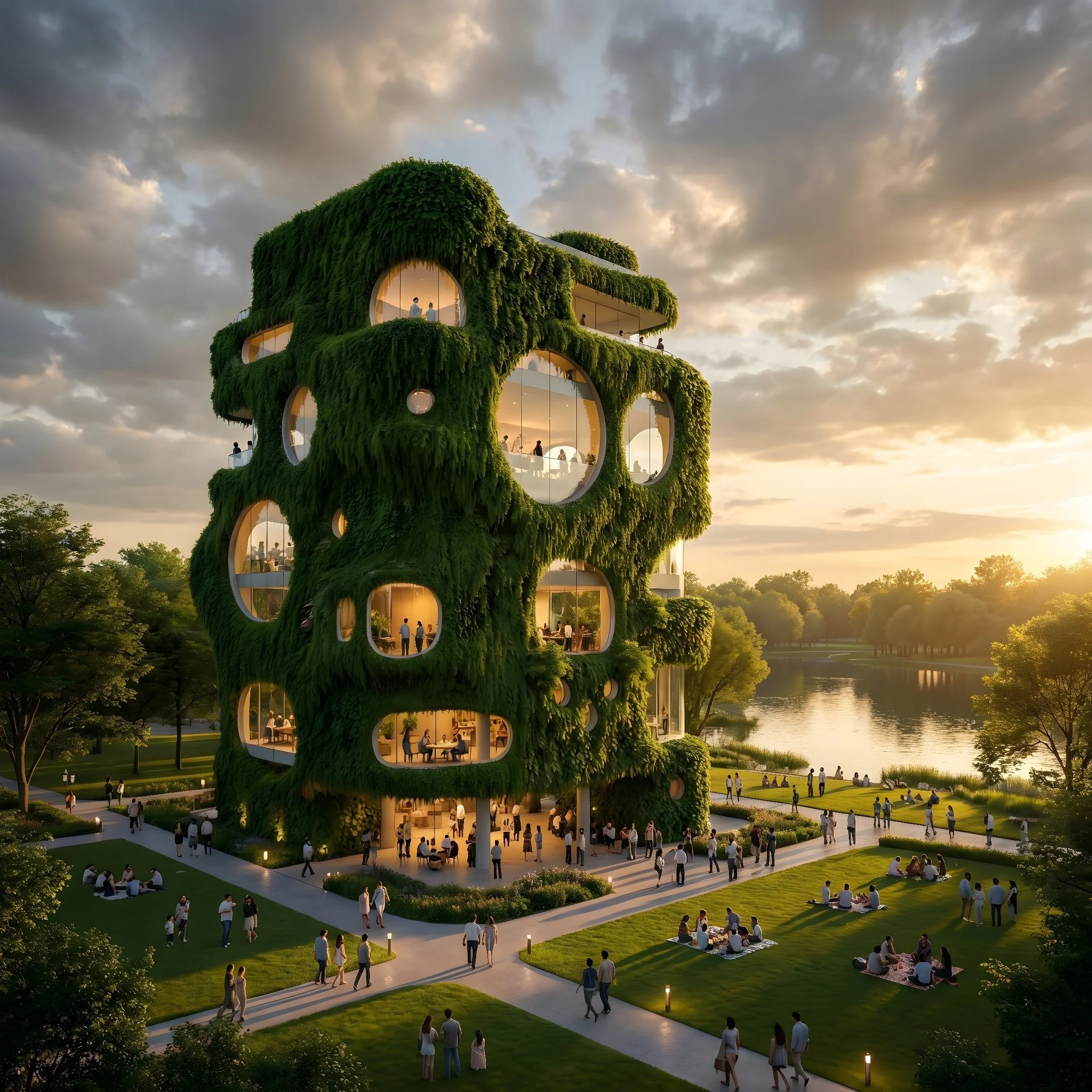
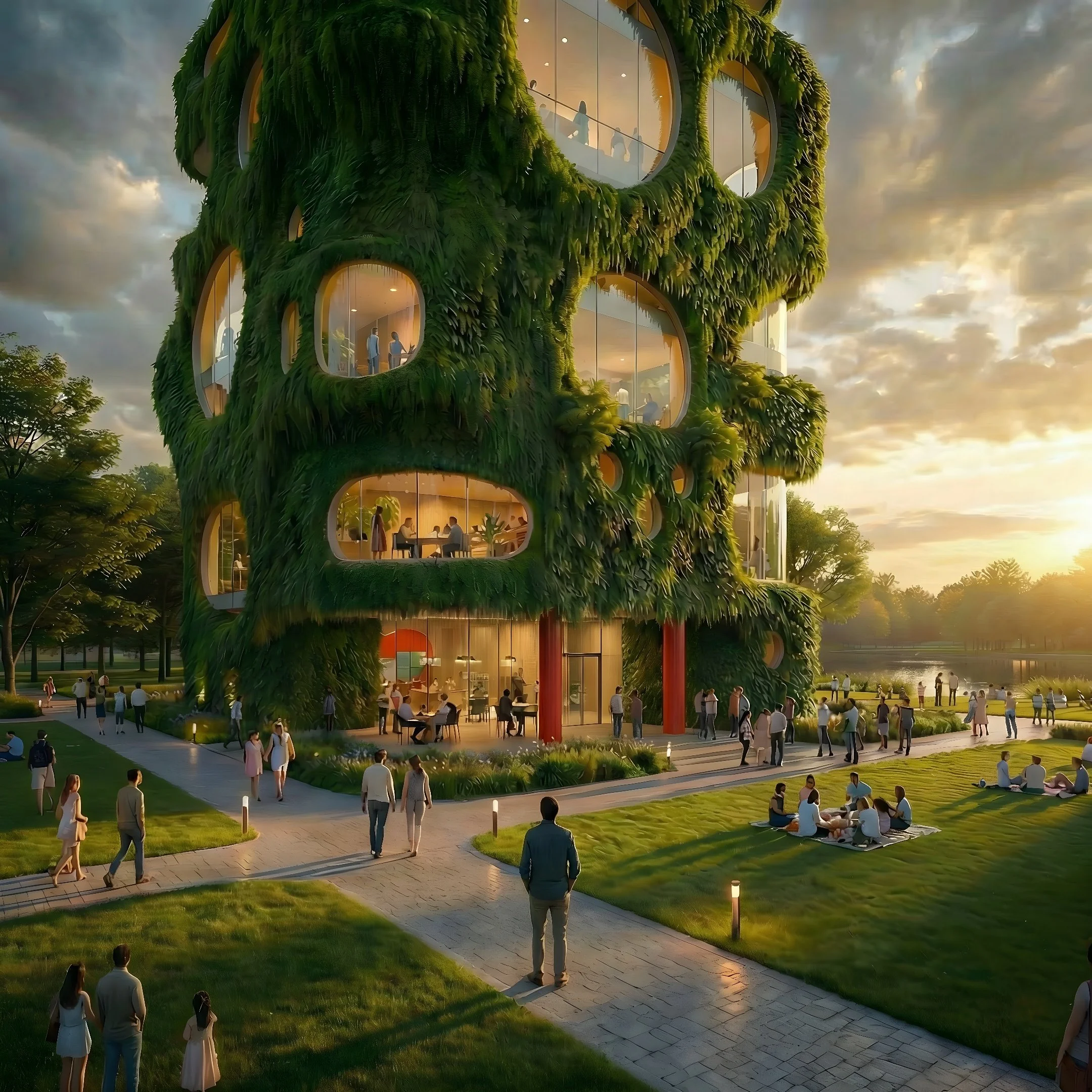
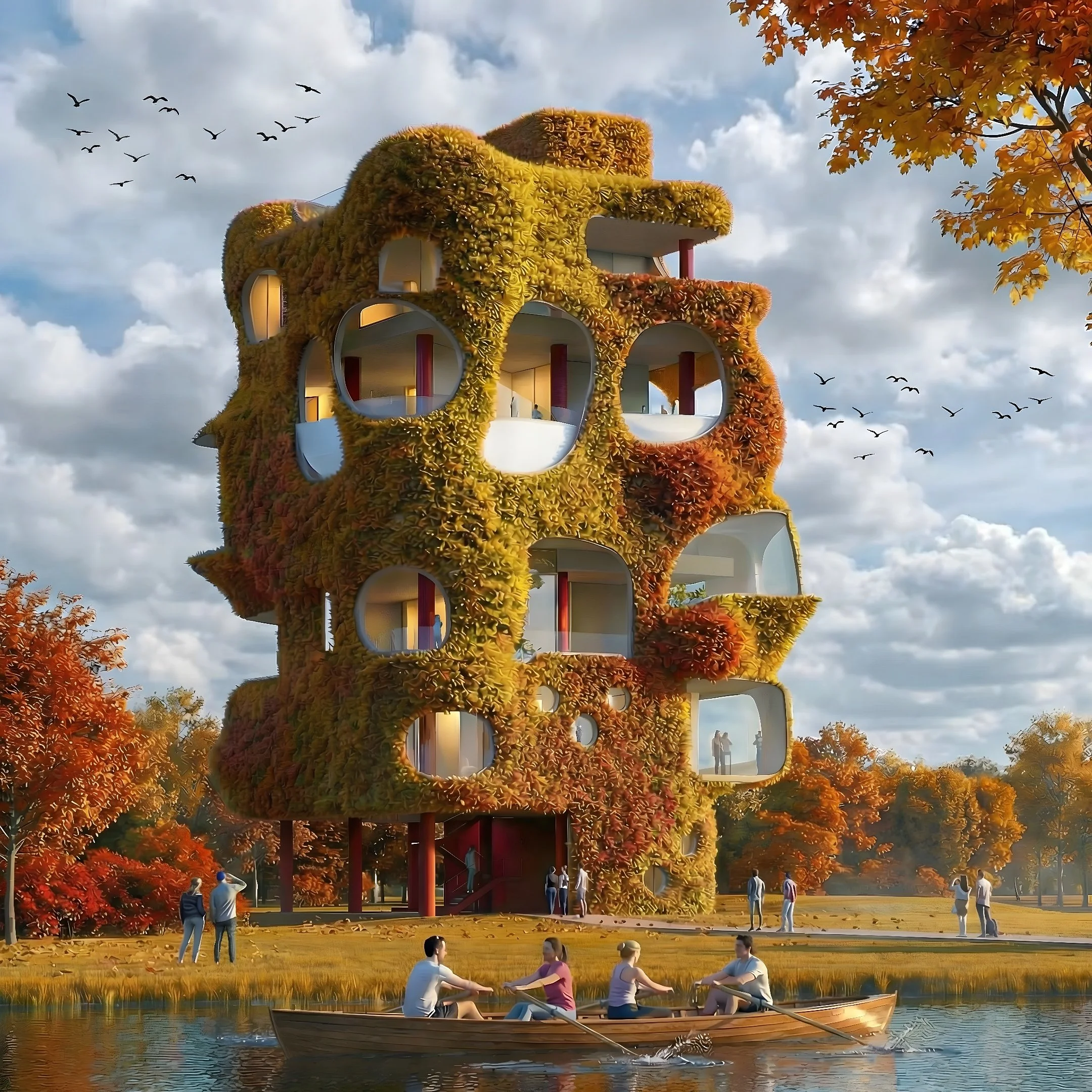
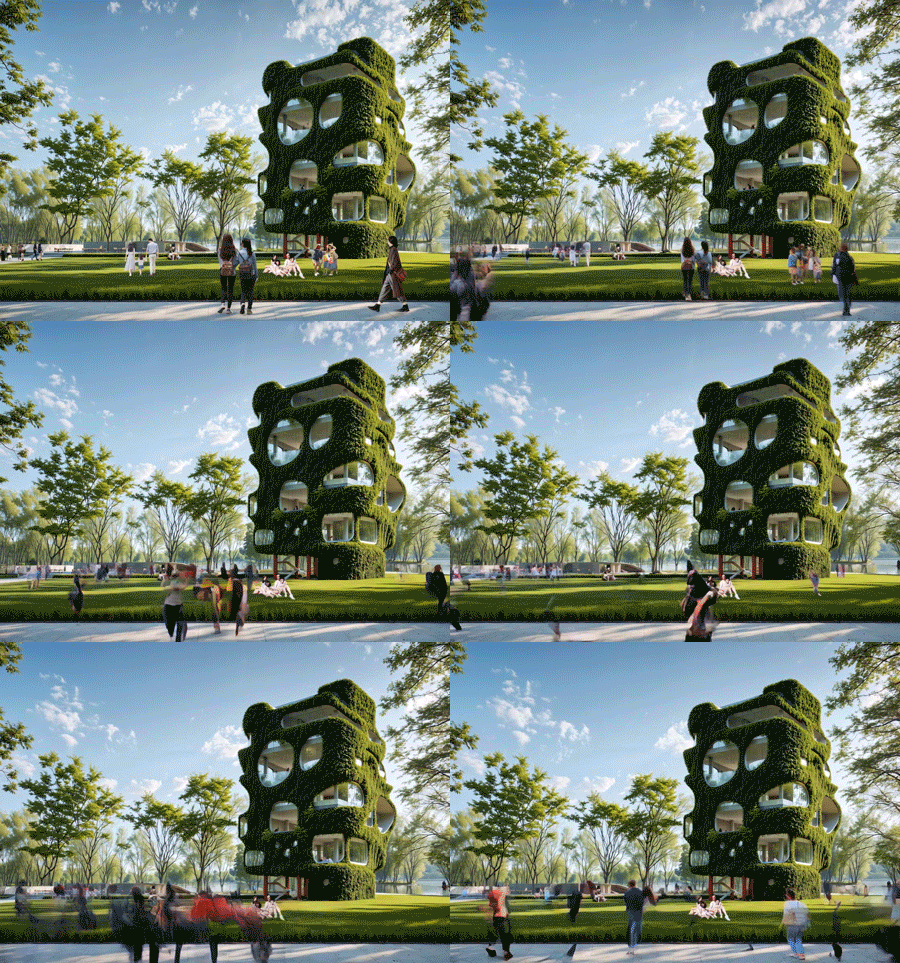
Only in section does the underlying order become clear. Behind the vegetated envelope sits a simple structural frame organising floors and circulation. The interior remains calm and rational while the outer layer, the inhabitable hedge thickens and softens the boundary between building and landscape. Rather than appearing as an object imposed upon this landscape, the Sound Box is imagined as a dense vegetated mass that might almost have grown there. Its planted envelope shades the interior spaces while participating in the living processes of the wetland itself.
Super Garden
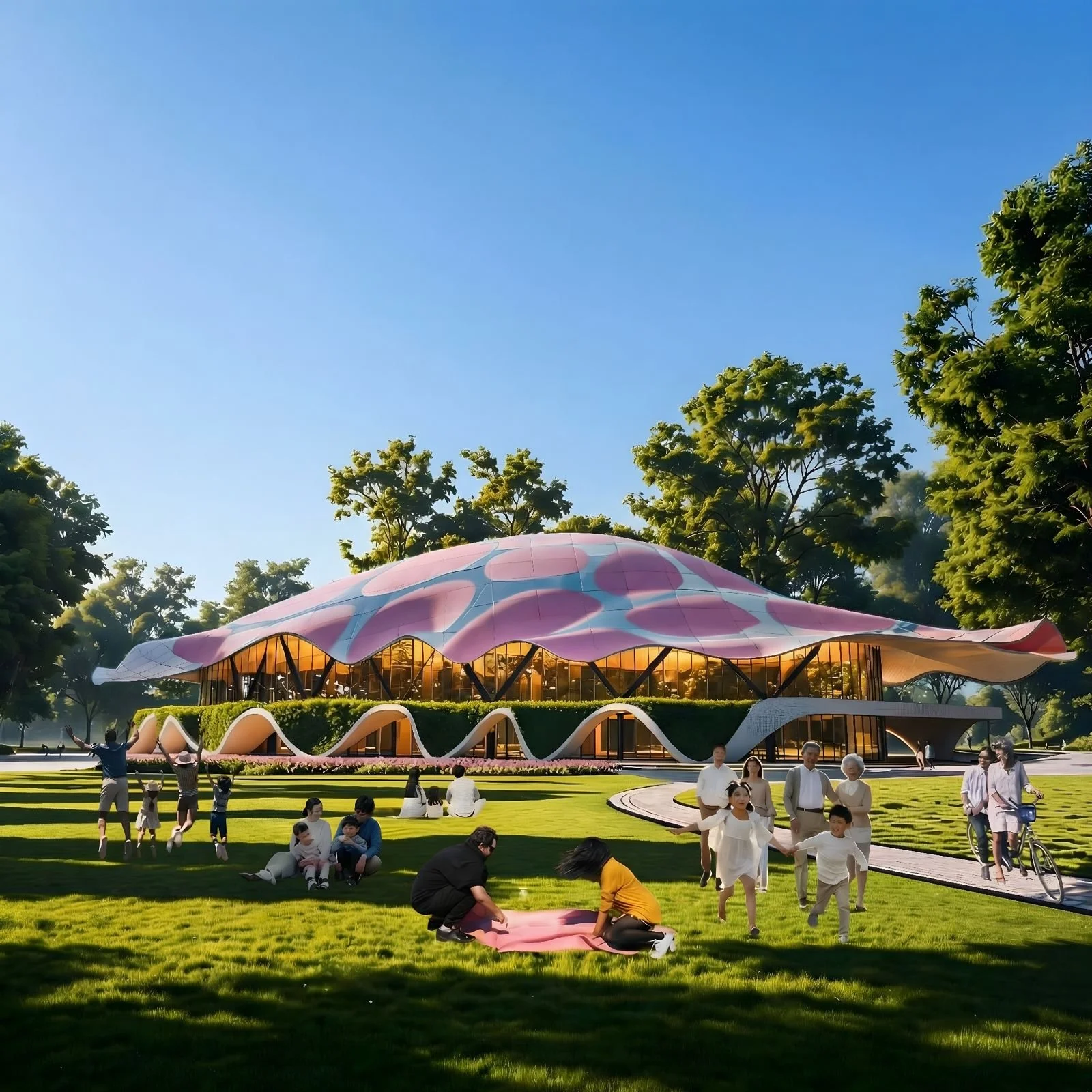
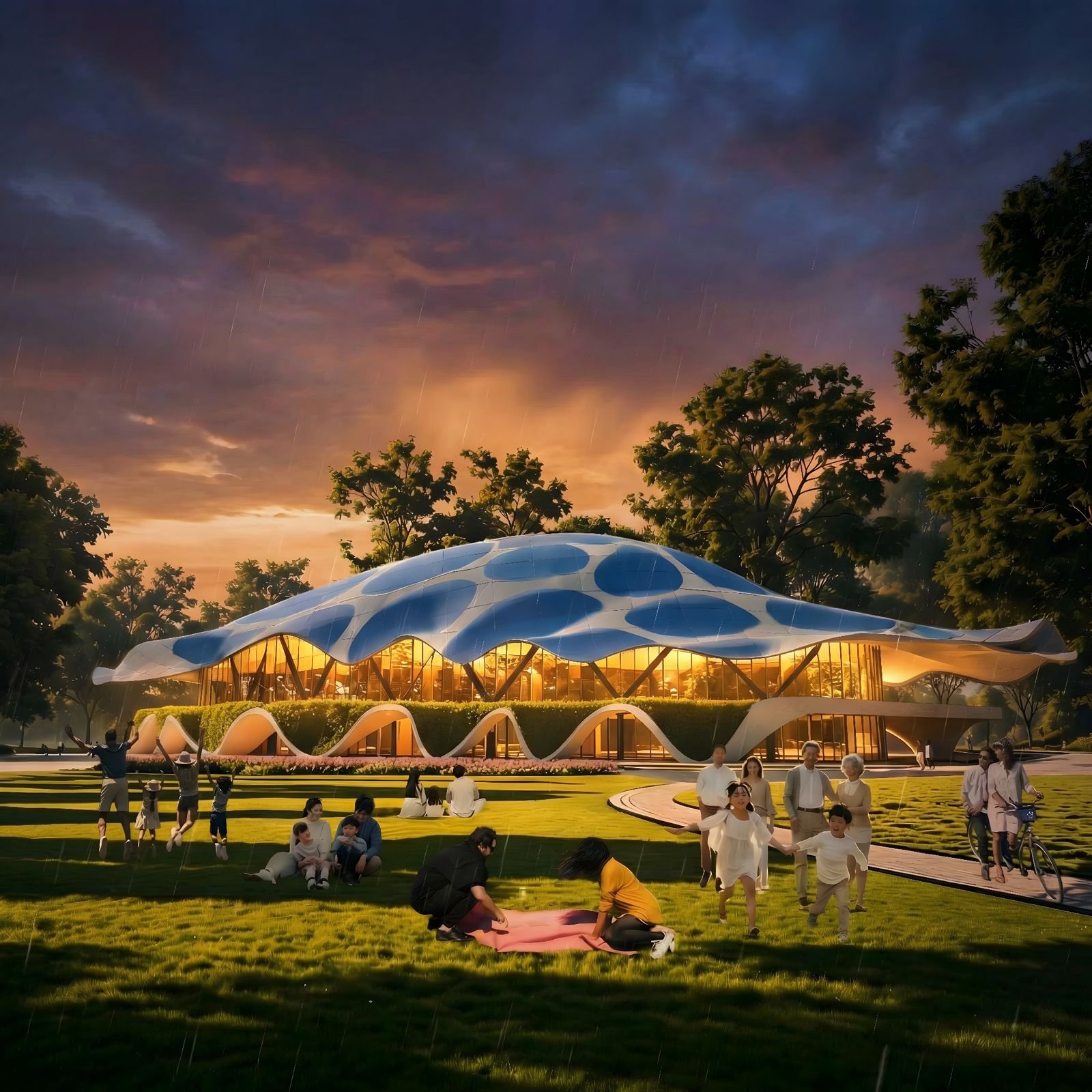
The Super Garden offers three themed educational zones: a greenhouse garden, a seed bank, and a fungi laboratory.
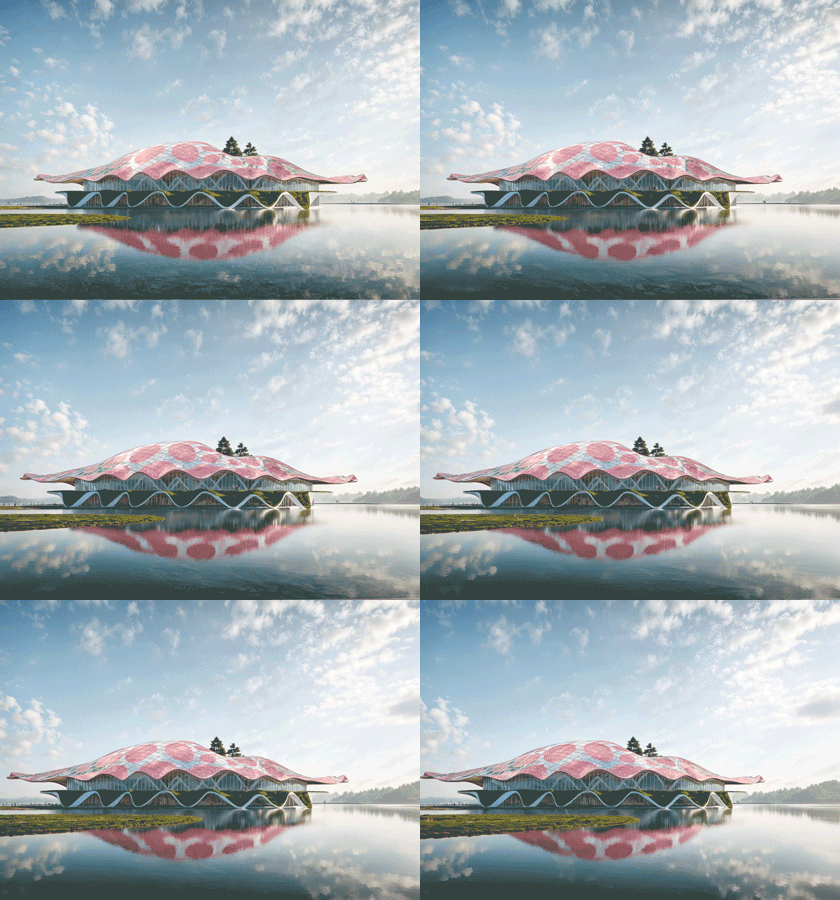
Designed to resemble an organism the building is equipped with heat sensors that detect the presence and position of visitors. The sensors feed heat readings into an algorithm which activates a Photochromic layer in the building ETFE skin. The structural colour changes the buildings skin’s material’s opacity and colour in response to people activity and external sunlight levels.
Examples of structural colour found in the Suzhou wetland include the wings of the Red Grey butterfly. We are interested in harnessing these material features and effects of the butterfly wing colour / biomimicry in our architecture, translating it into a scalable building skin for the garden Centre Pavilion.
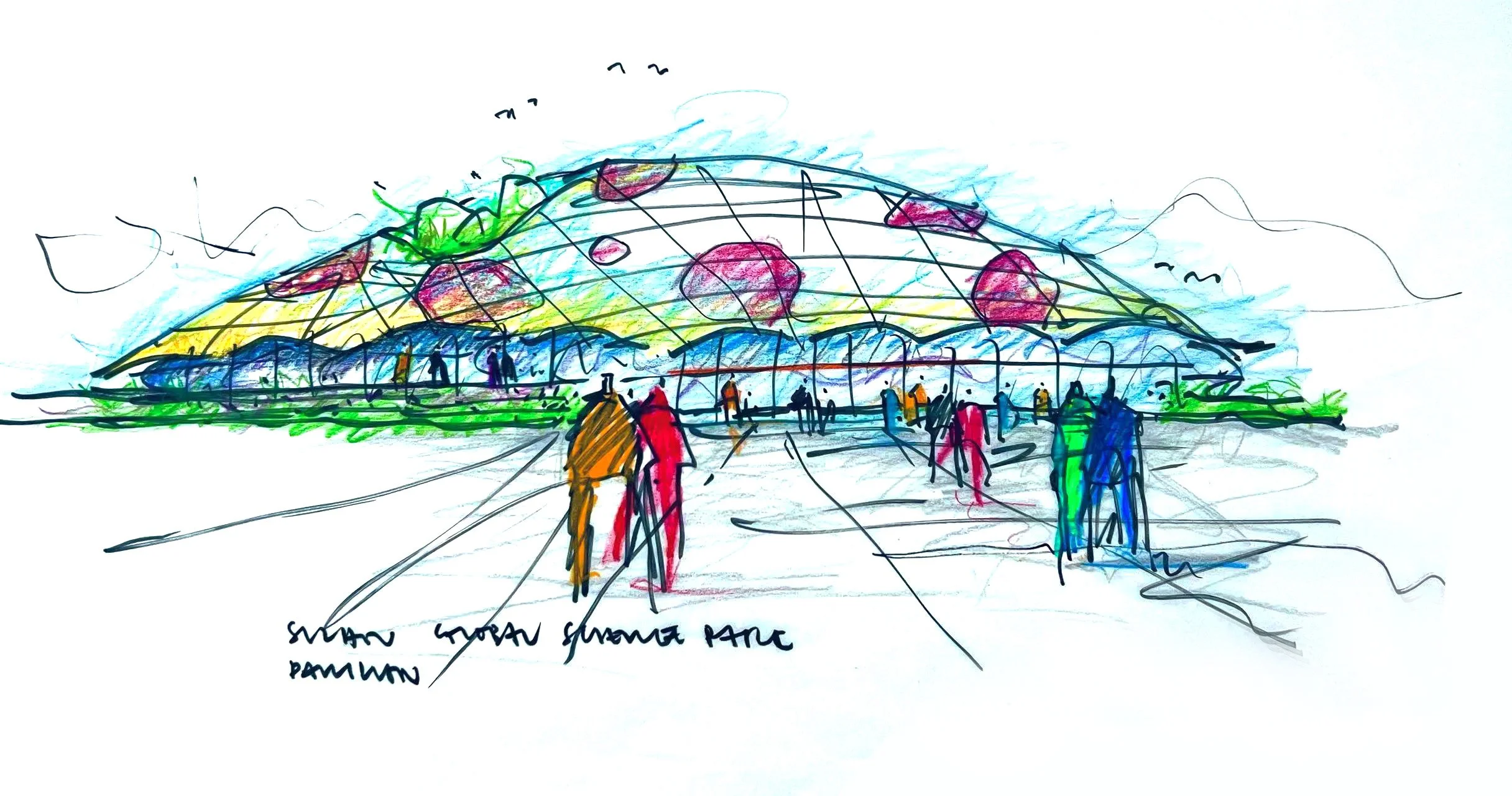
The Super Garden: Conceptual Hand Sketches by Stephen Pimbley, Founding Director of SPARK
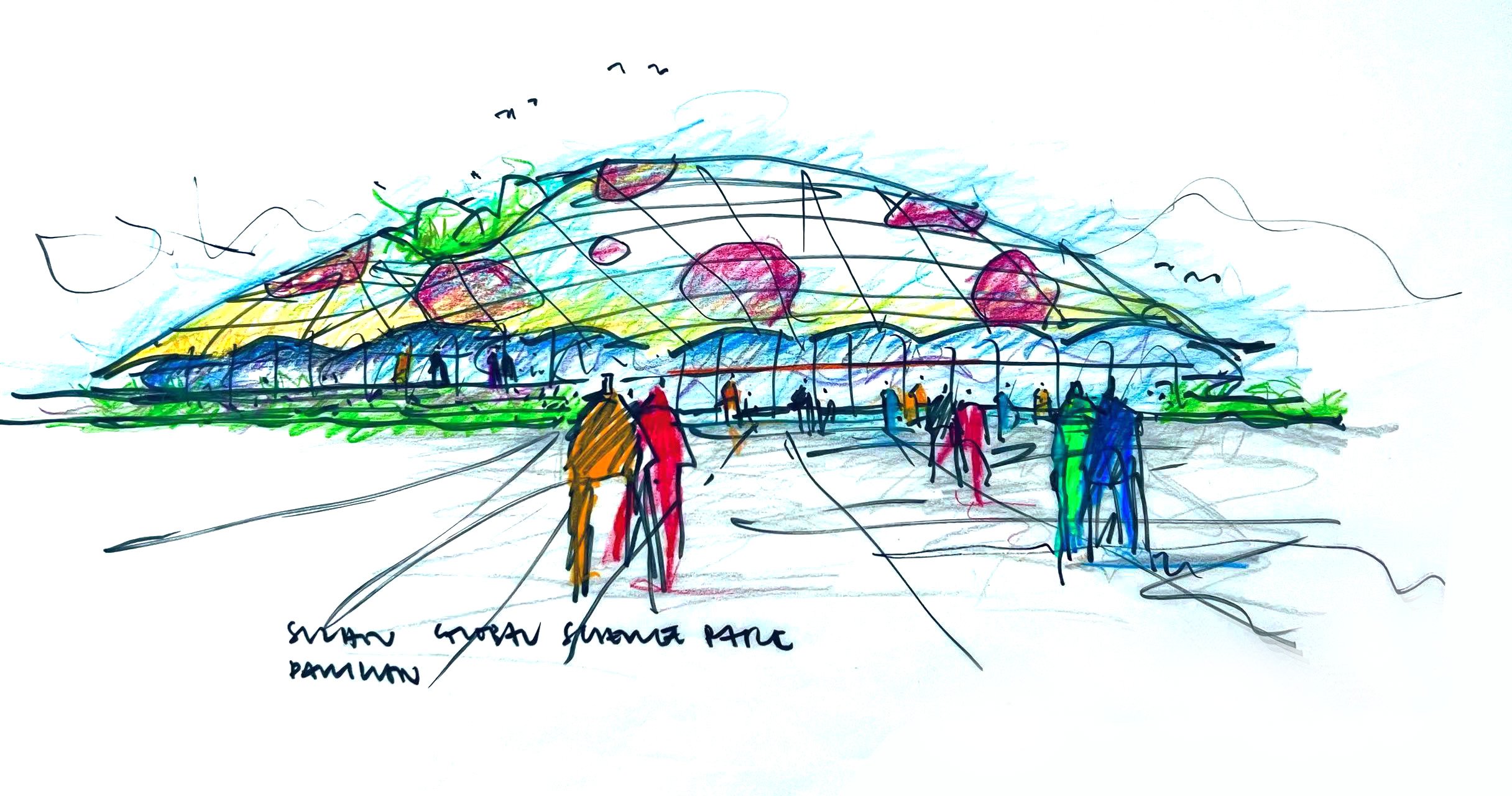
Furthermore, the site features six science installations. Of particular note is the "Living Machine," a public educational storytelling installation.
Living Machine
The Living machine is designed to manage human waste and other bi-products from the pavilions. Waste is fed by gravity into a series of an aerobic and aerobic digesters designed to filer and clean the back and grey water before it is introduced clear of pathogens into the wetland. The aerobic digester tanks form a healthy growing substrate for vegetables and plants. The story of water cleaning and opportunities for nutrient rich aquaponic farming become part of the Living Machine’s healthy, and vibrant functional exhibition mainstreaming biomimicry and biophilic design into design.
Inspired by the Suzhou wetlands, the Huqiu Science Popularisation Education Base proposal translate the intelligence inherent in nature into the design, reflecting SPARK's profound dedication to the principle of "coexisting with nature." Within this project, science and nature mutually reinforce and complete one another, demonstrating once again that the finest design is not an attempt to subdue nature, but rather an endeavour to think, grow, and breathe as nature does.
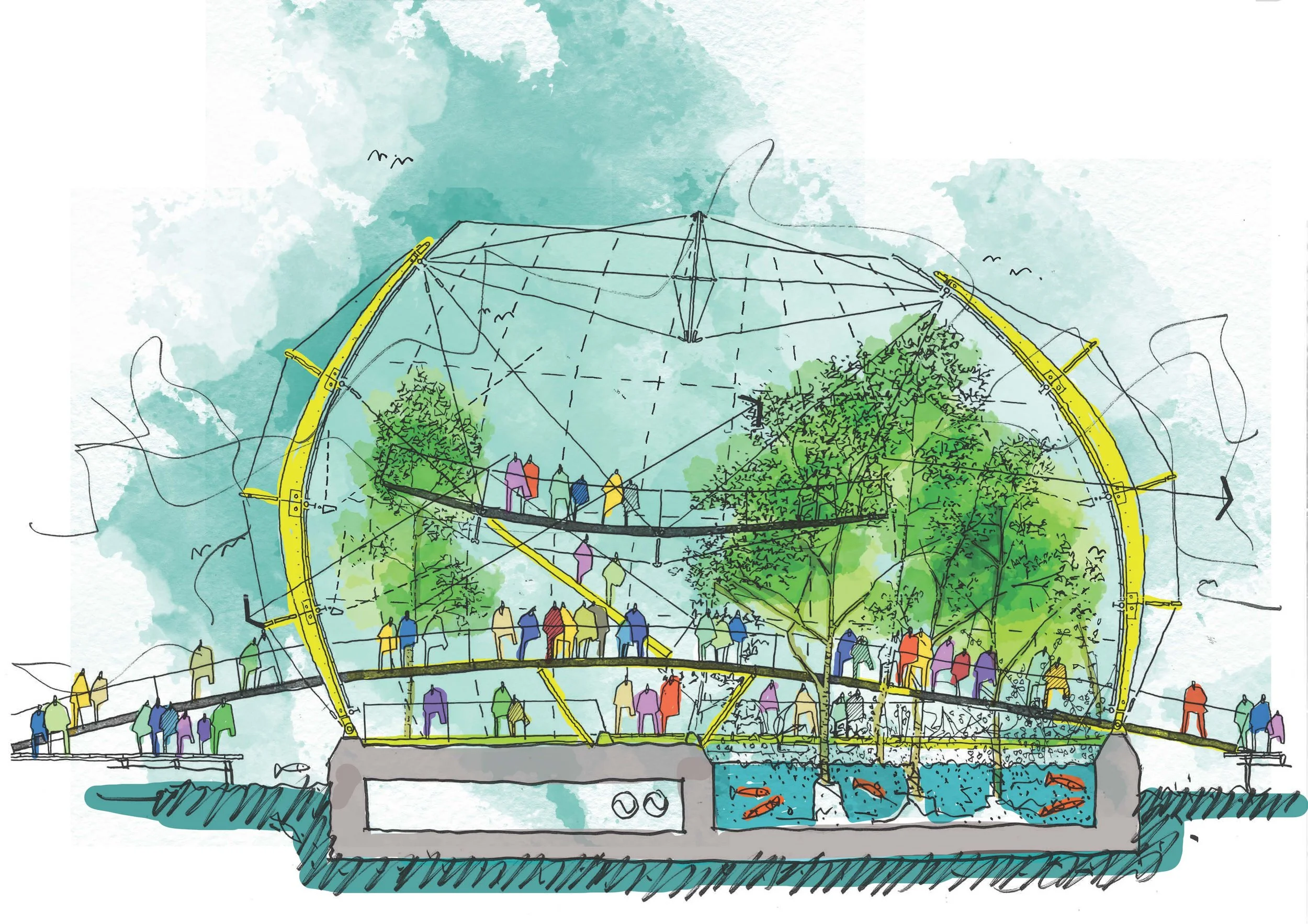
The Living Machine: Conceptual Hand Sketches by Stephen Pimbley, Founding Director of SPARK
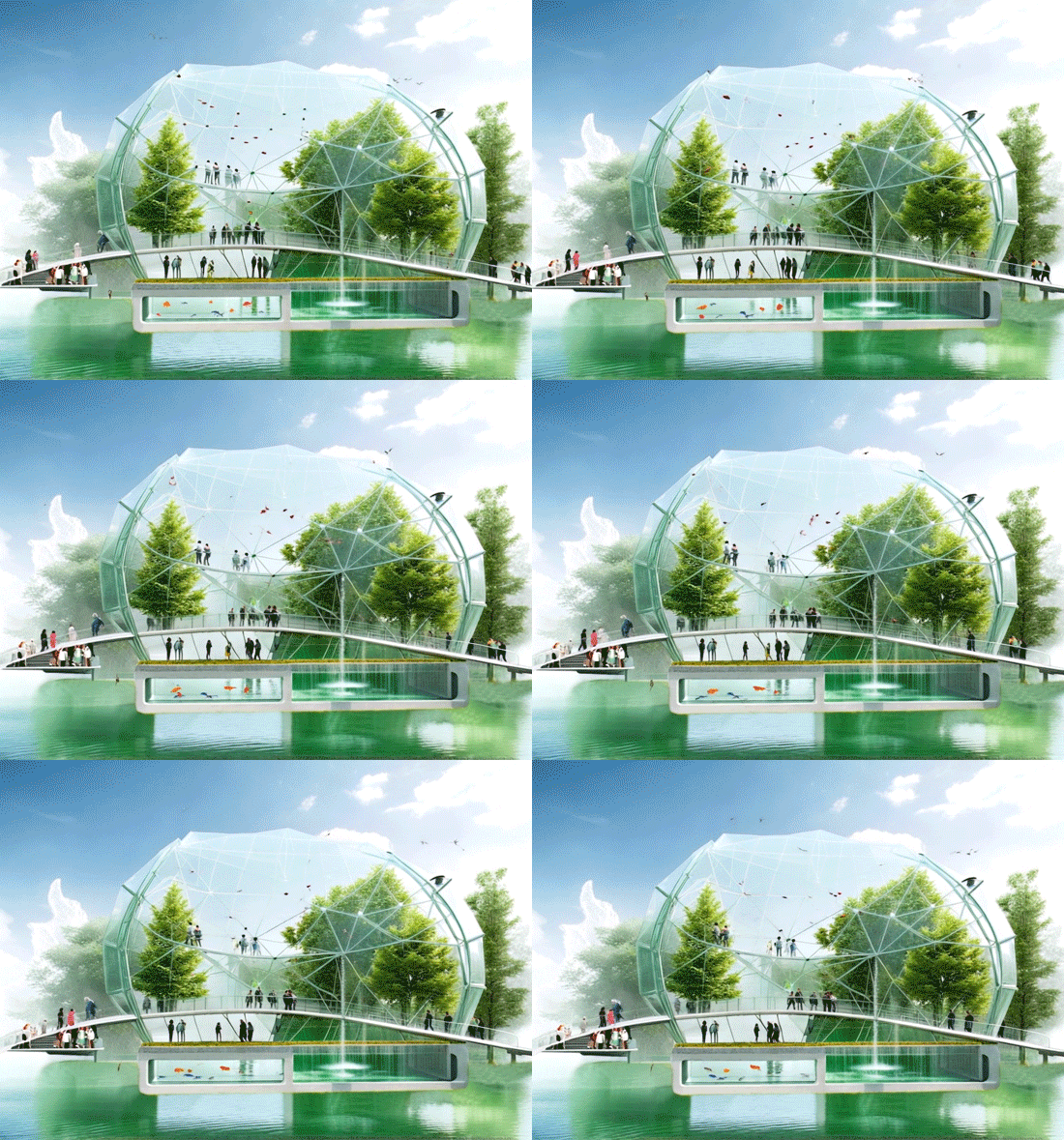
The Living Machine: Wastewater Treatment, Recycling, and Aquaponics