
Huawei R&D Campus in Guangzhou by SPARK Architects: A Riverfront Research District
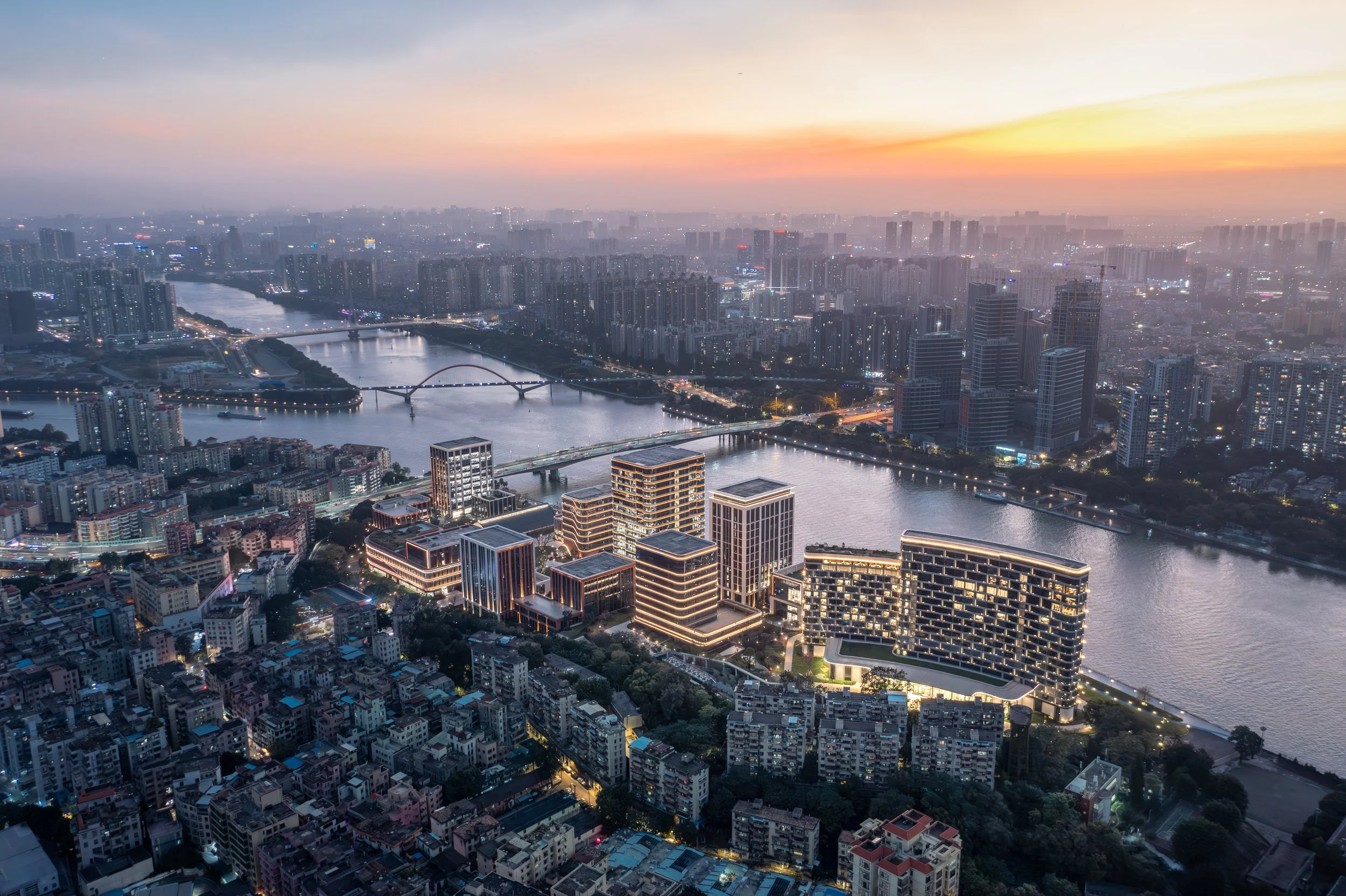
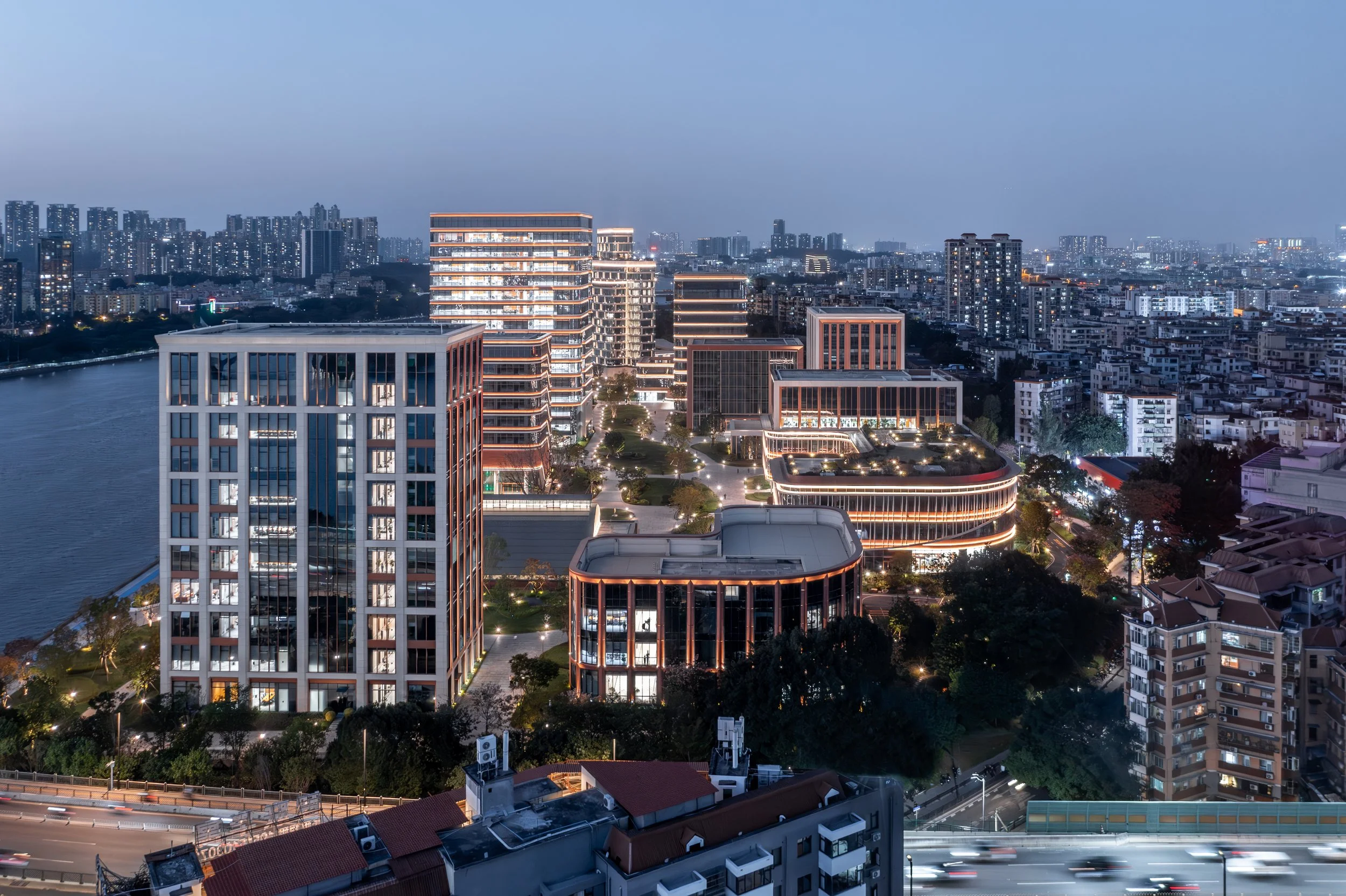
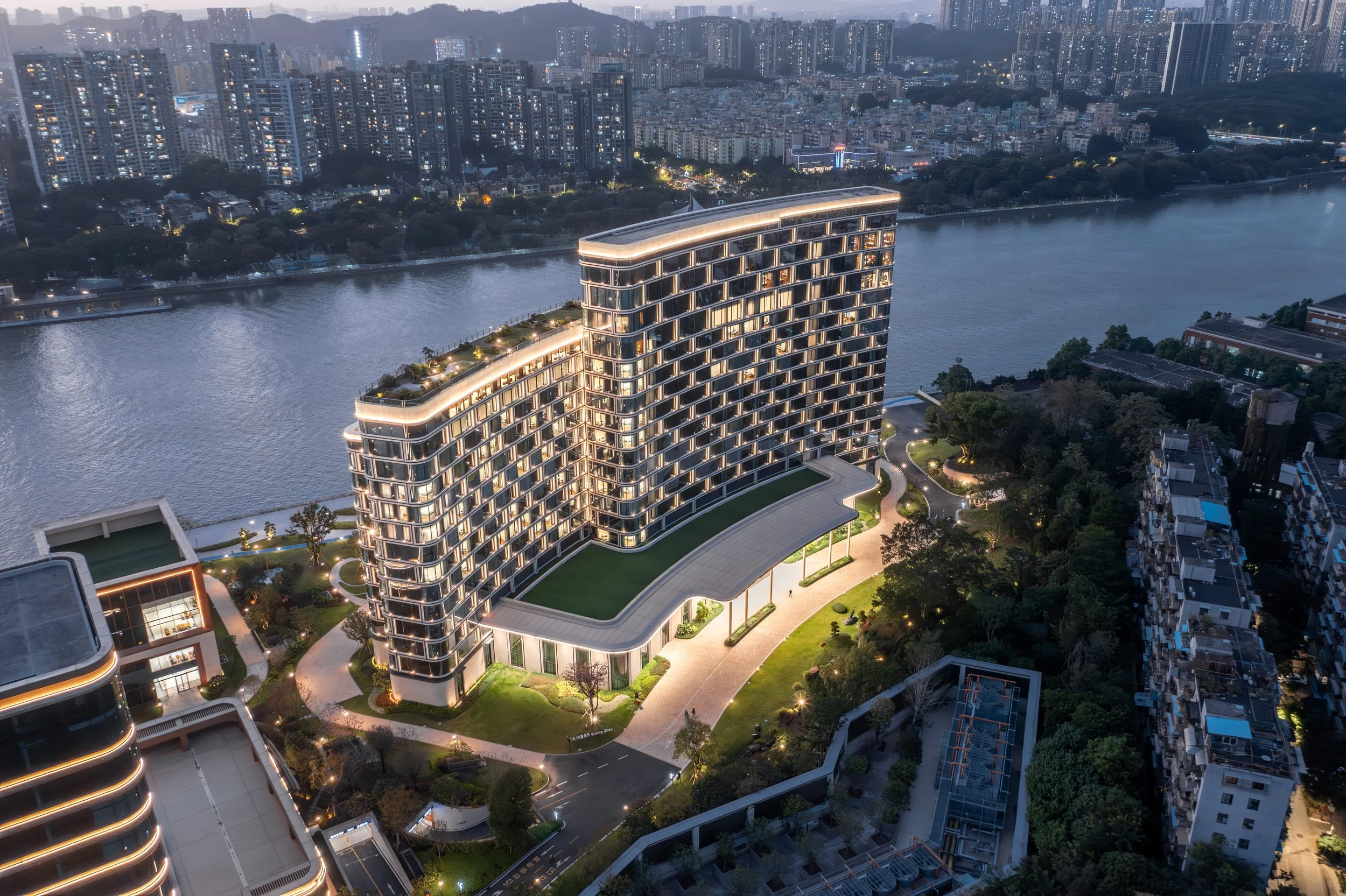
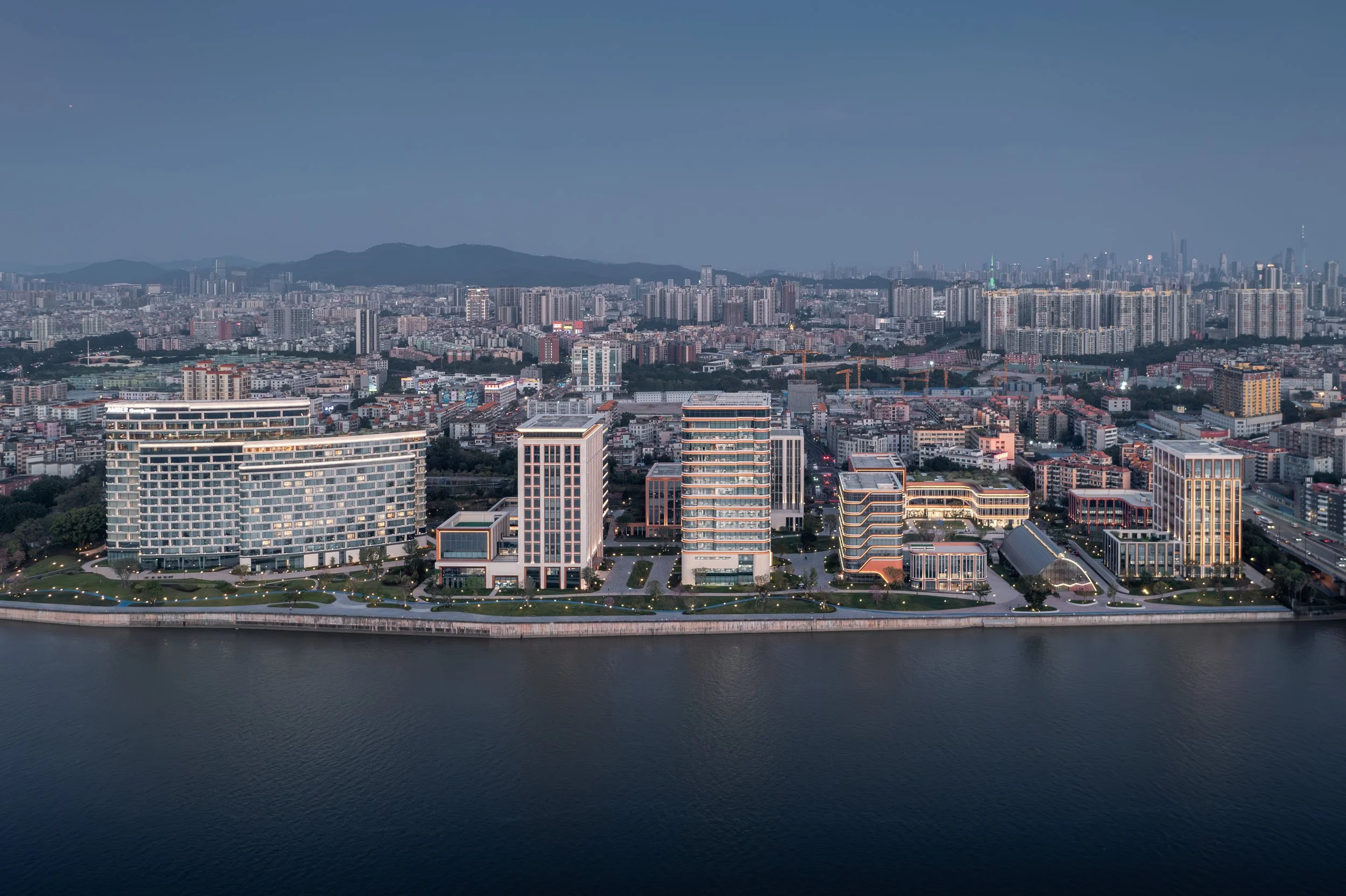
Aerial view of the northeast side of Huawei Guangzhou R&D Campus at dusk.
The Huawei R&D Campus in Guangzhou was conceived not as a single architectural object, but as a fragment of city carefully assembled along the river’s edge.
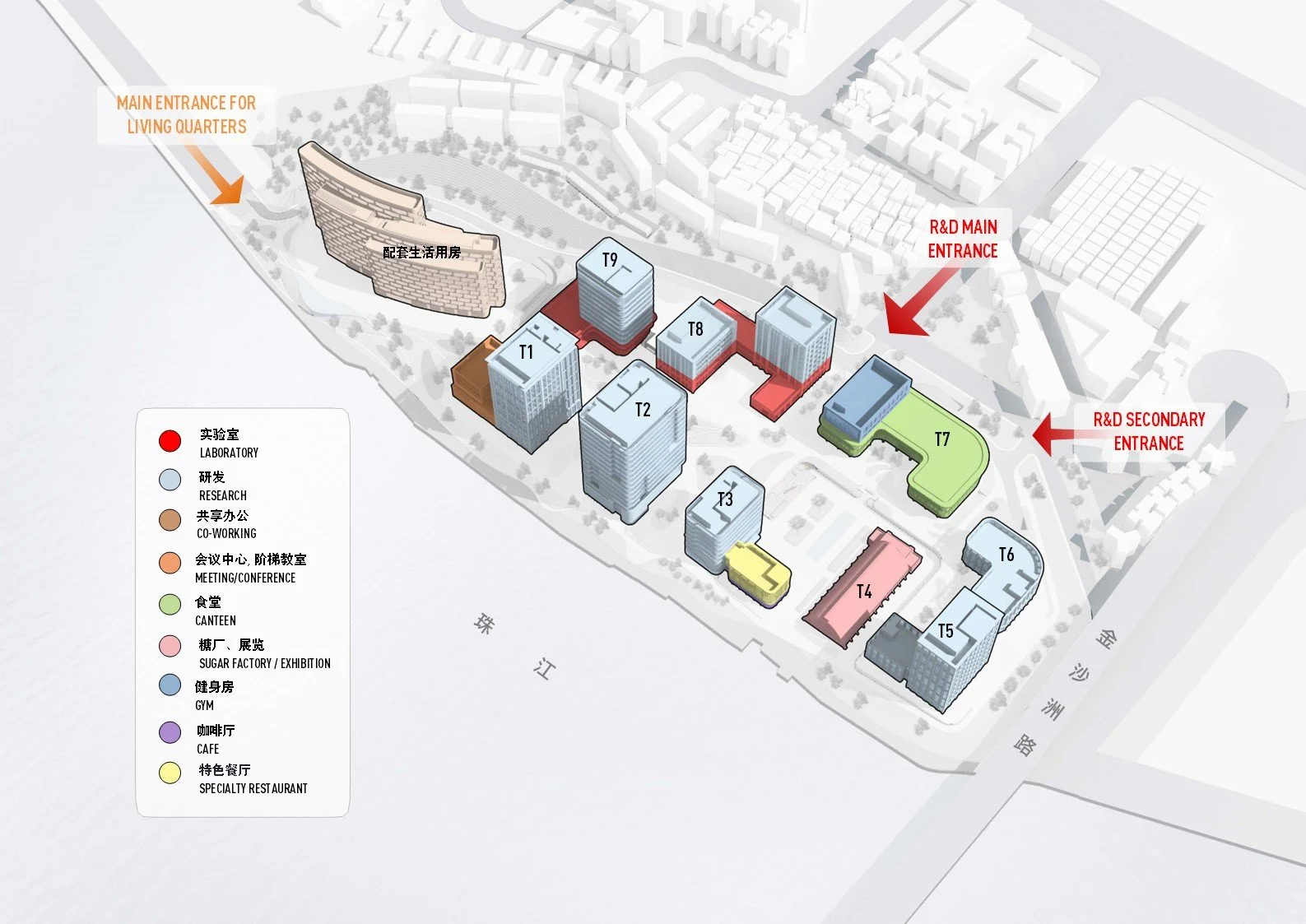
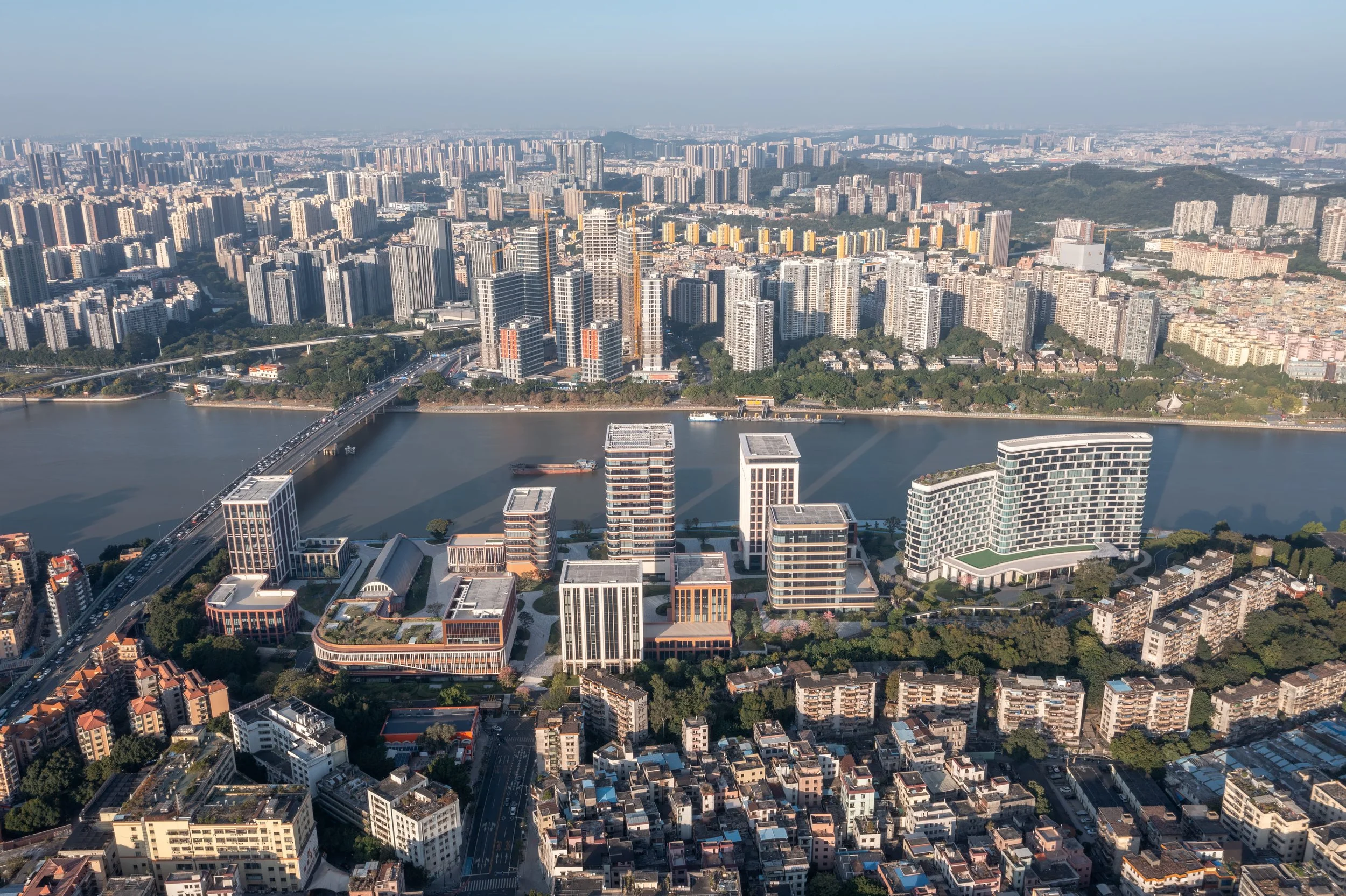
The project is located on Songnan Road in Baiyun District, Guangzhou and has a mixed-use district with a total gross floor area of approximately 300,000 square metres, comprising eight office buildings, one hotel, and an exhibition hall converted from a former sugar factory. The buildings along the riverfront create a varied and layered skyline, with heights reaching up to approximately 80 metres. From the outset, the project resisted the model of the sealed corporate enclave. Instead, it proposed a mixed-use district in which research, work, leisure, hospitality, culture, and landscape are interwoven into a continuous civic terrain.
SPARK designed the campus in its entirety from master plan and architecture to concept landscape, allowing a singular spatial idea to guide the project from ground to skyline.
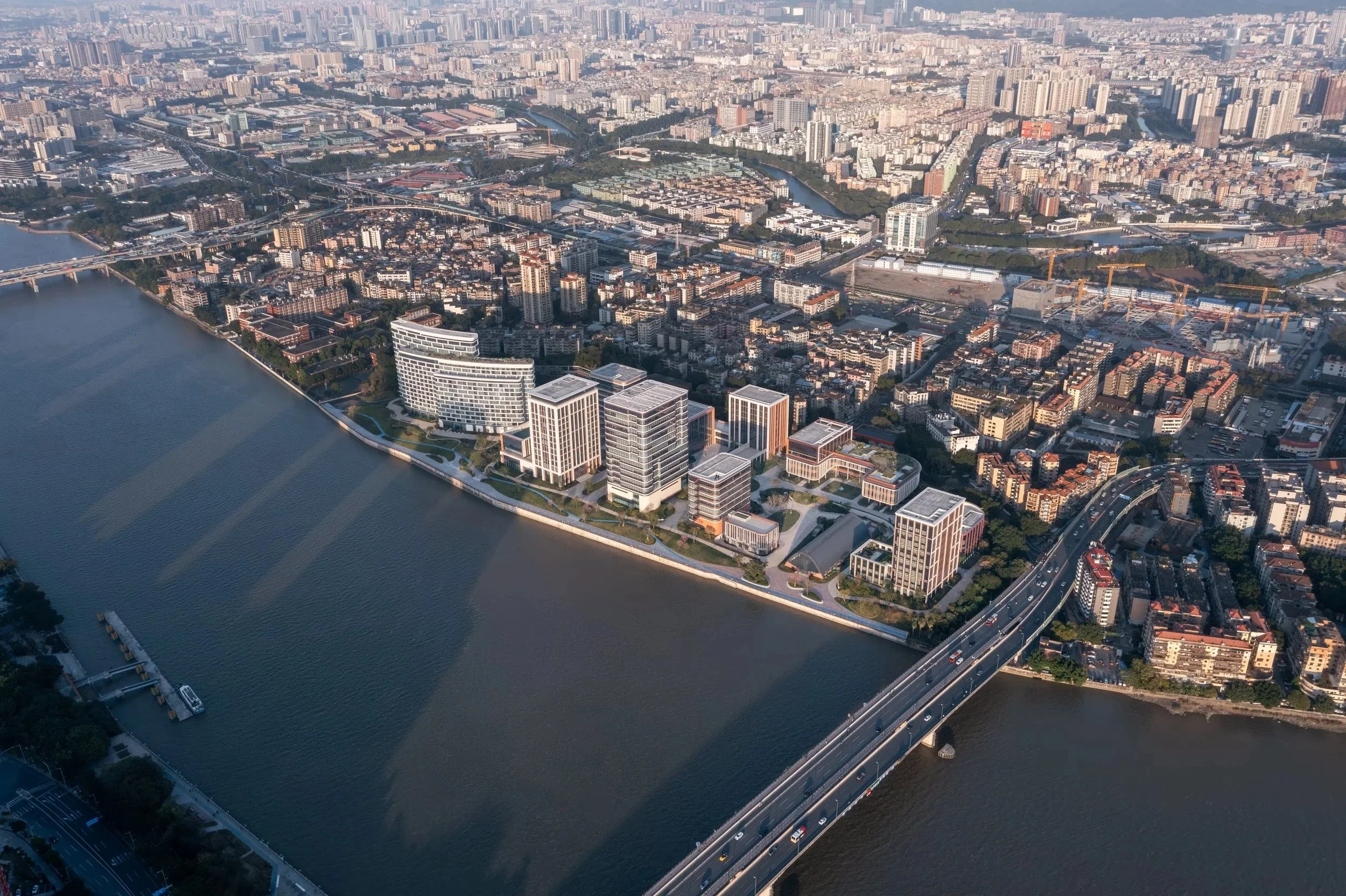

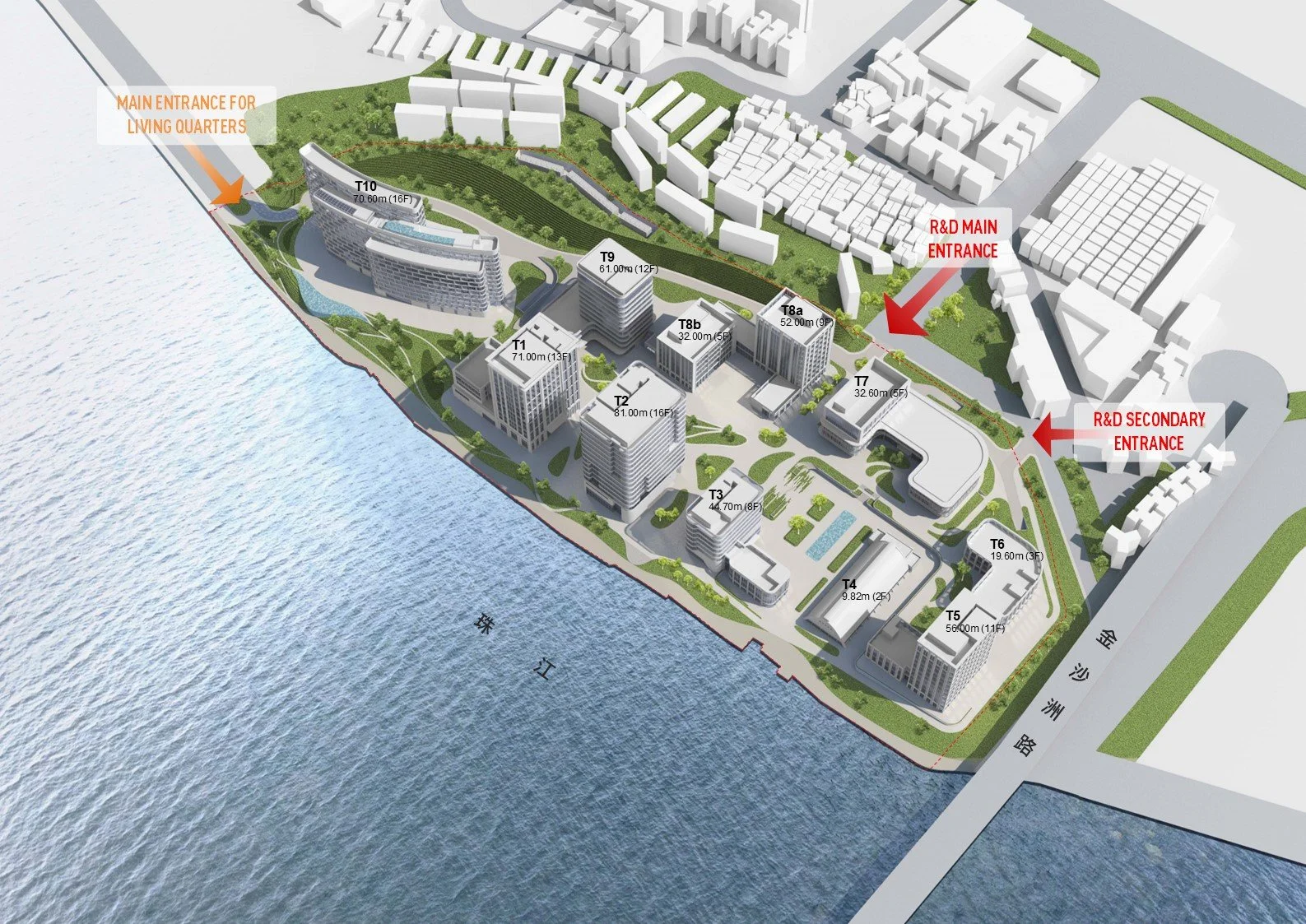
the master plan begins with movement rather than form.
The river is treated as a primary civic datum: a linear public edge that structures orientation, and campus life and spans approximately 620 meters long.
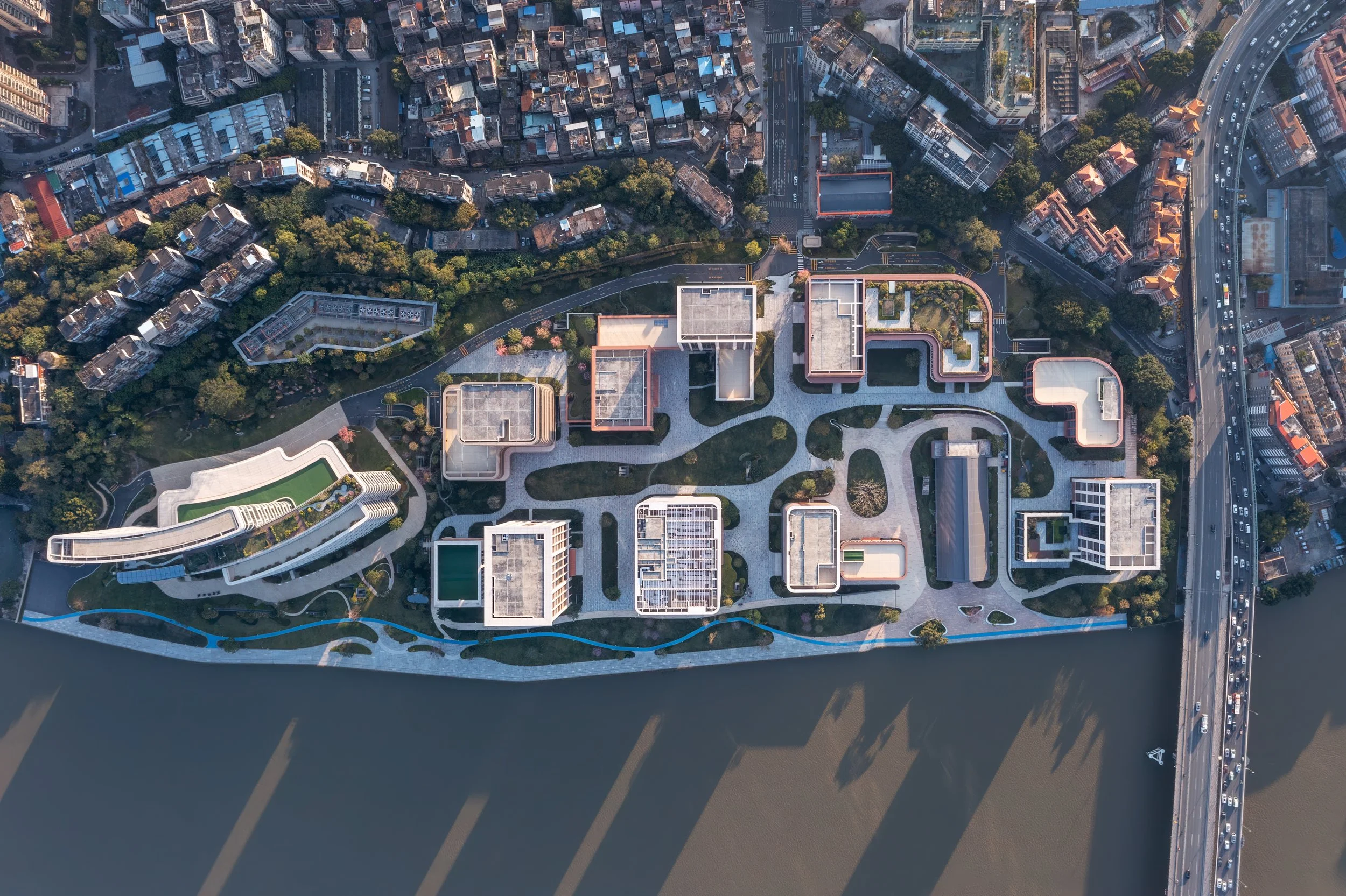
Huawei Guangzhou R&D Campus master plan.
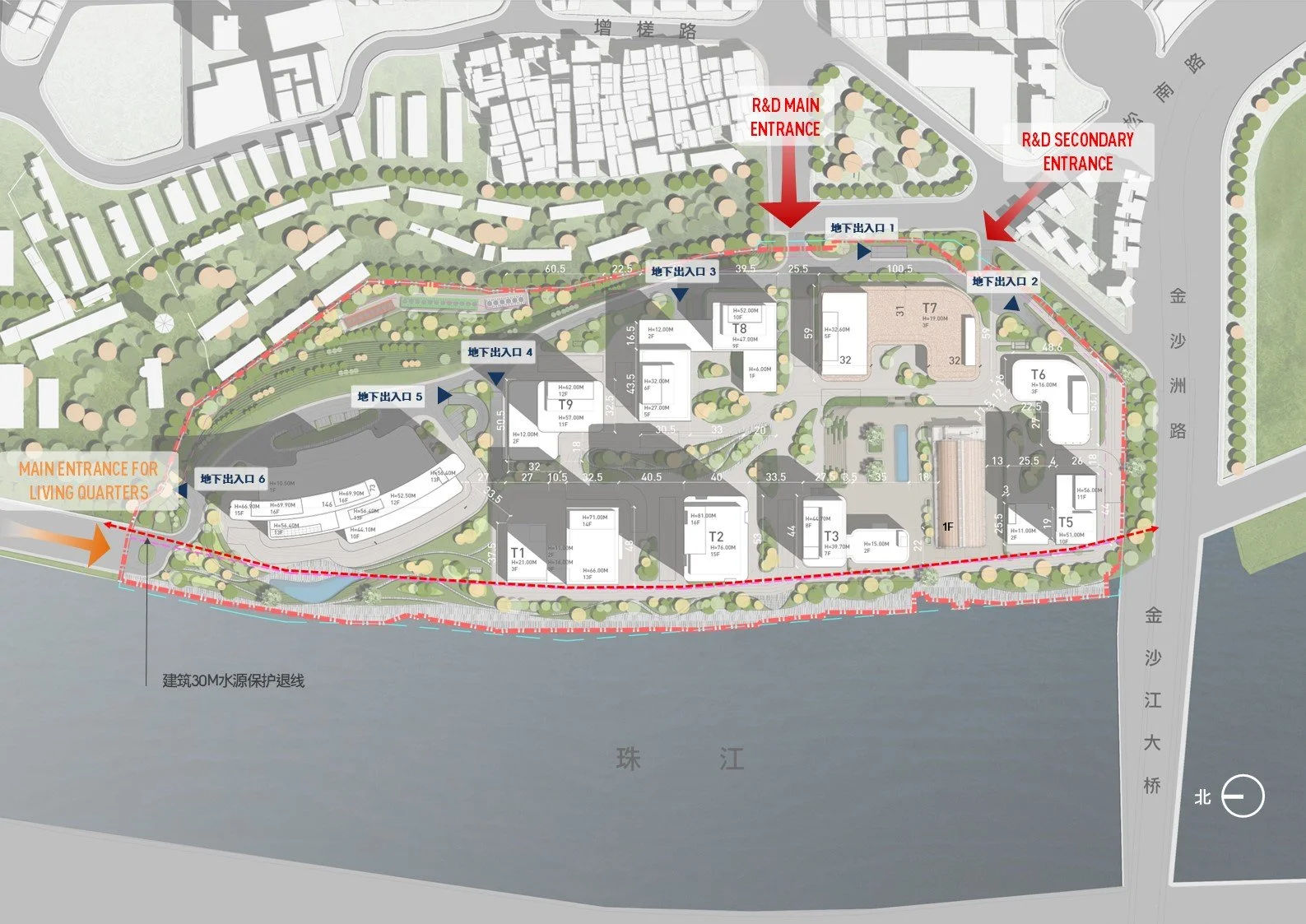
Main pedestrian and vehicular entrances to the park.
Pedestrian routes are aligned parallel and perpendicular to the water, establishing a legible framework of promenades, courts, and garden spaces. Buildings are placed to define these spaces rather than dominate them, creating a porous campus that encourages walking, encounter, and pause. The result is not an open field of isolated objects, but a coherent urban fabric.
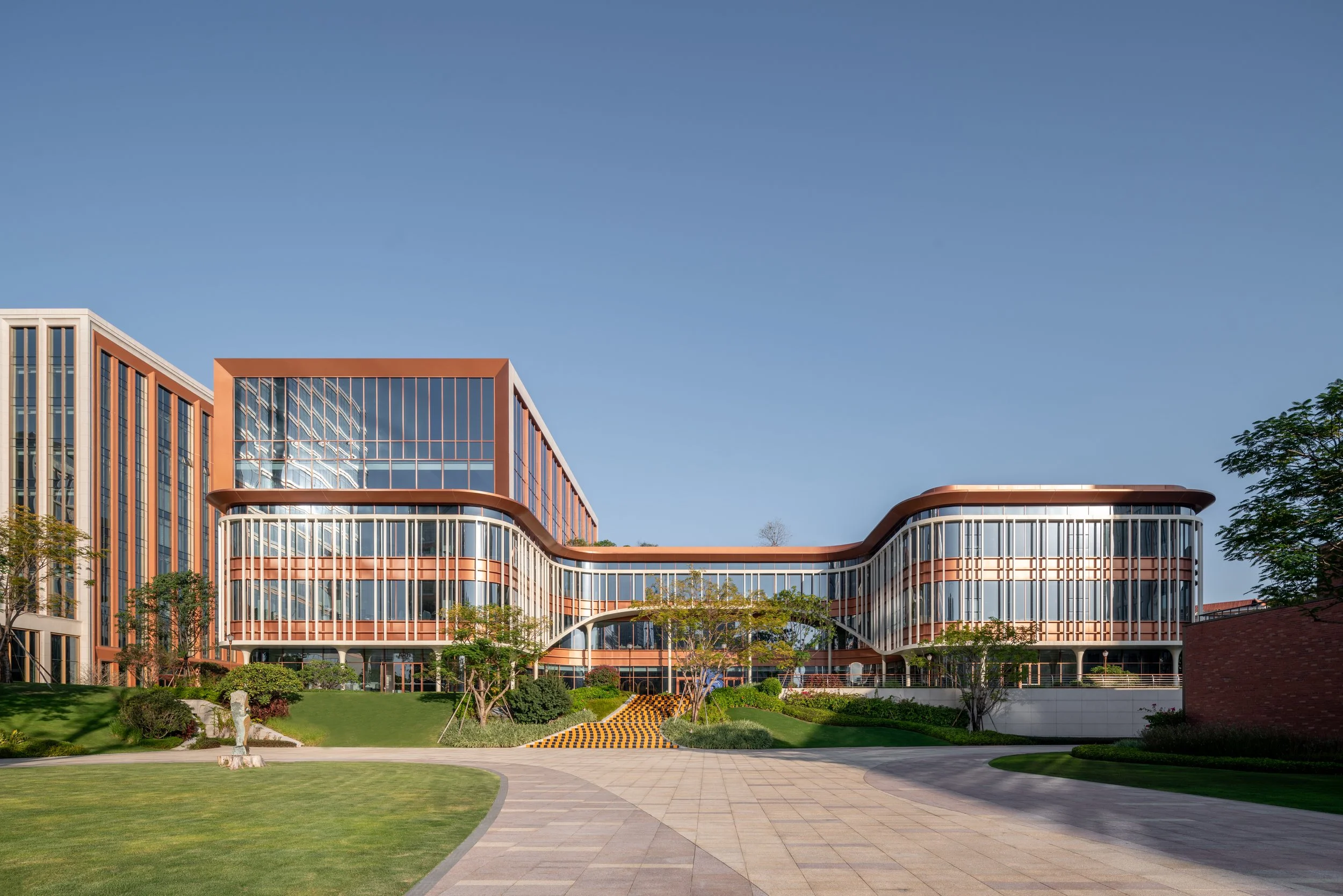
South view of Huawei Guangzhou R&D Campus.
Within this framework, the campus unfolds as a sequence of outdoor “rooms.” Arrival courts, garden cloisters, river terraces, and quieter interior landscapes are each spatially contained by architecture yet remain open to light, air, and movement.
These spaces are calibrated in scale and character: some animated and public, others more, offering moments of retreat within the working day. The emphasis is on spatial continuity rather than monumentality, allowing everyday life to shape the campus over time.
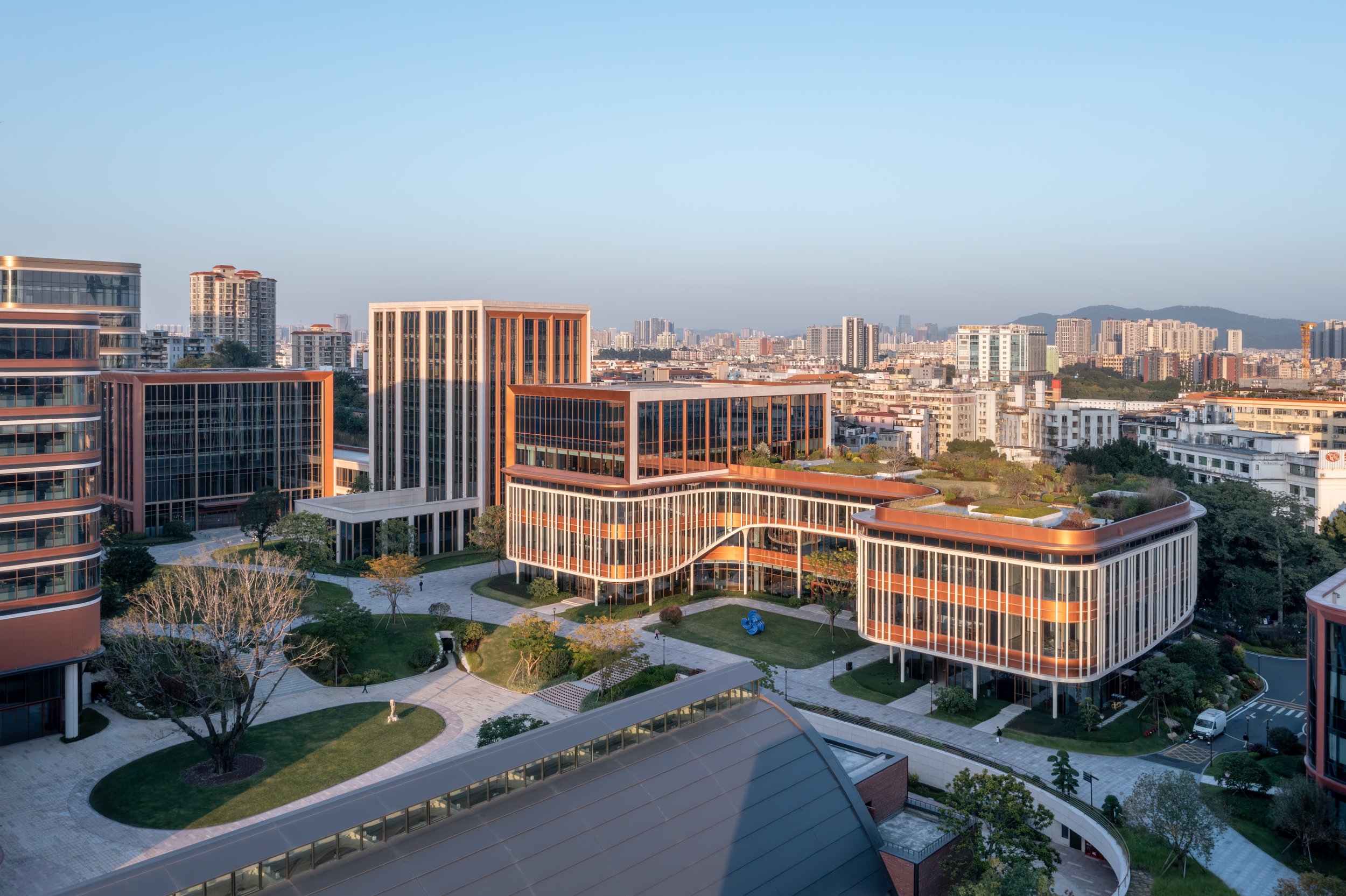
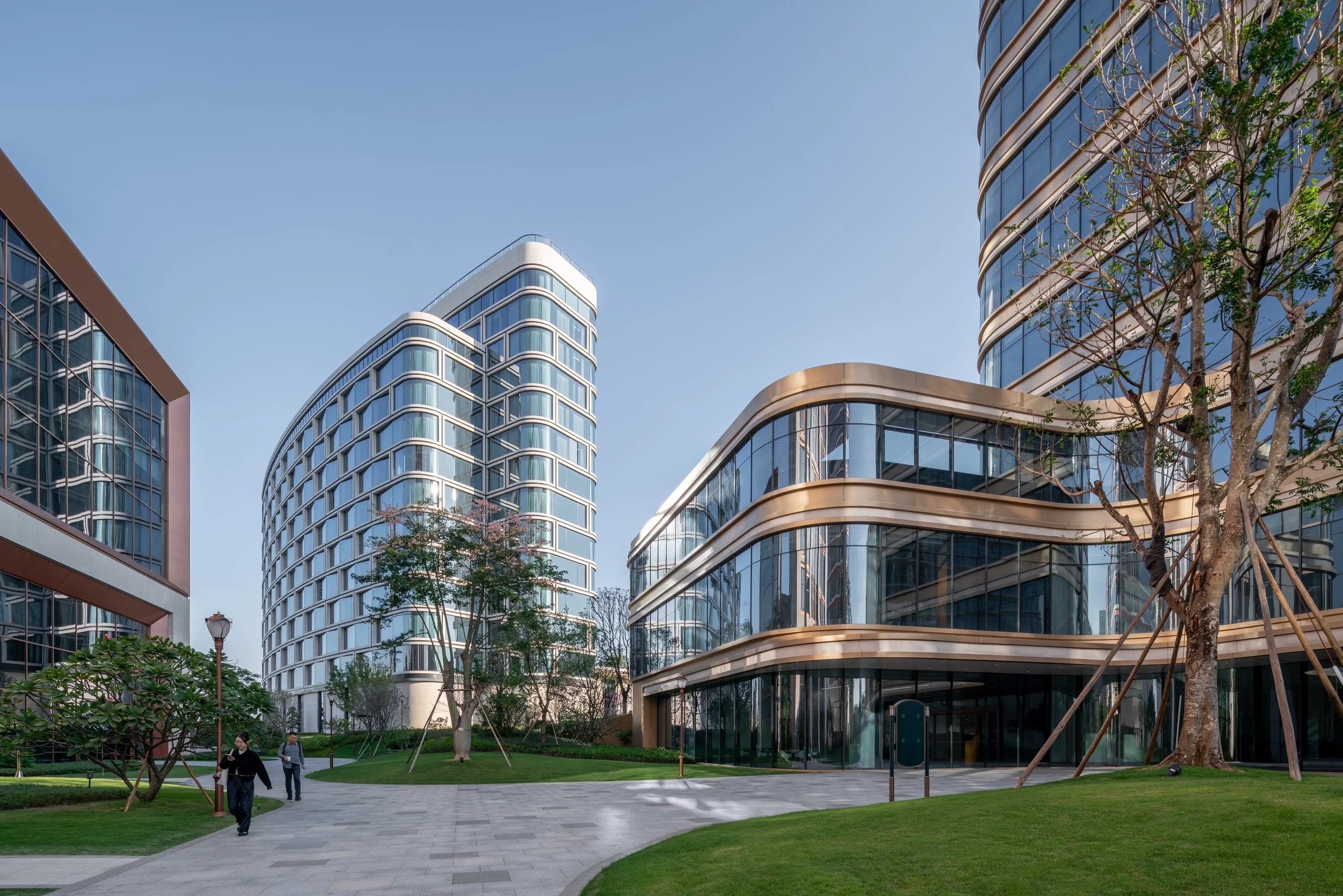
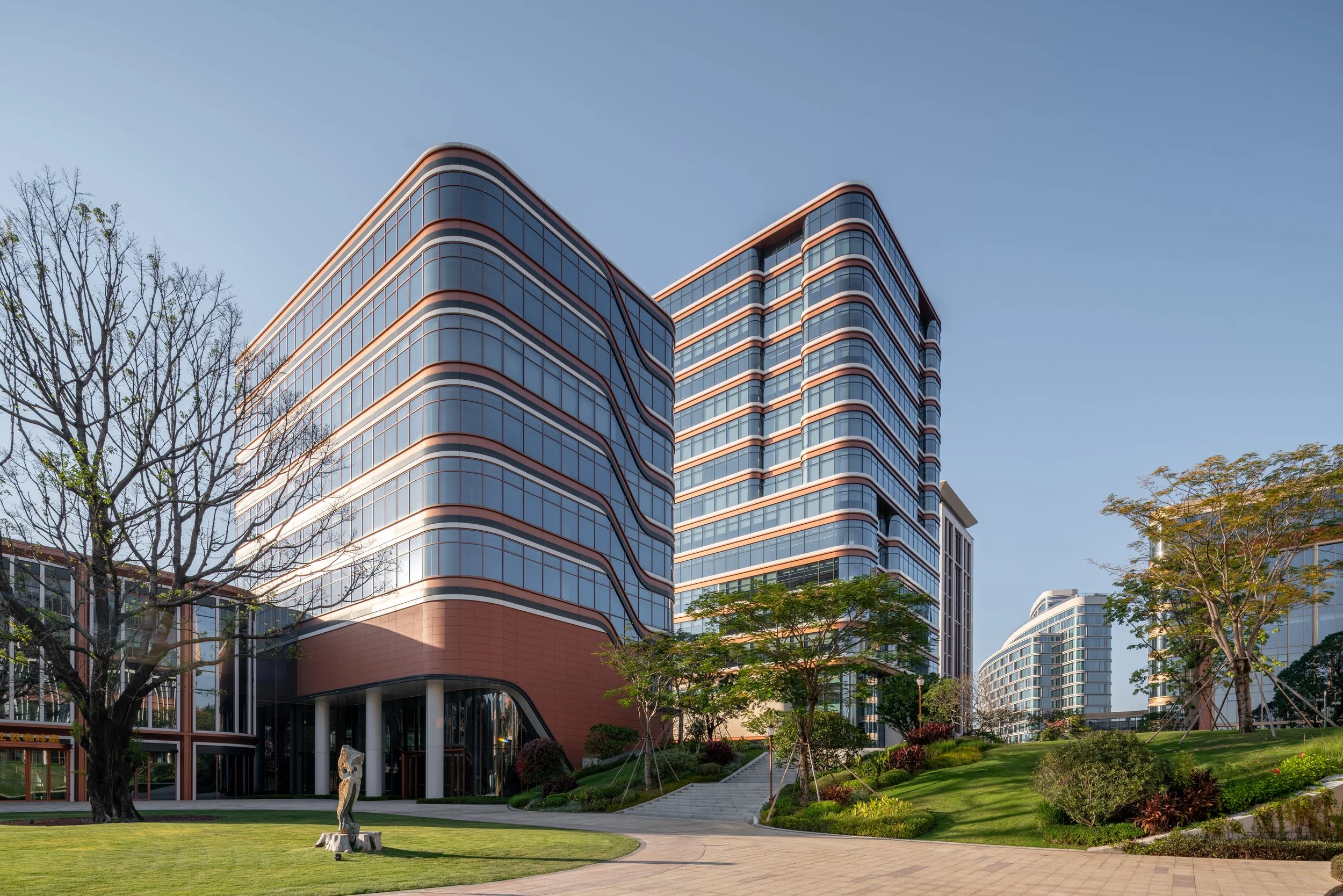
The buildings themselves act as containers for this sequence of spaces.
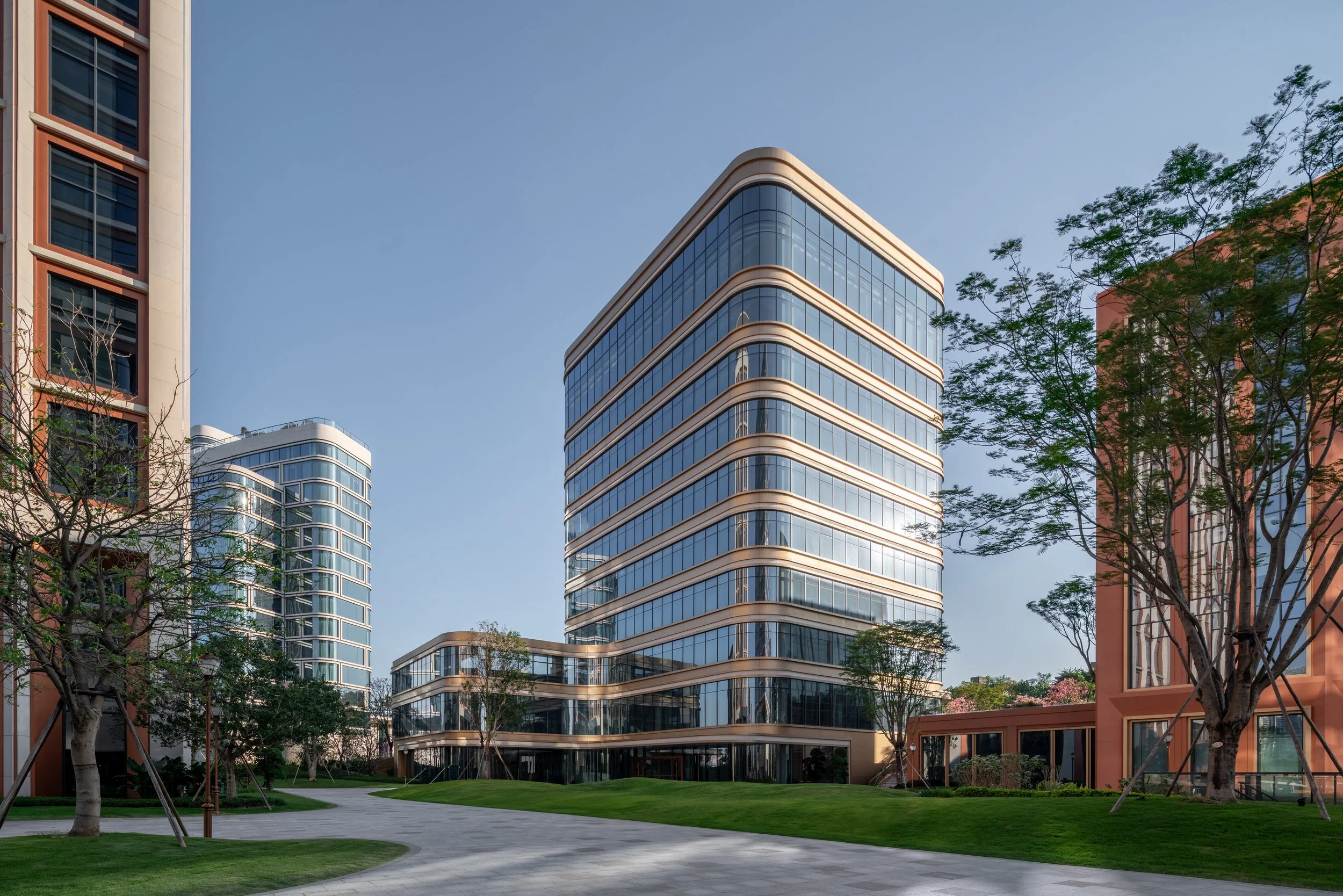
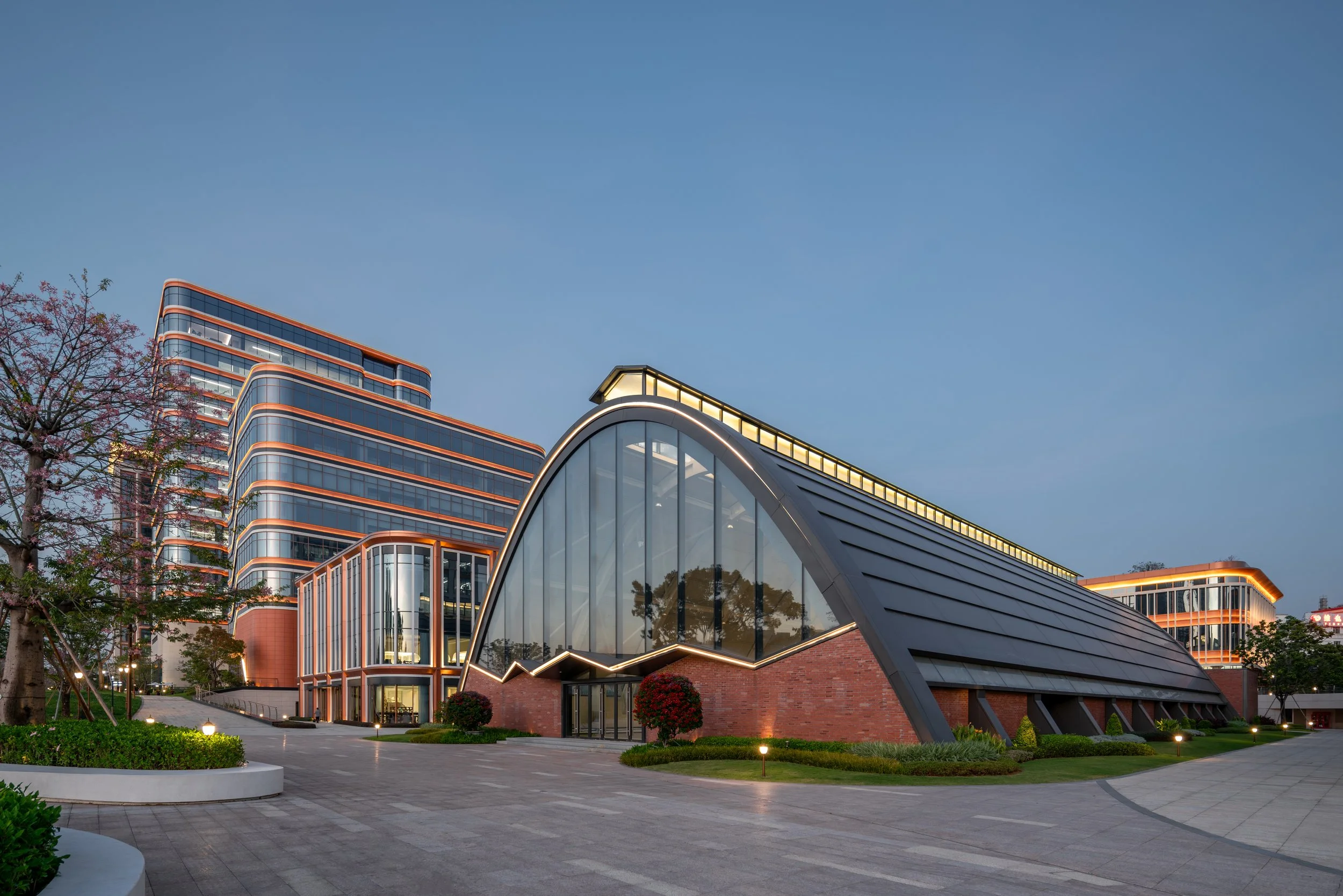
Rather than pursuing a singular architectural language, the architecture responds to differing programme and context: research offices, recreational facilities, cafés and restaurants, a hotel with banqueting and meeting spaces, and an exhibition pavilion formed from the adaptive reuse of a Grade A listed sugar factory. Each typology is distinct, yet all are unified by consistent attention to proportion, materiality, and the relationship between interior and exterior.
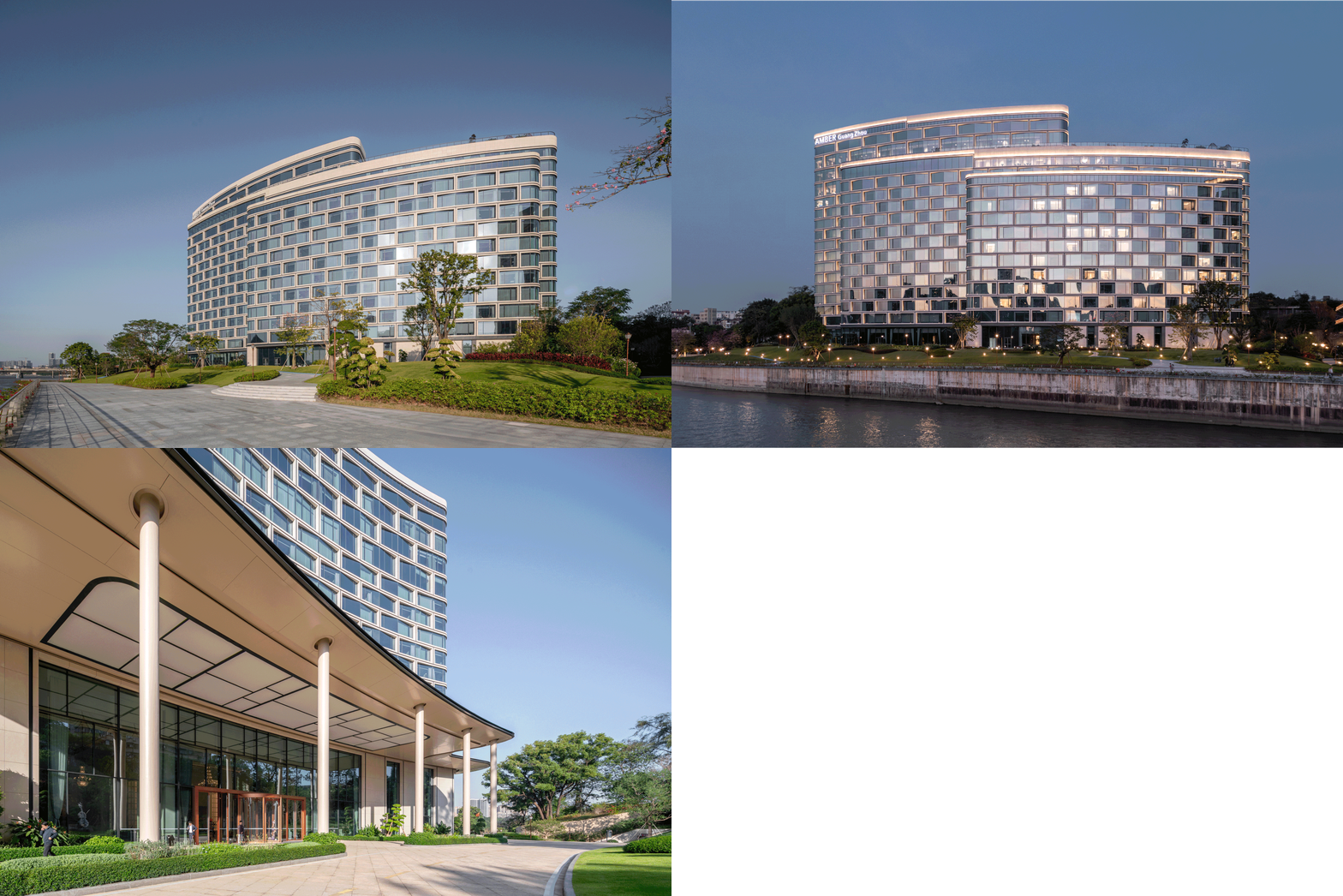
A defining characteristic of the campus is the dual condition of its façades.
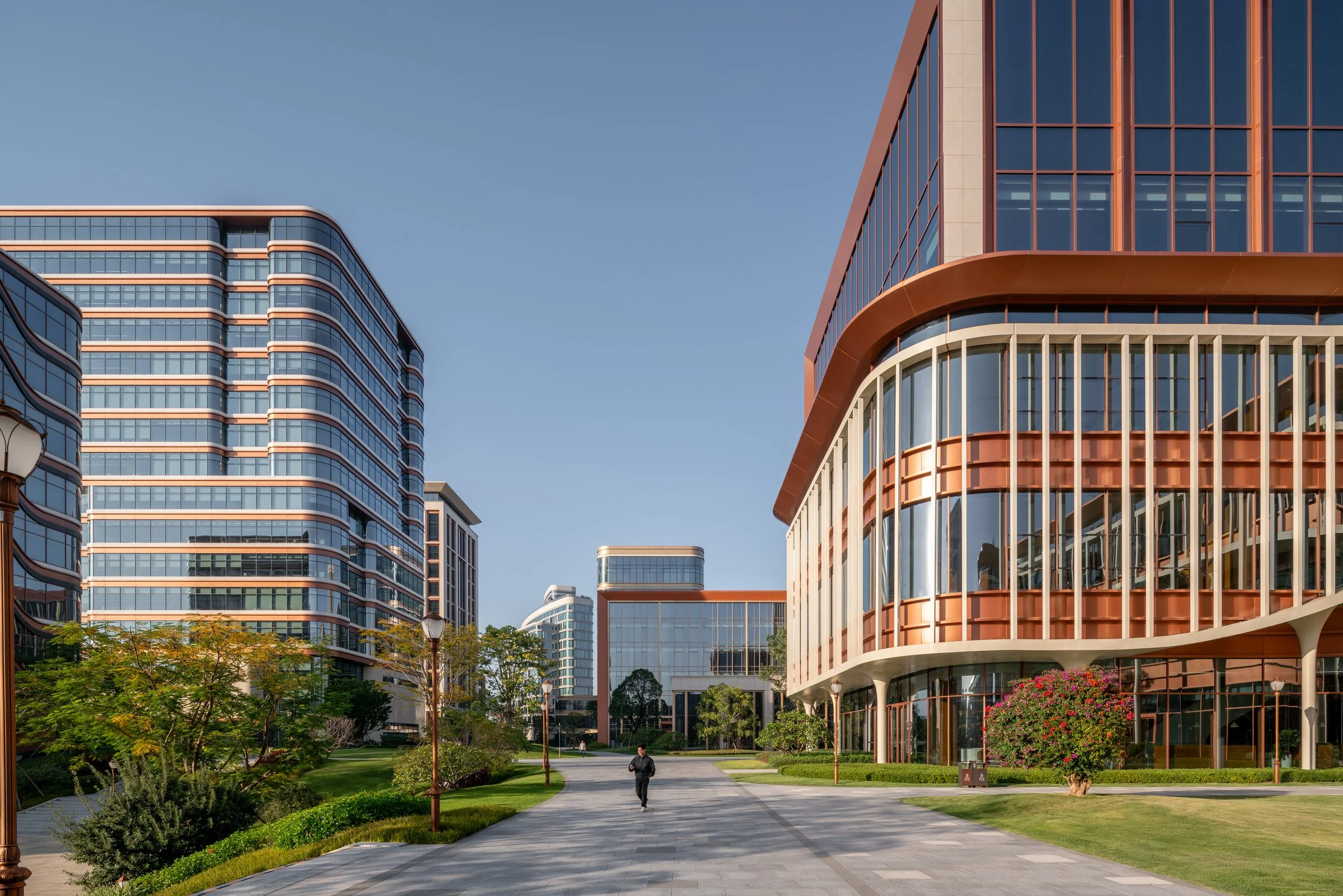
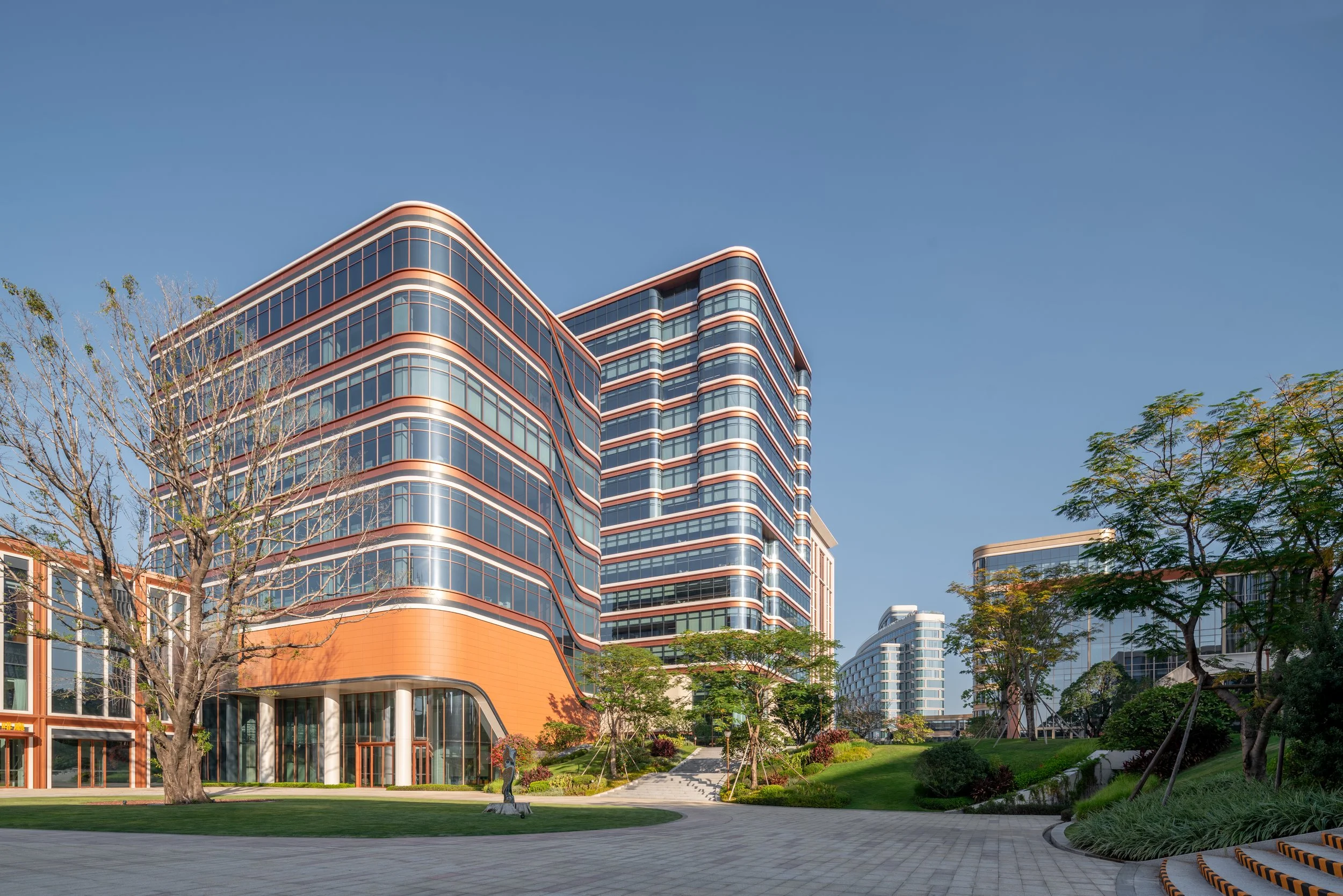
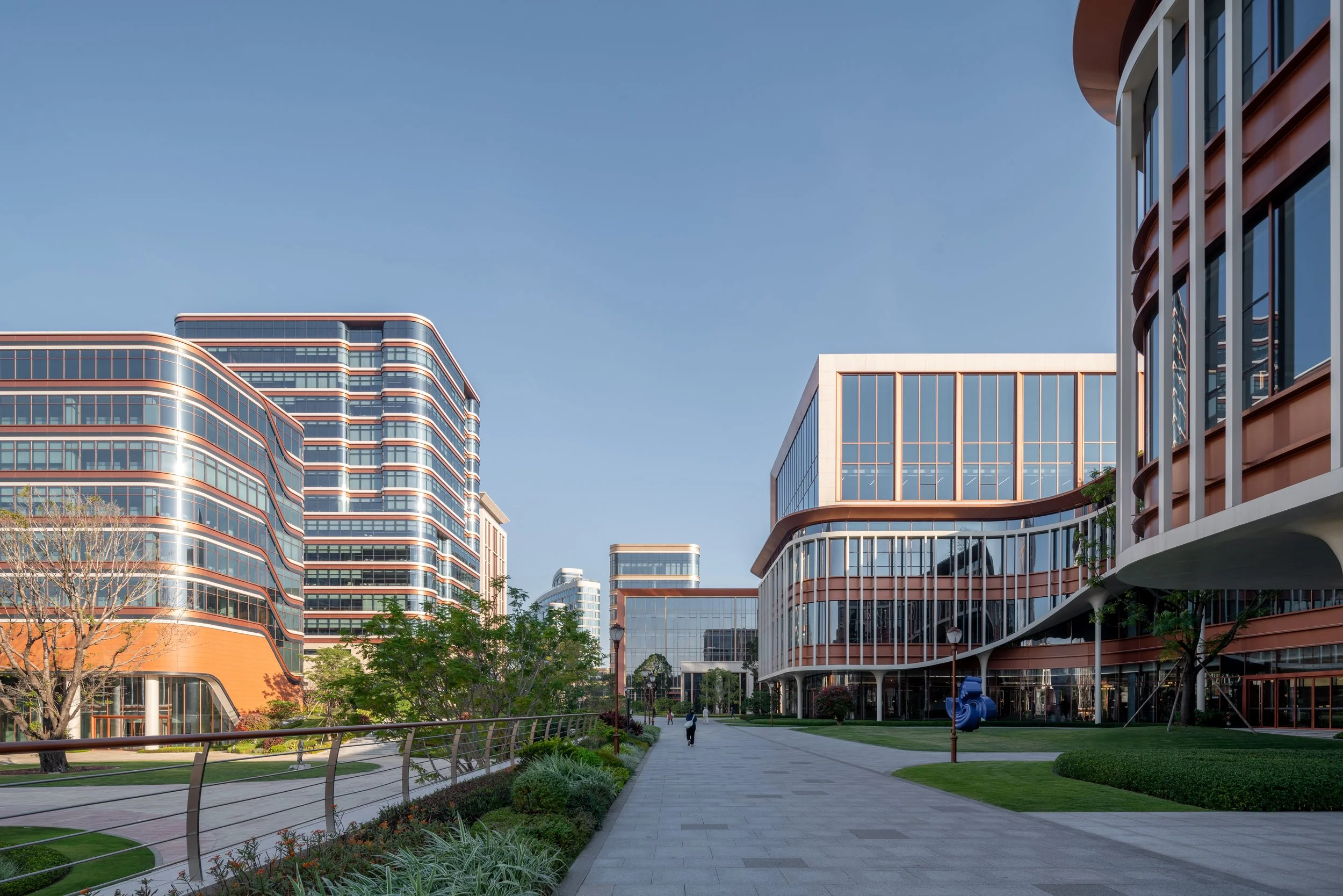
Buildings facing the river adopt a more civic scale and expression. Terraces, stepped forms, and horizontal emphasis engage the long view and the movement of water, contributing to the river’s urban frontage. In contrast, garden-facing elevations are more tactile and intimate, shaped by planting, texture, and shadow. Here, architecture recedes slightly, allowing landscape to take precedence and creating quieter environments for work, rest, and informal meeting.
This deliberate contrast reinforces the idea of the campus as both public city edge and internal garden world.
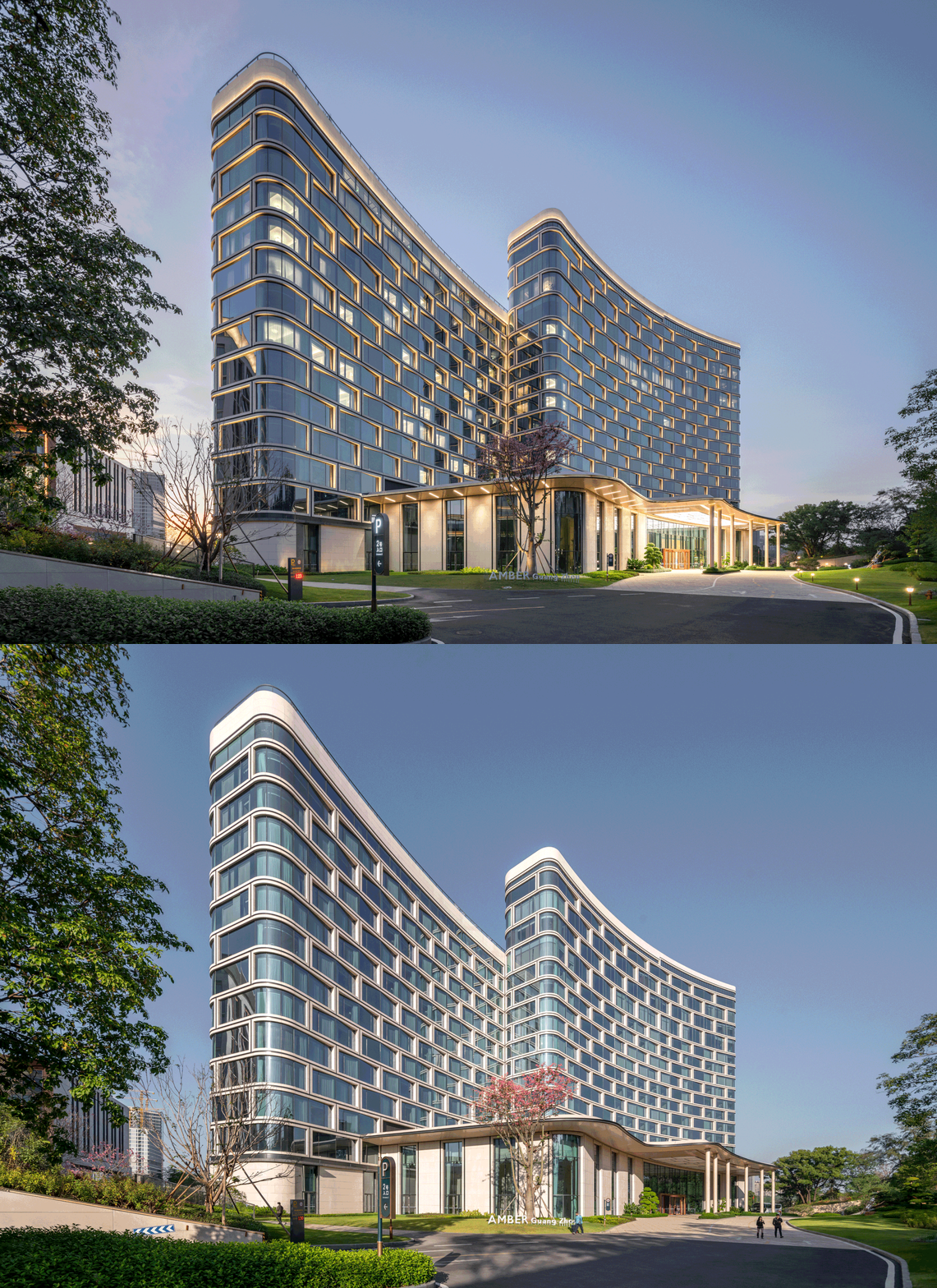
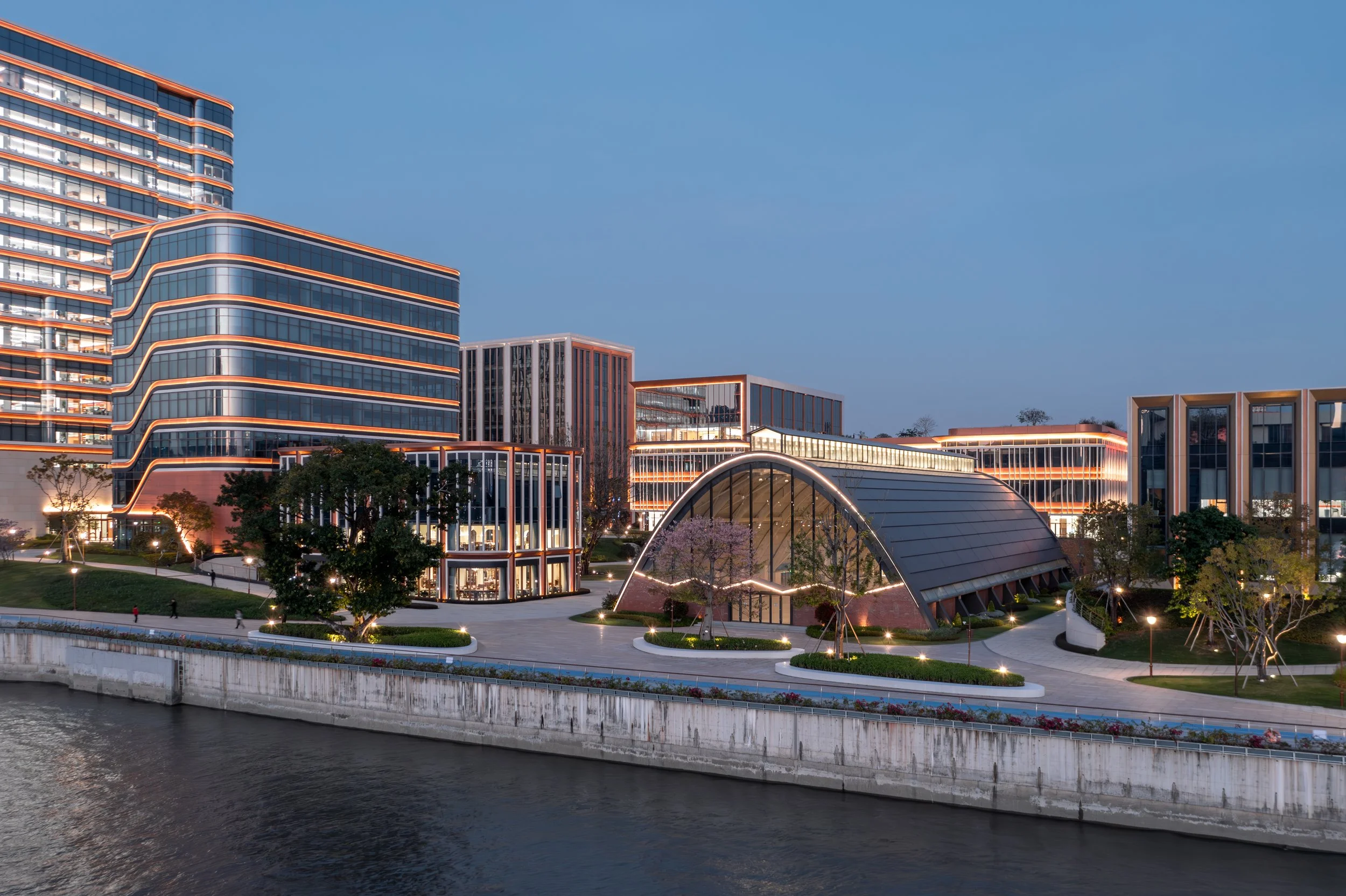
The urban riverside design of Huawei Guangzhou R&D Campus features terraces, stepped shapes, and horizontal lines (west side).
The side of Huawei Guangzhou R&D Campus facing the internal garden has a gentler feel (east side).
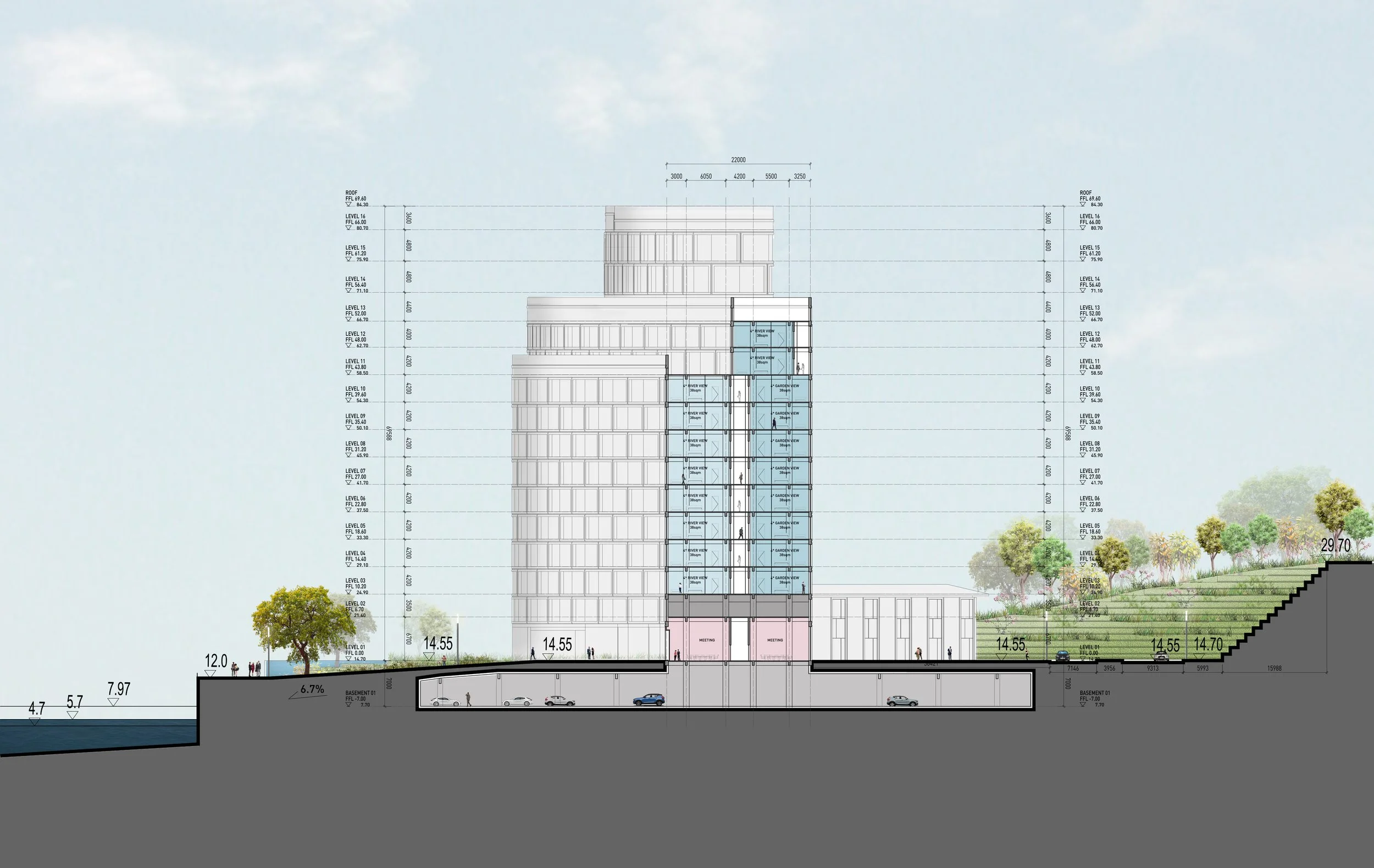
East-west transition from the riverside location to the interior of the park.
Landscape is not treated as decoration or residual green space, but as the connective tissue that binds the campus together.
Gardens, planted courtyards, and shaded routes mediate between different building types, soften transitions, and provide continuity across the site. The landscape strategy supports environmental performance, addressing climate, comfort, and microclimate, while also structuring social life, from everyday lunch breaks to larger gatherings associated with the hotel and exhibition spaces.
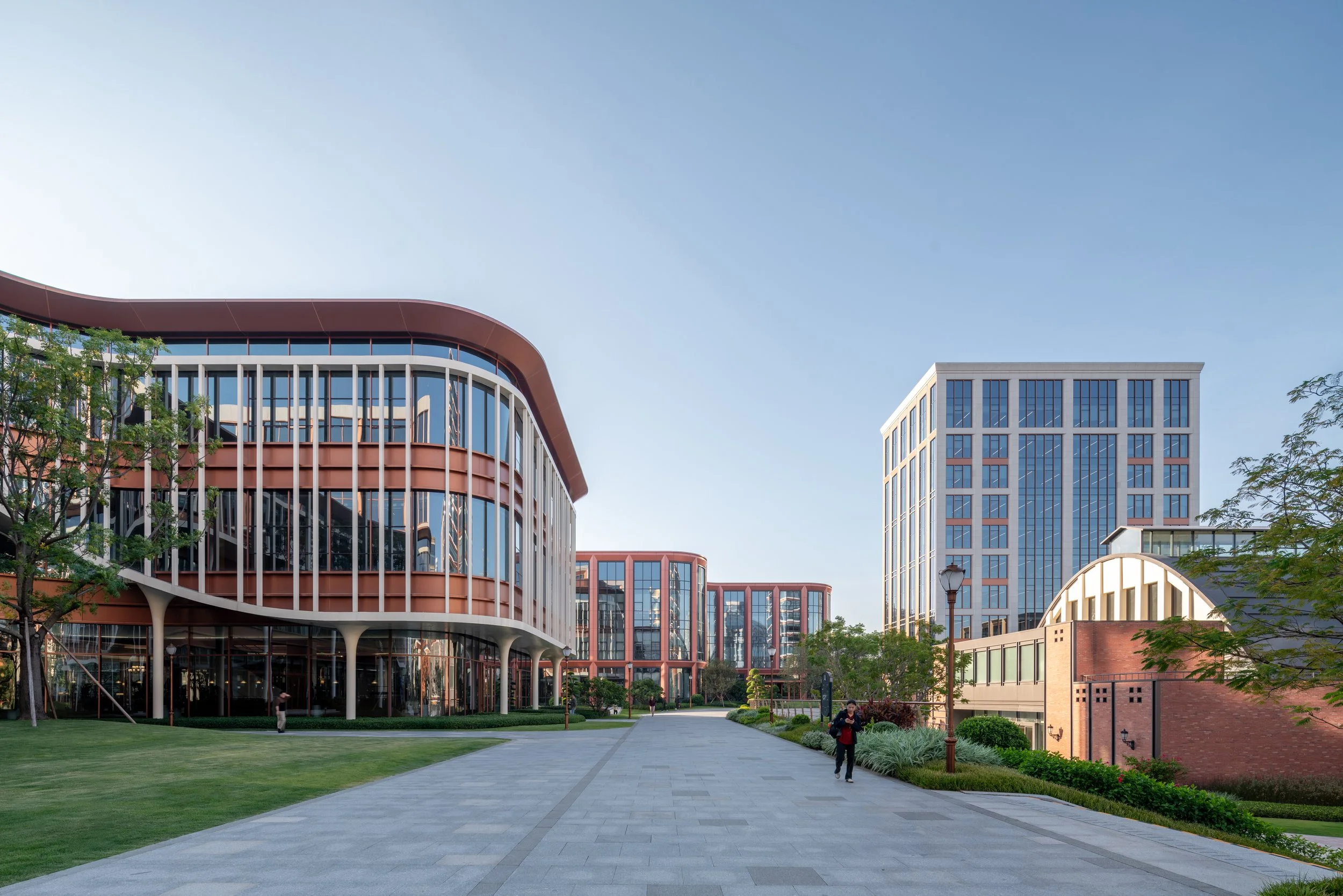
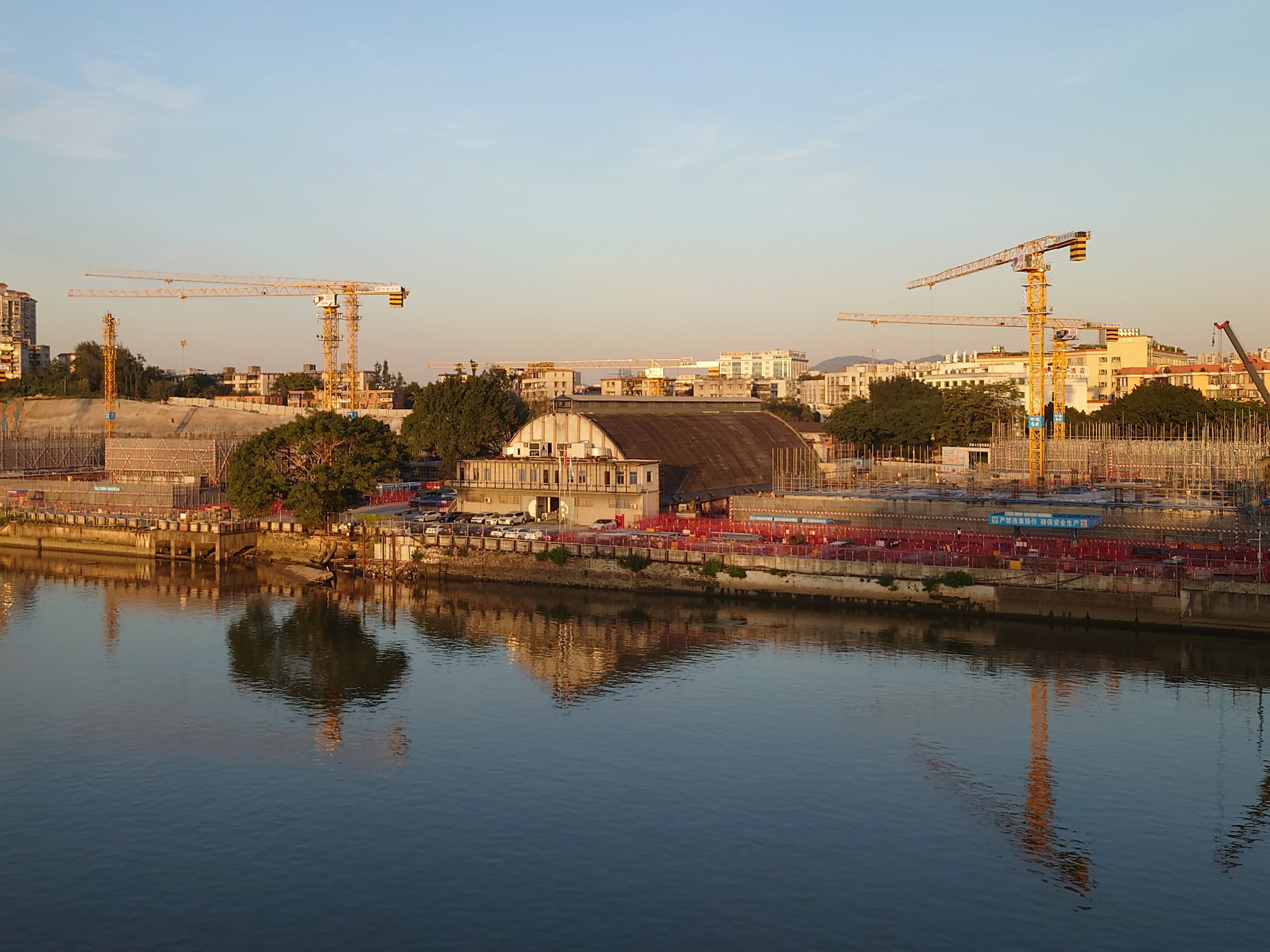
The transformation of the former sugar factory into an exhibition pavilion anchors the campus in the site’s industrial past. Rather than erasing this history, the project incorporates it as a cultural and spatial reference, allowing new forms of knowledge production to coexist with traces of earlier labour and manufacture. This act of reuse reinforces the campus’s identity as a layered urban place rather than a tabula rasa development.
Taken as a whole, the Huawei R&D Campus proposes a model for contemporary research environments that is grounded, humane, and urban. Innovation here is not isolated within buildings, but distributed across landscapes, routes, shared spaces, and daily rituals. By designing the campus as a sequence of connected rooms along the river, SPARK sought to create an environment in which intelligence is supported not only by technology, but by space, movement, encounter, and memory.
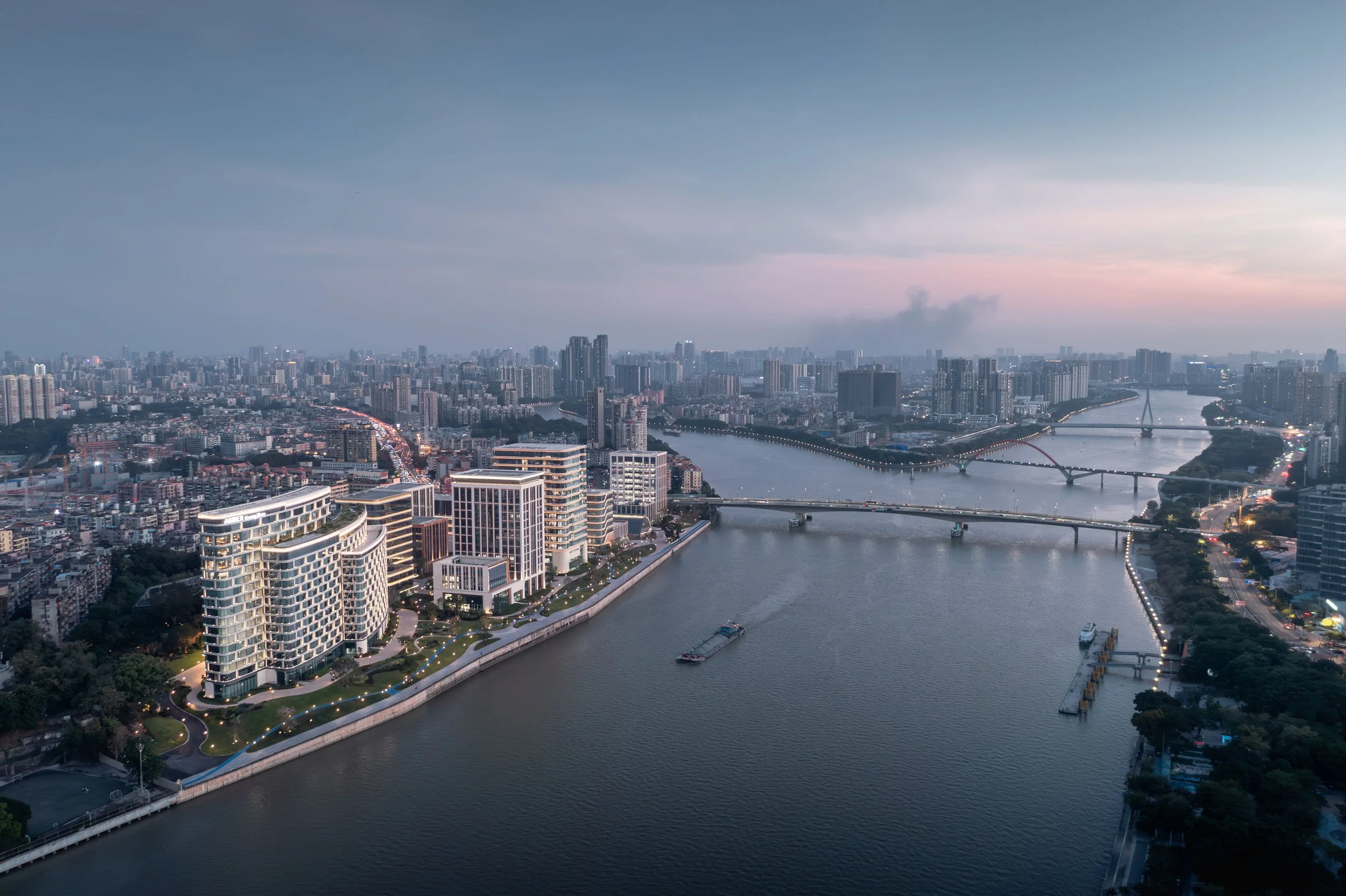
Aerial view of Huawei Guangzhou R&D Campus.