
From Home Farm to Alone Together: the analogue city in the age of artificial intimacy
Every generation inherits its own architectures of meeting.
For my parents, connection took place in churches, and cafés. For mine, in studios, clubs, pubs, and open offices. Today, connection has become an app a swipe, a profile, a fleeting signal that vanishes into a feed.

Across the world, more people are single than ever before. They live longer, marry later, or not at all. The social infrastructures that once generated serendipity the workplace, the neighbourhood, the club have thinned, replaced by digital expedience. The result is not a moral crisis but a spatial one: where do people go to feel seen?
The question extends far beyond youth or romance. It touches the full arc of life from young professionals seeking company in crowded cities to older adults navigating solitude in later years. The future of housing, care, and community all pivot around the same issue: how do we live well, when we increasingly live alone?
Alone together: the architecture of solitude
Alone Together began as a thought experiment about the fast-growing population of single-person households.
Rather than seeing singleness as an aberration, it treats it as a defining social condition of our time, one that architecture has barely begun to understand.
The project proposes a new typology: compact, self-contained dwellings gathered around shared “commons” gardens, supper rooms, reading lounges, laundries, sports and yoga facilities. Each unit offers autonomy; each communal space offers possibility. The architecture is porous enough for contact, yet private enough for retreat.
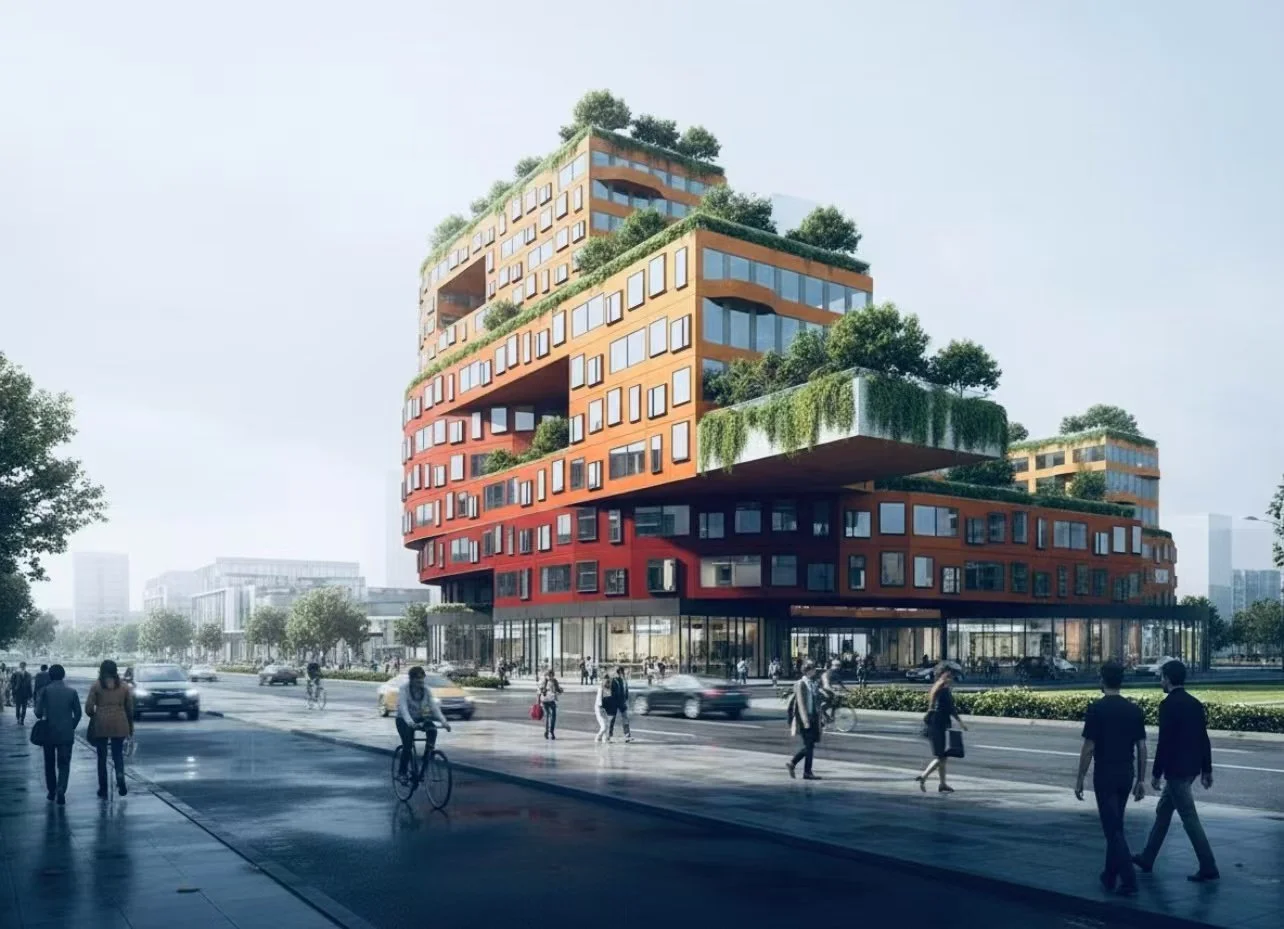
The layered terraces of Alone Together its visible loops, and programmed intersections of a broader demographic: not just the young, but anyone navigating the space between solitude and connection.
These are not co-living dormitories or co-housing enclaves; they are neighbourhood cloisters.
The idea is not to force interaction but to create ambient proximity, a new spatial rhythm that allows people to live “alone together.”
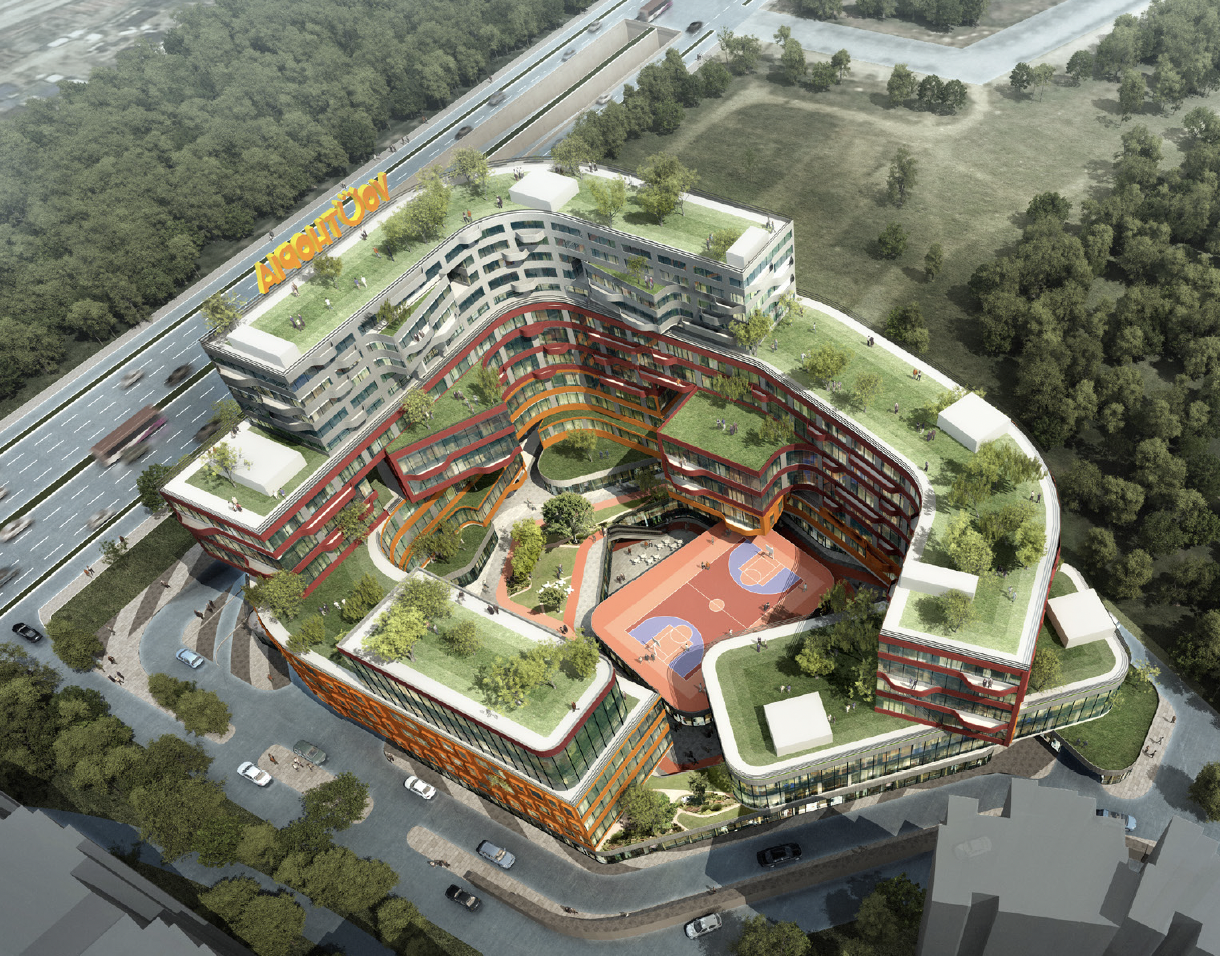
In a world where affection has been outsourced to algorithms, Alone Together reclaims the slow, analogue choreography of daily life: hanging laundry, sharing a meal, crossing paths at dusk. It’s a counterpoint to the dating app not a marketplace of desire, but an architecture of gentle possibility.
home farm: the architecture of care
If Alone Together explores the first half of the social arc, autonomy and selfhood Home Farm completes it with interdependence and care.
Designed as an intergenerational community where older residents grow food, share meals, and live independently within reach of assistance. Home Farm collapses the usual binary between “the cared for” and “the carer.”
Here, the architecture is the caregiver. Gardens, dining halls, and shaded walkways replace clinics and corridors.
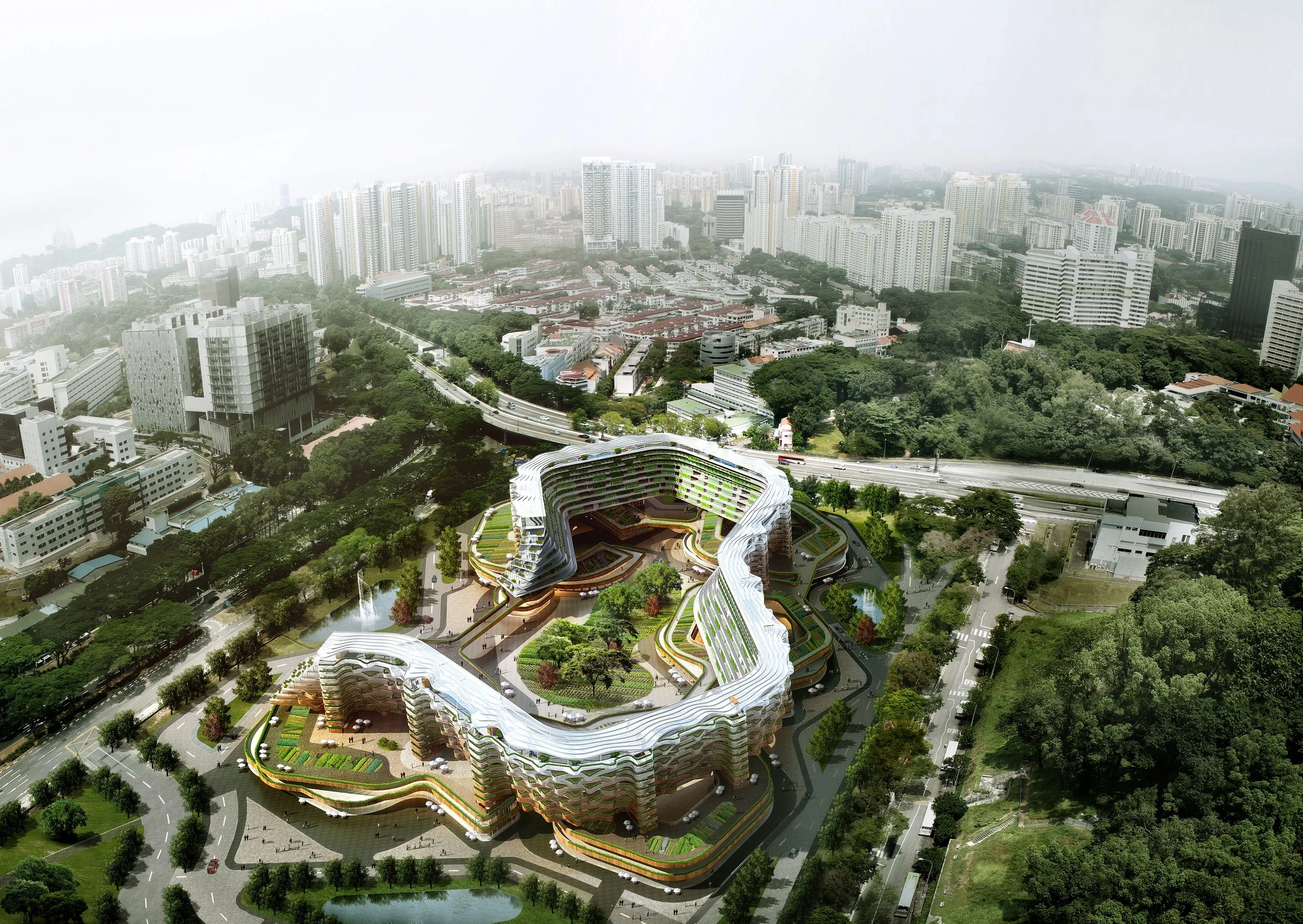
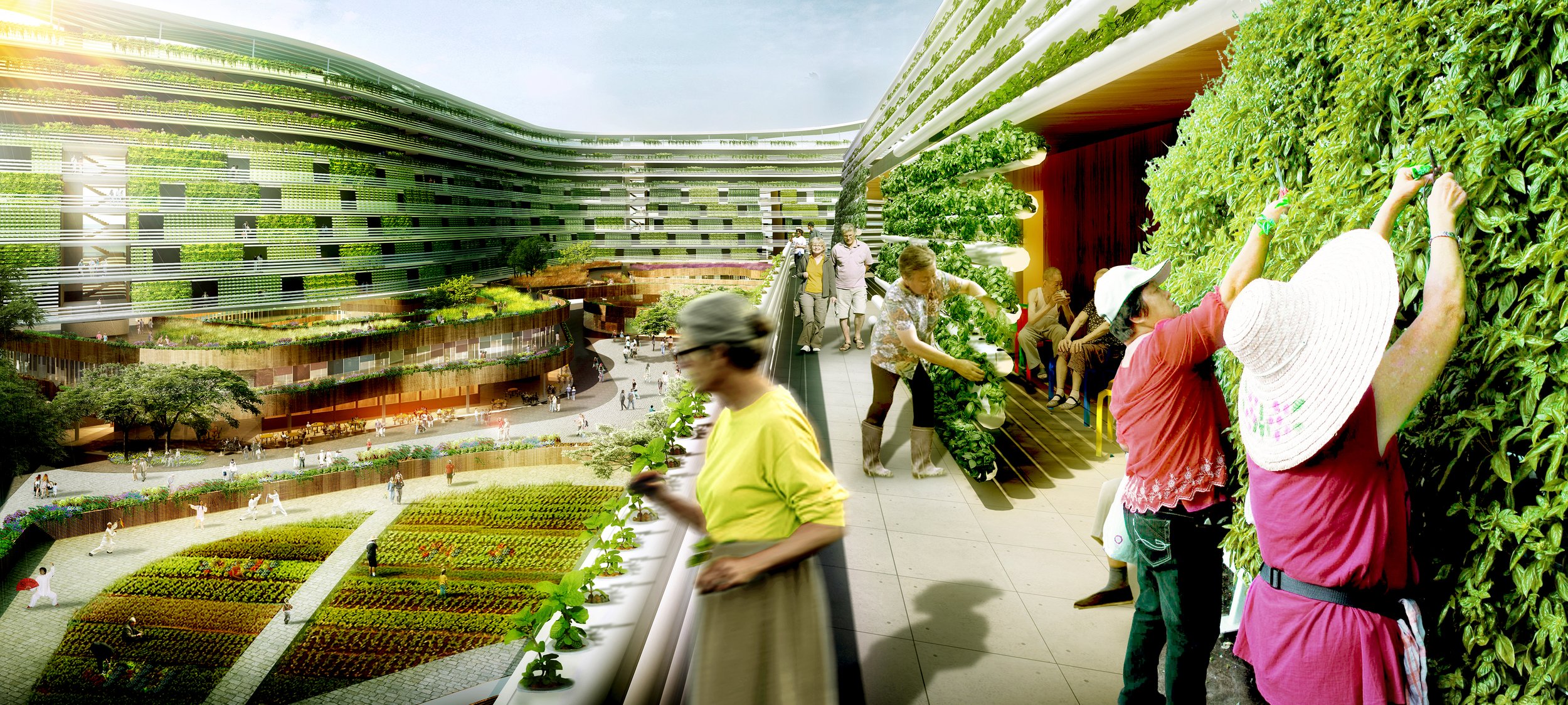
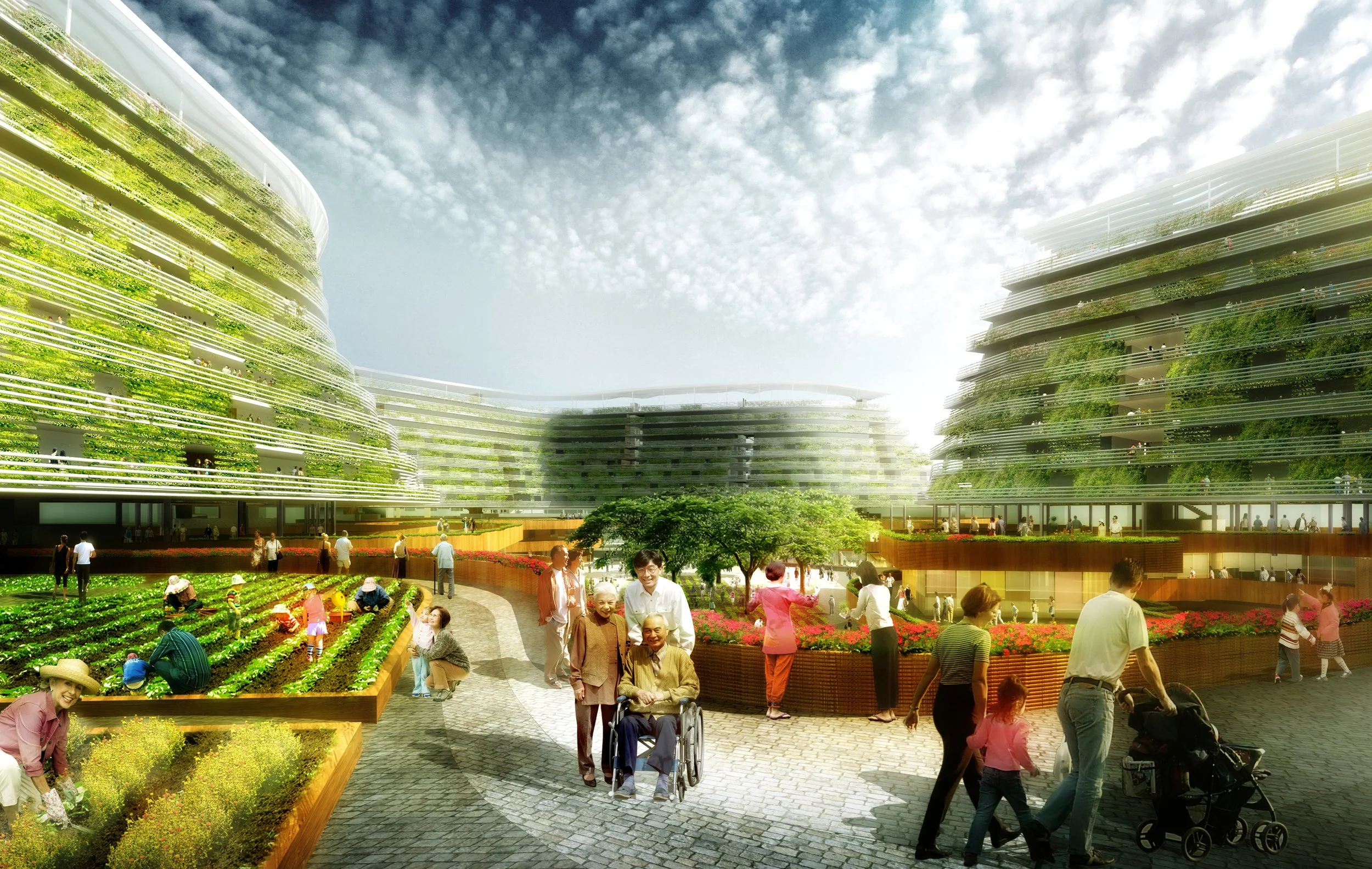
Both projects address a shared anxiety of modern life: isolation, whether through too much independence or too much dependence.
They propose different but complementary responses:
Alone Together restores connection to solitude.
Home Farm restores dignity to dependency.
Together they form a new typology for the contemporary city a continuum of living that acknowledges how human needs shift not just with age, but with circumstance.
from gutenberg to gpt: the great levelling
To understand these architectures, it helps to look beyond buildings.
Technological revolutions have always redefined the conditions of being human.
When Gutenberg’s press appeared in the fifteenth century, it liberated knowledge from the few and gave it to the many. The printed word became the first mass technology of thought. It taught us to read and in doing so, changed what it meant to think.

AI is our modern equivalent. It dismantles the scarcity of expertise, automating skills once thought uniquely human, writing, drawing, reasoning. It is an extraordinary leveller: as the Gutenberg’s press democratised literacy, AI democratizes cognition.
But this levelling comes at a cost. When intelligence becomes abundant, attention becomes scarce.
In a world that can simulate almost everything, the analogue, the unrepeatable, the slow and perhaps what is felt becomes our last true luxury.
THE LAST ANALOGUE
Architecture, like love, is stubbornly analogue.
It cannot be digitised without losing its meaning. It requires touch, time, and weather. It demands the friction that algorithms try to erase.
That is why, in the age of AI, architecture matters more, not less. It holds the sensory ground on which empathy survives. It reminds us that belonging begins not in data, but in presence, in the warmth of a chair in the sun, in the rhythm of a neighbour’s footsteps, in the shared act of tending something that grows.
Home Farm and Alone Together are not simply typologies for living; they are acts of resistance. They protect what cannot be flattened: slowness, care, proximity, grace.
They remind us that architecture’s task is not to predict the future, but to humanise it.
If Gutenberg gave humanity the power to read, and AI gives us the power to reason, architecture must teach us once again how to feel how to dwell in a world that thinks too quickly, and touches too little.