Completed | 2026
119,295 sqm | Planning, Mixed Use, Office, Retail, Placemaking, Regeneration, Waterfront, R&D Facilities
Client | Huawei Technologies Co., Ltd
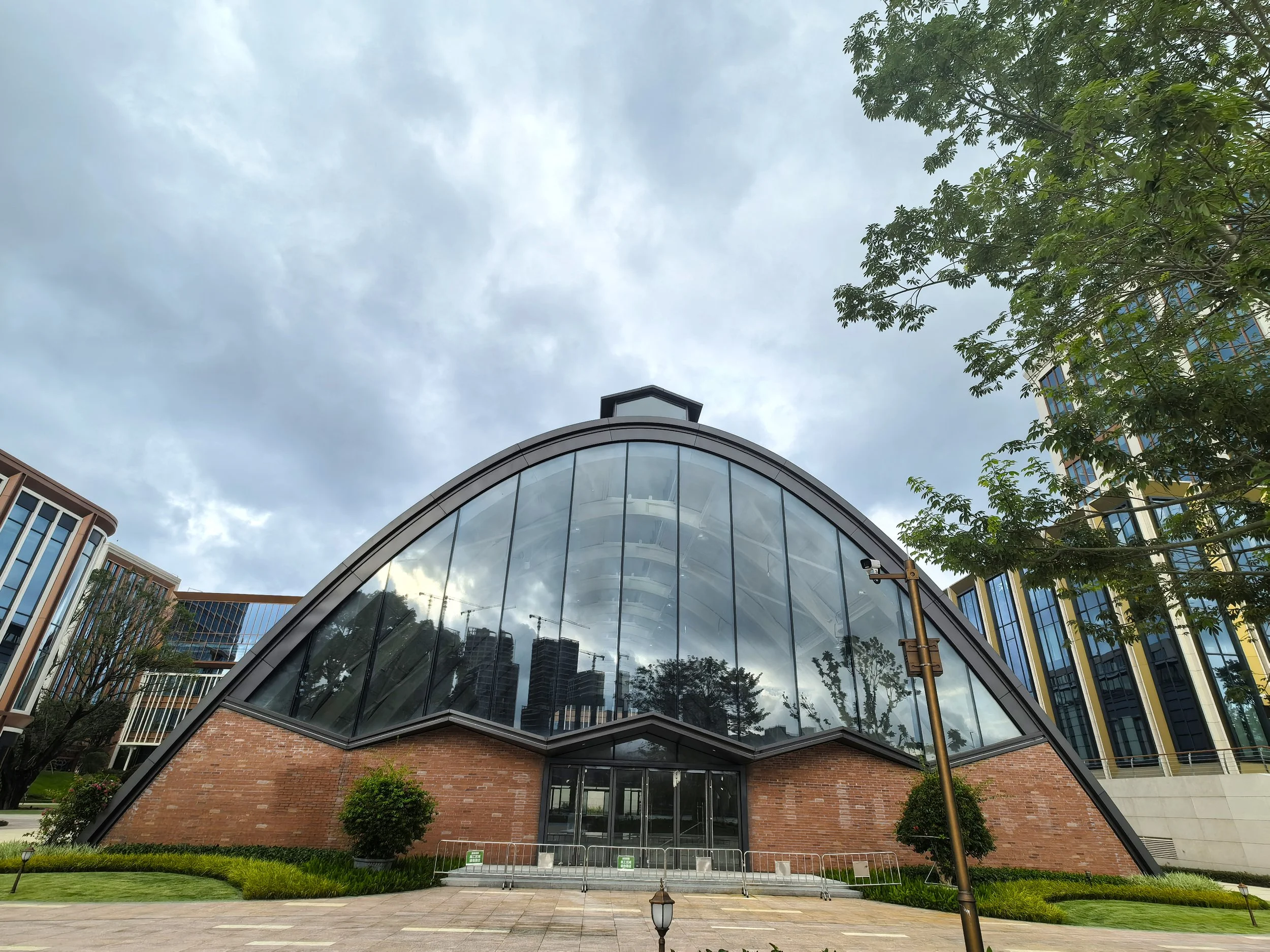
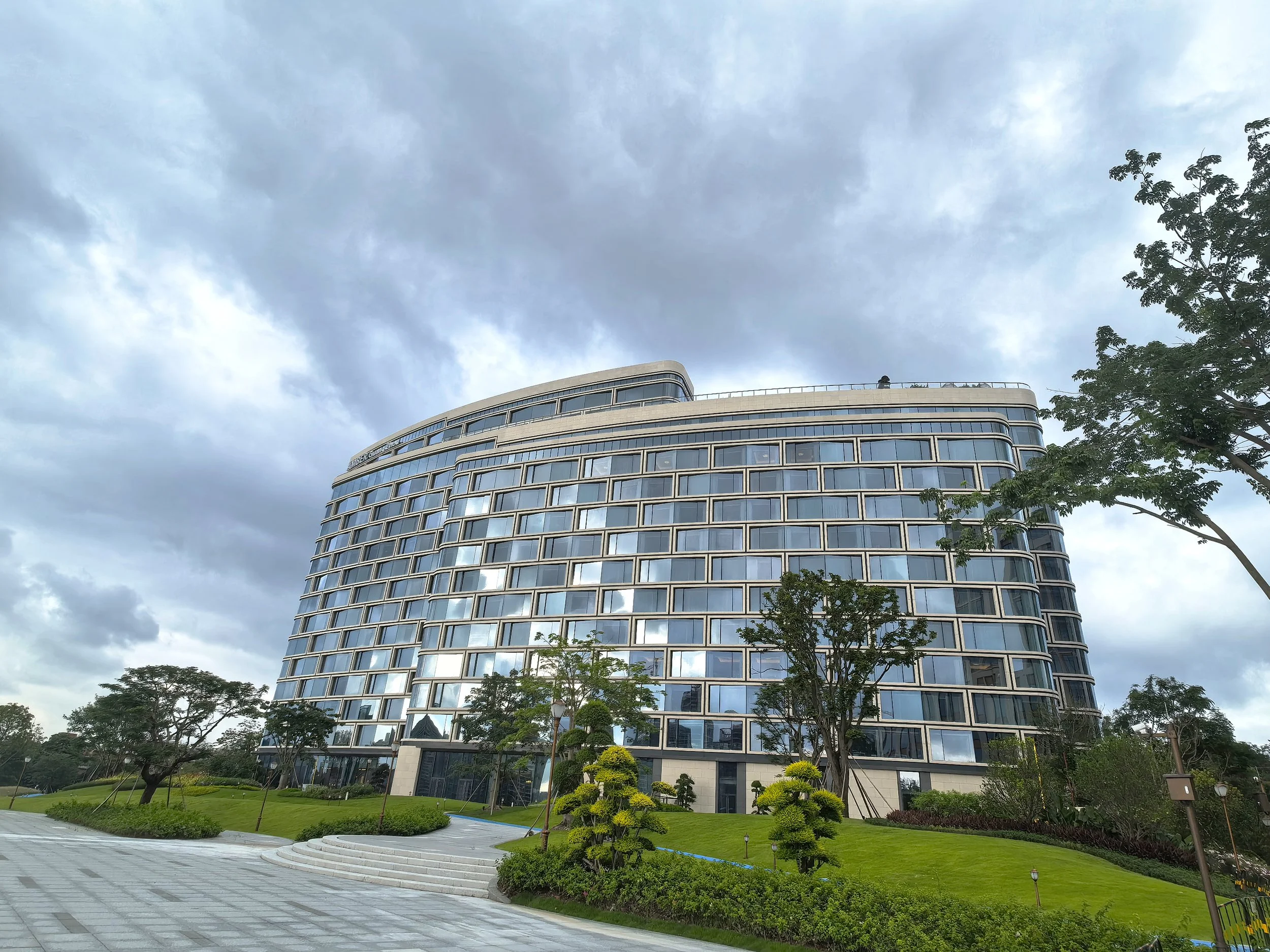
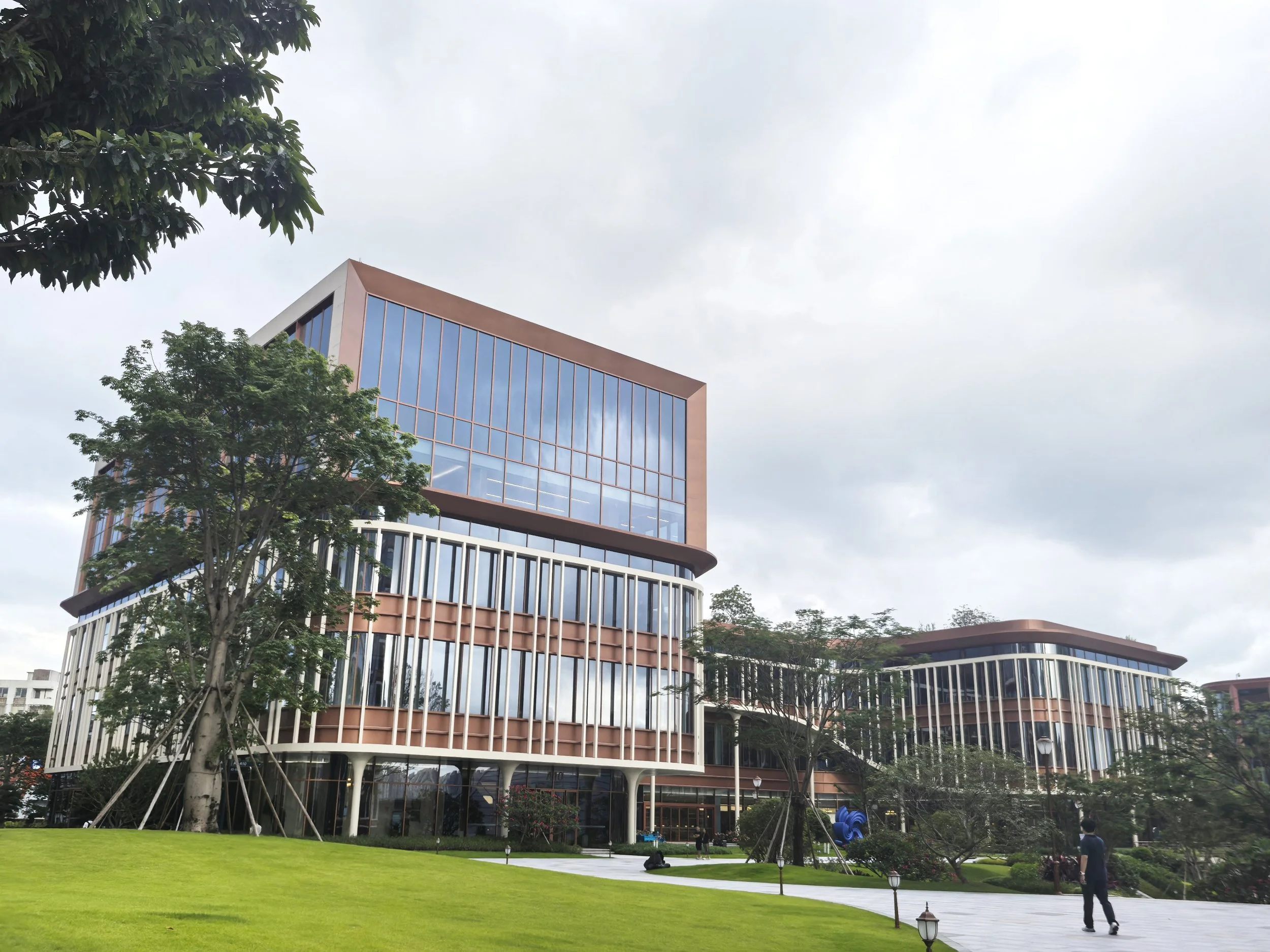
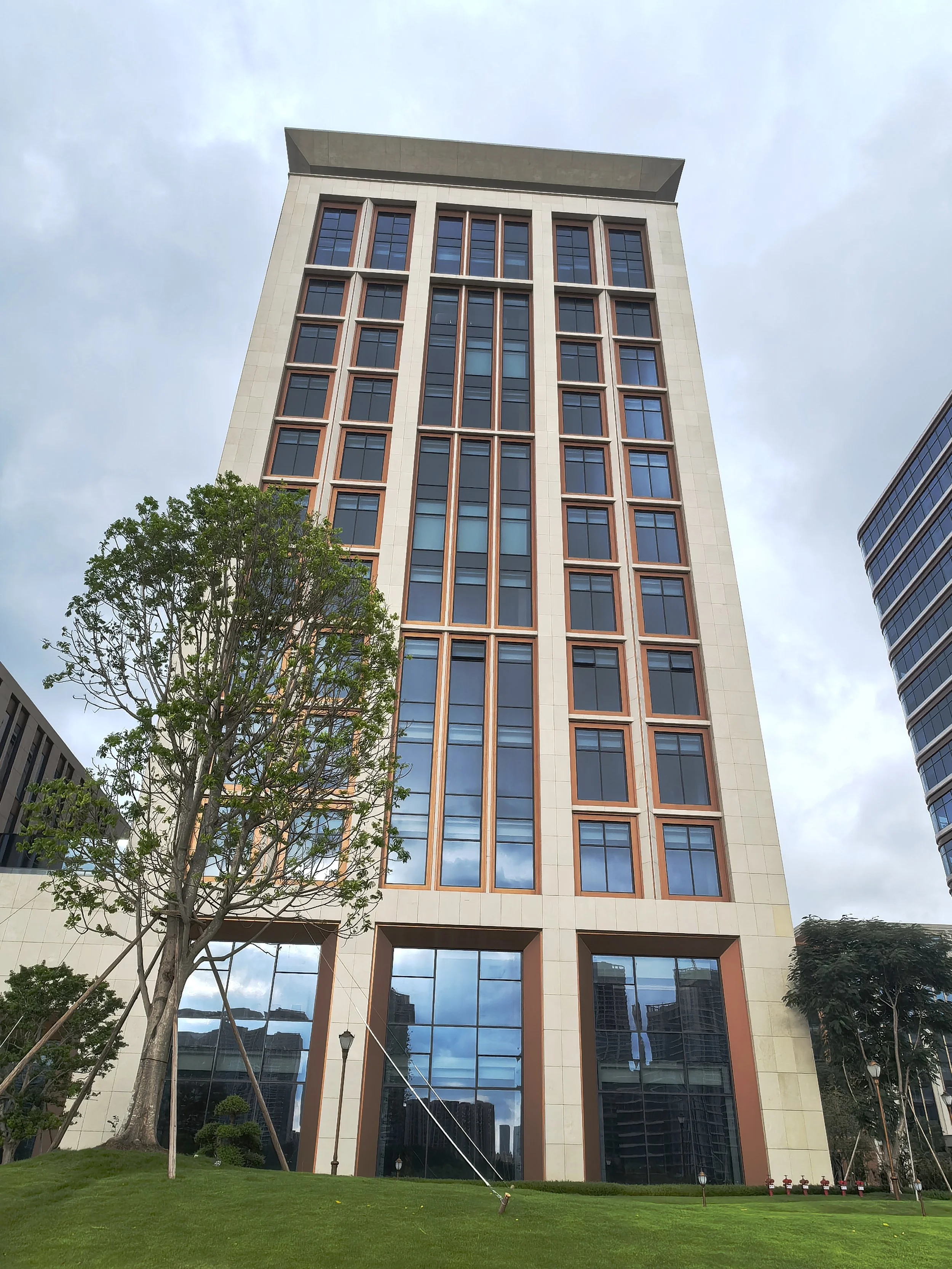
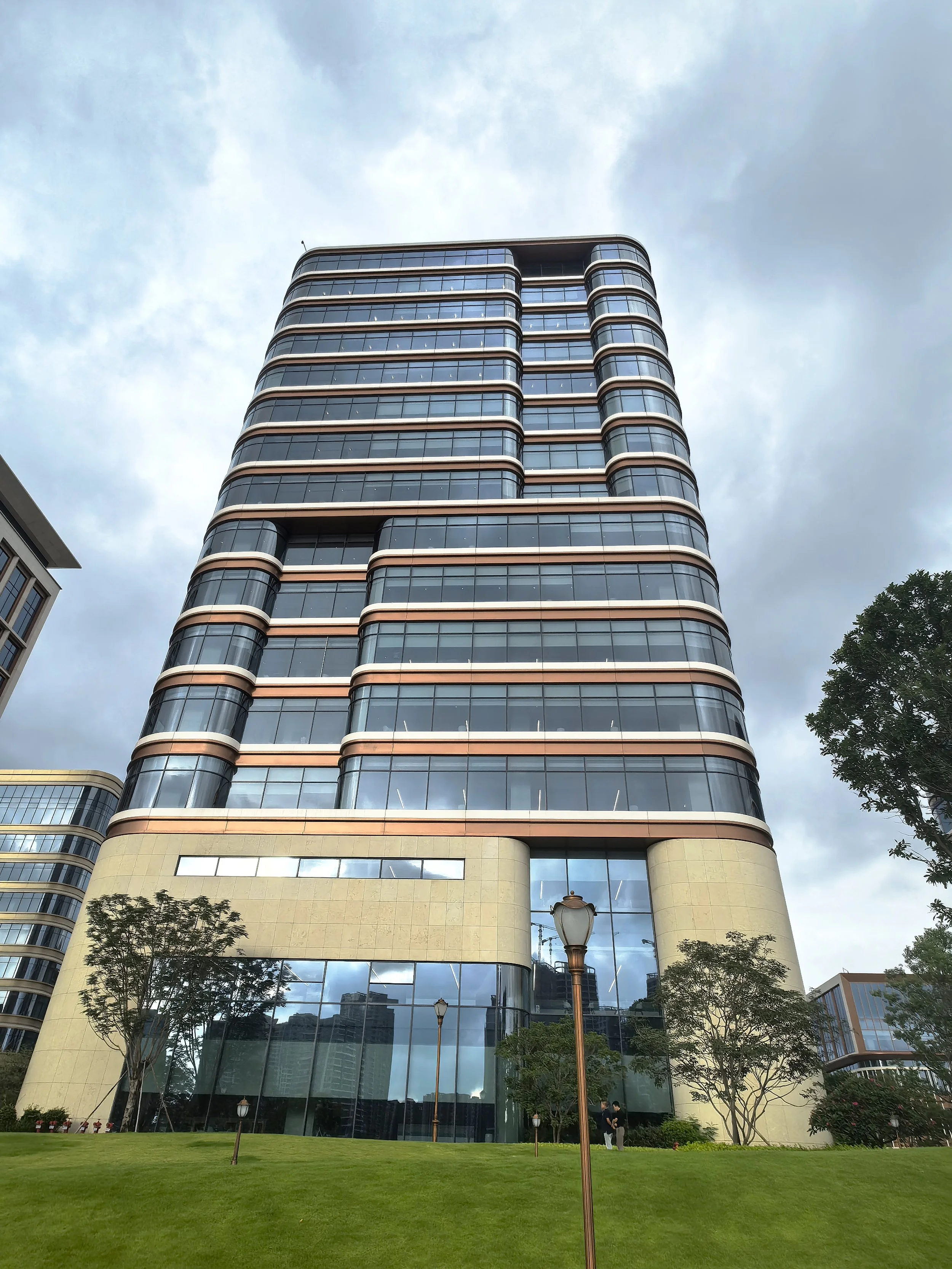
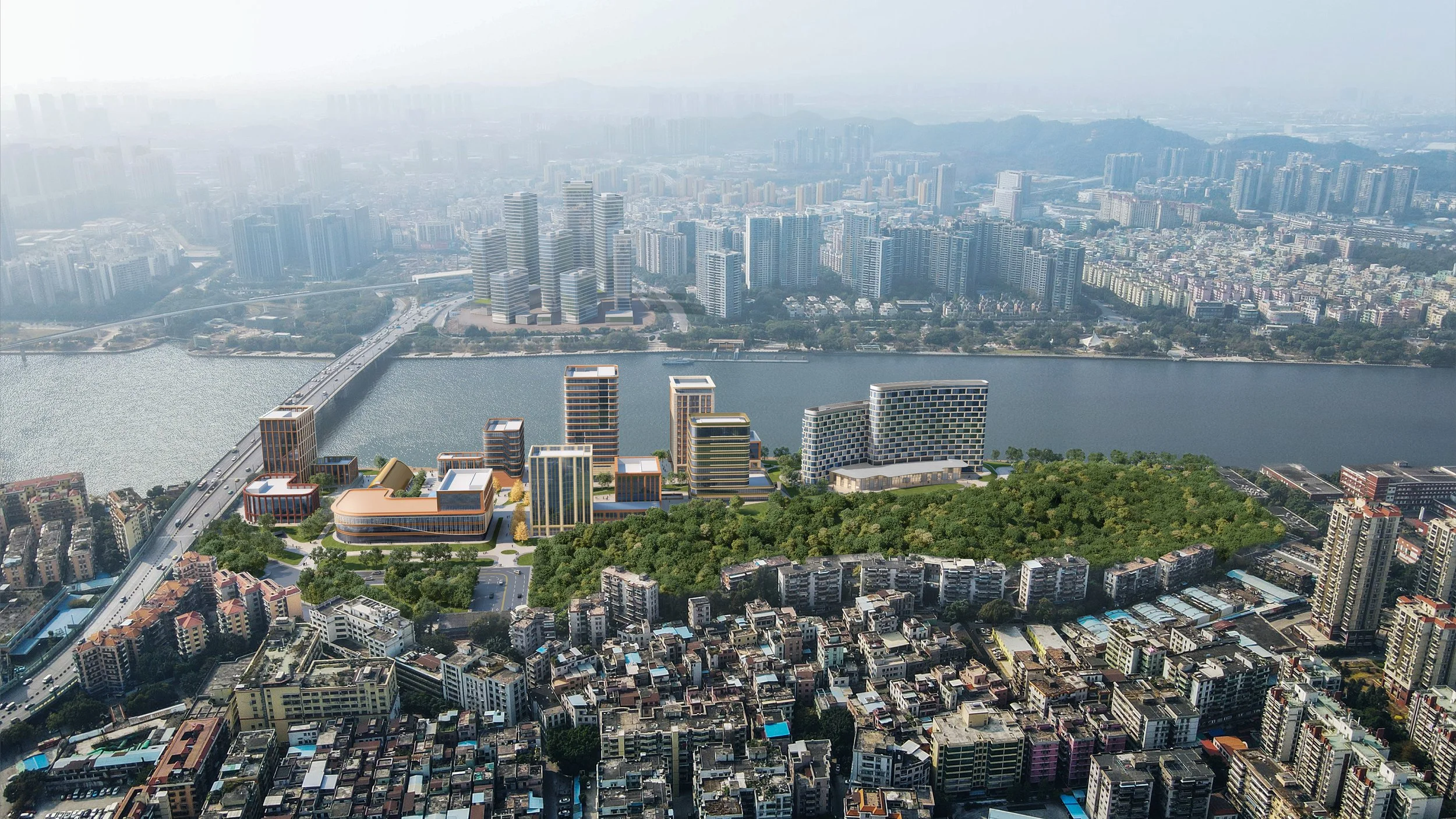
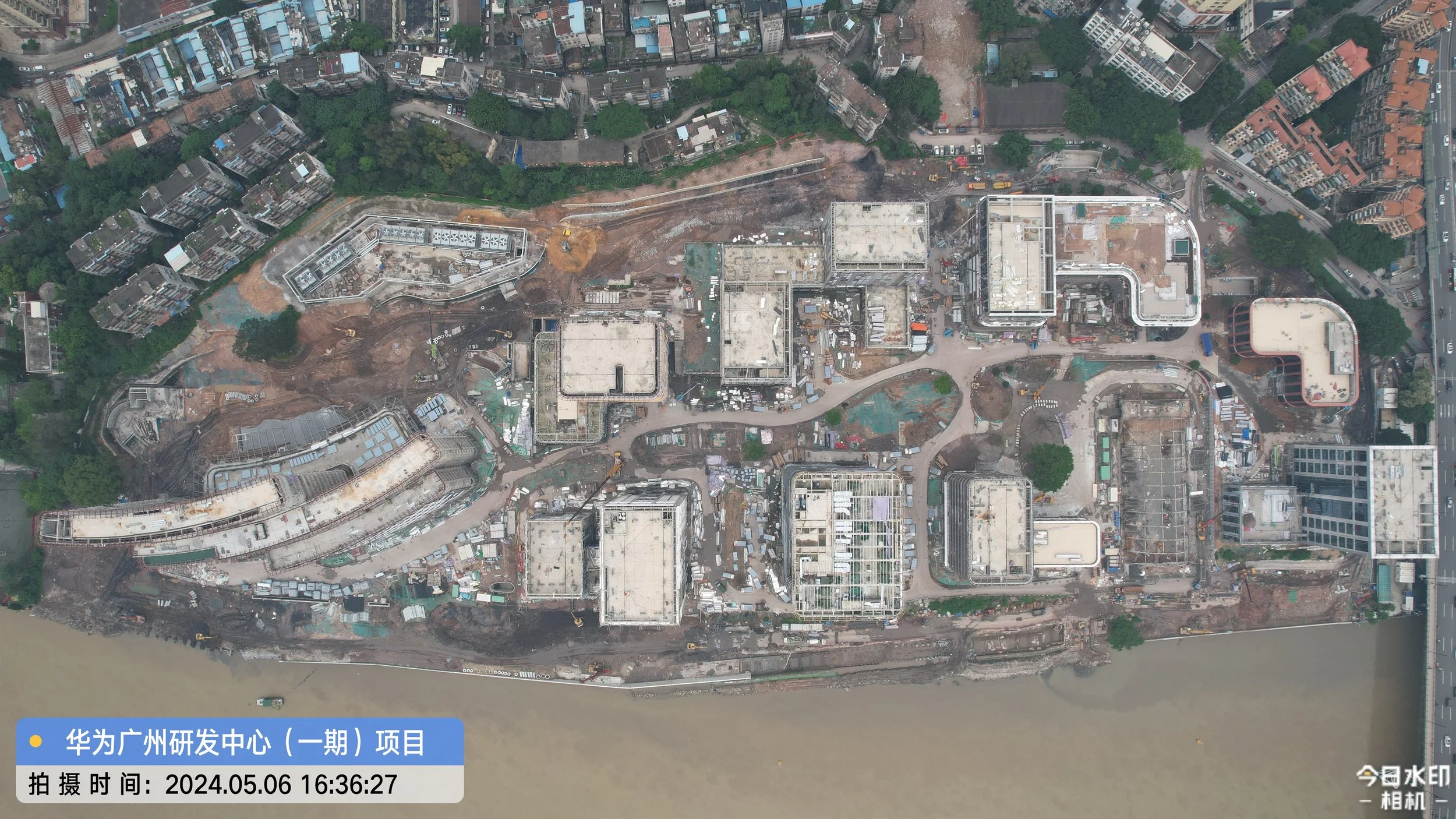
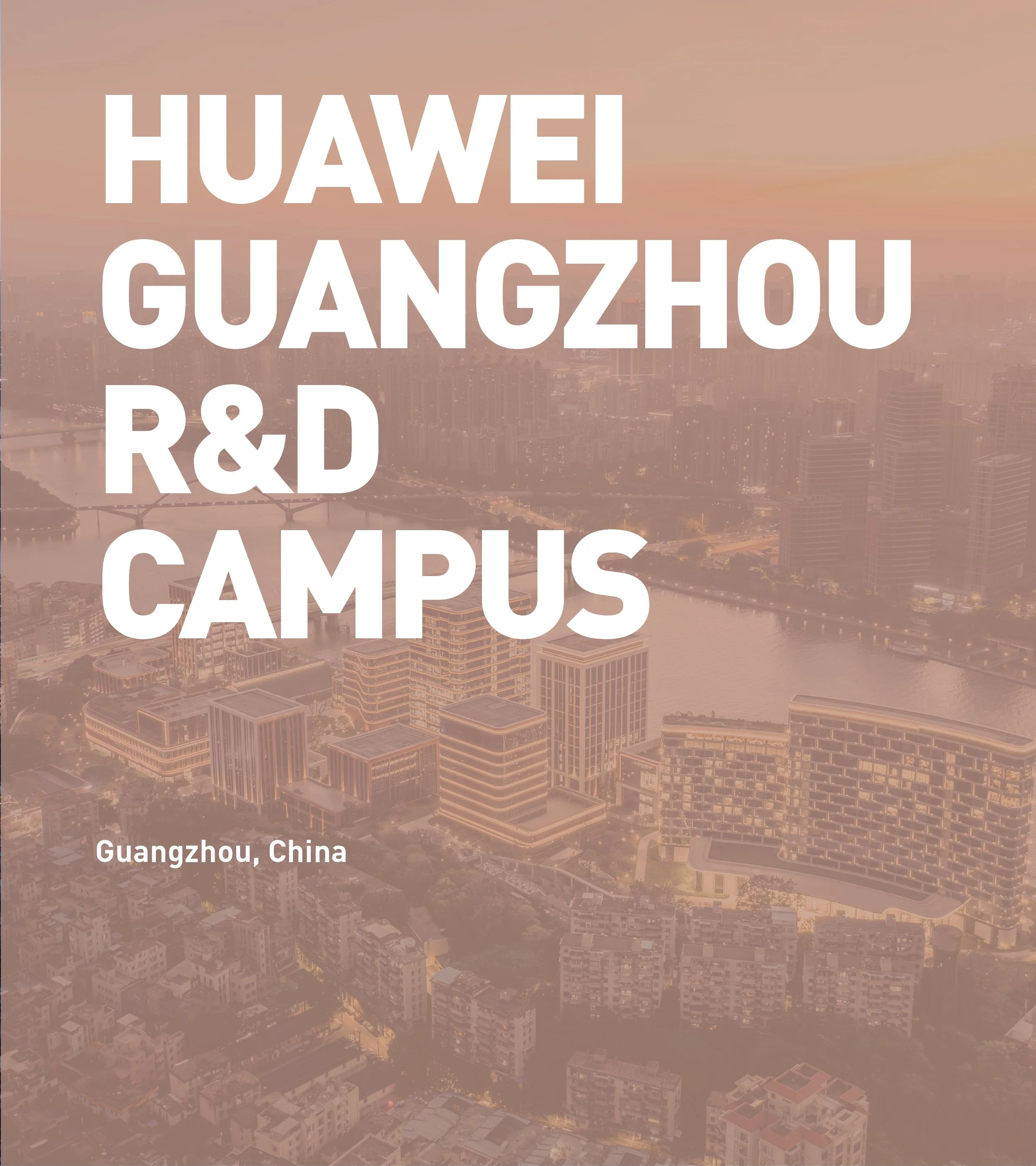
The Huawei R&D Campus in Guangzhou was conceived by SPARK Architects as a piece of city. Located along Songnan Road in Baiyun District, the 300,000 sqm mixed-use development transforms a former industrial riverfront site into an open, connected urban district where research, culture, landscape, and everyday life intersect.The campus comprises eight office buildings, one hotel, and an exhibition hall adapted from a former sugar factory, forming a diverse programme that integrates workspaces, hospitality, cultural functions, and public life. Buildings along the river create a layered skyline with heights reaching approximately 80 metres, while their placement defines a network of outdoor spaces that support movement, encounter, and pause.
Rather than beginning with form, the masterplan is organised around movement and the river as a civic datum. A 620-metre-long riverfront promenade anchors the site, structuring orientation and campus life along the water’s edge. Pedestrian routes run parallel and perpendicular to the river, establishing a legible framework of promenades, courts, and garden spaces that encourage walking and informal interaction. Buildings are positioned to shape these spaces rather than dominate them, creating a porous campus that functions as a coherent urban fabric instead of a collection of isolated objects. The campus unfolds as a sequence of outdoor “rooms” — arrival courts, garden cloisters, river terraces, and quieter interior landscapes — each defined by architecture yet open to light, air, and movement.
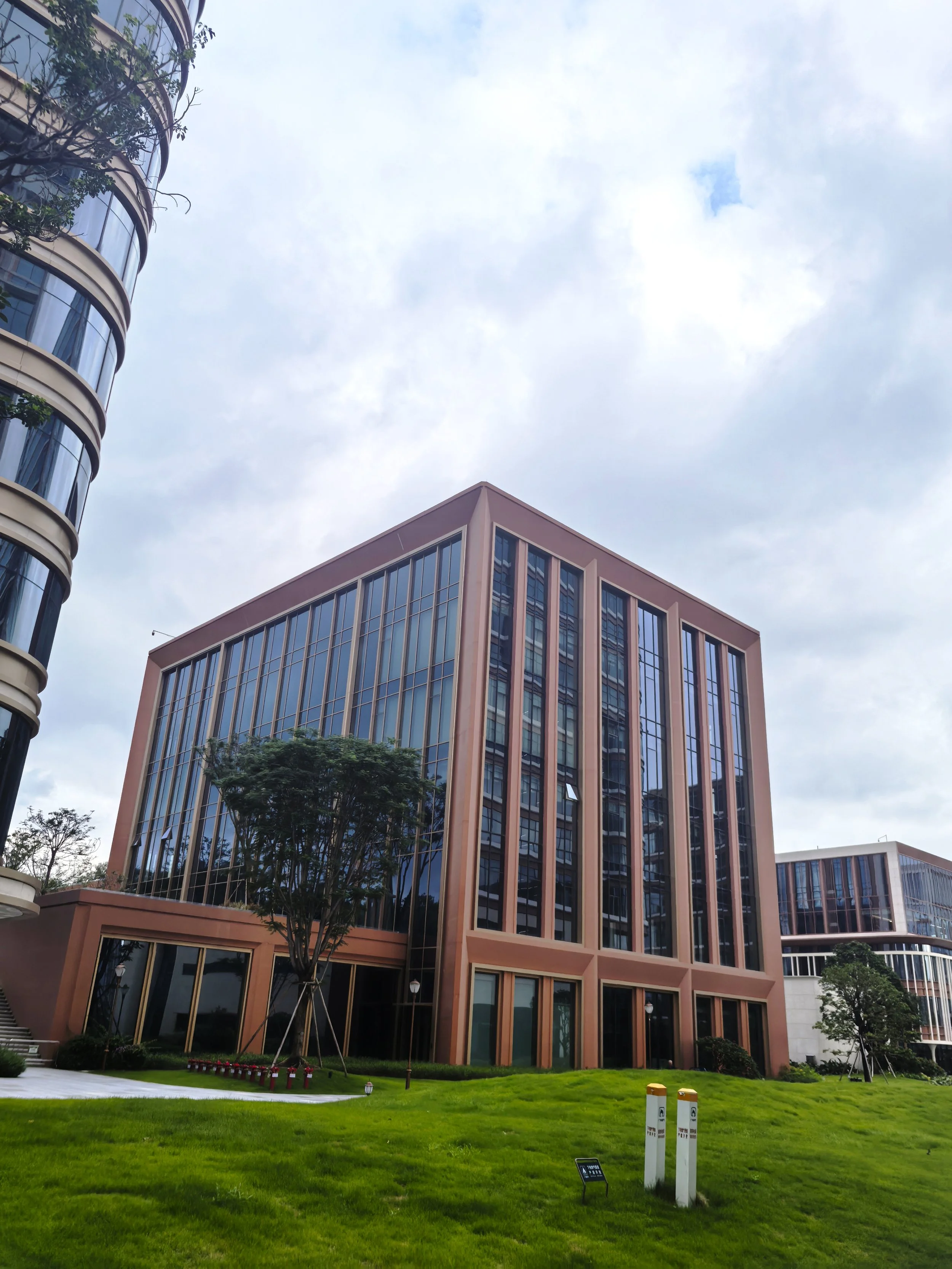
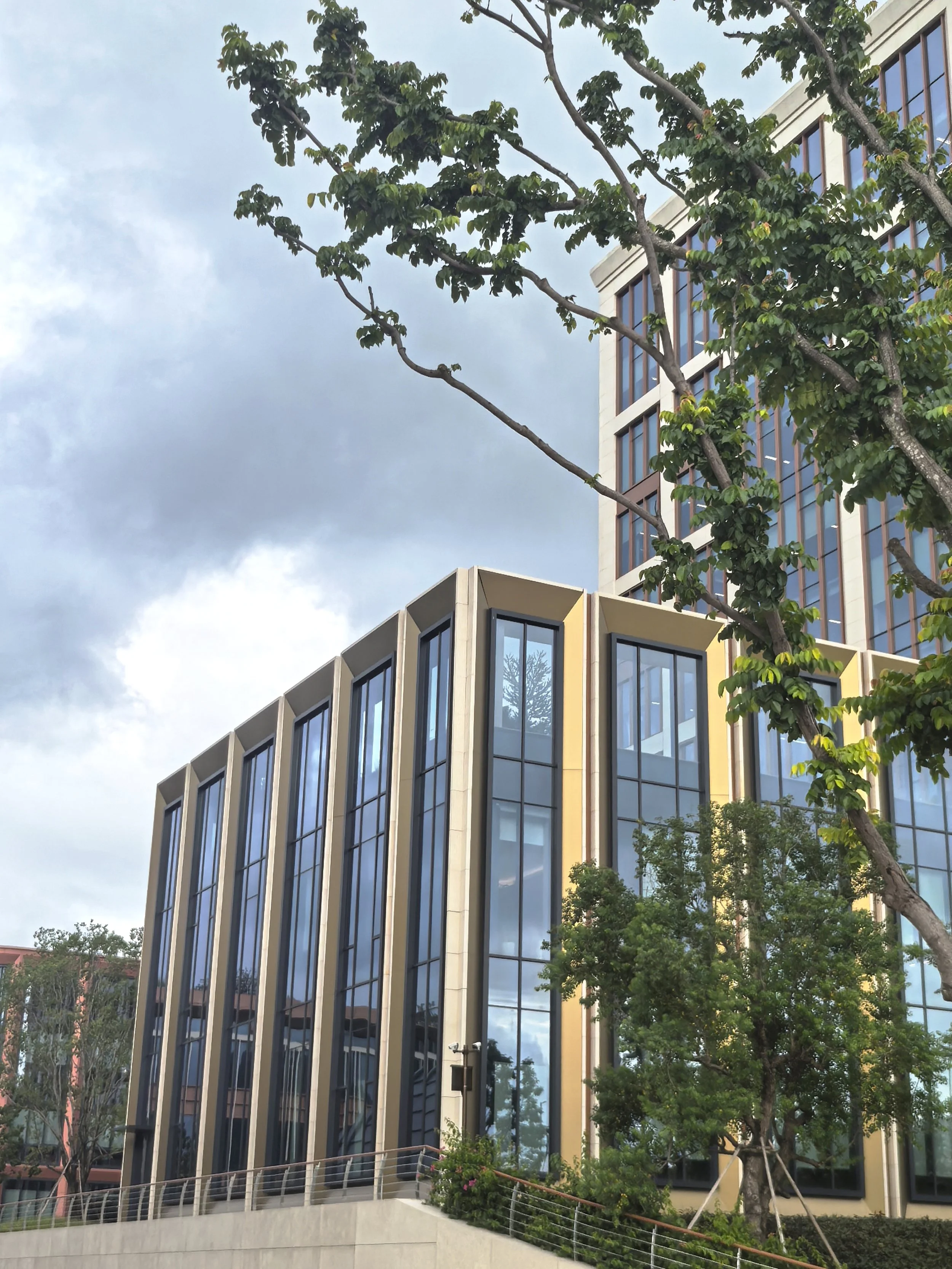
The architectural language responds to programme and context rather than imposing a singular form. Research offices, recreational spaces, cafés and restaurants, hotel facilities, and exhibition areas each express their function while remaining unified through consistent attention to proportion, materiality, and the relationship between interior and exterior. Façades adopt a dual condition: river-facing elevations present a civic scale with terraces, stepped forms, and horizontal emphasis, engaging the long views and movement of water, while garden-facing elevations are more tactile and intimate, shaped by planting, texture, and shadow to support focused work and rest.
Landscape is conceived as connective tissue rather than decoration. Planted courtyards, shaded walkways, and garden terraces mediate between buildings, enhance microclimatic performance, and structure social life across the campus. These spaces support both daily routines and larger gatherings, reinforcing the campus as an active urban environment throughout the day.
A former Grade A listed sugar factory has been carefully transformed into an exhibition pavilion, anchoring the campus in its industrial past. Rather than erasing history, the project integrates it as a cultural reference, allowing new forms of knowledge production to coexist with traces of earlier labour and manufacture.
Designed holistically from masterplan to architecture and landscape, the Huawei R&D Campus proposes a model for contemporary research environments that is open, urban, and humane. By treating the campus as urban fabric rather than object, SPARK Architects reconnects innovation with the life of the city — distributing intelligence not only within buildings, but across landscapes, routes, shared spaces, and everyday rituals.
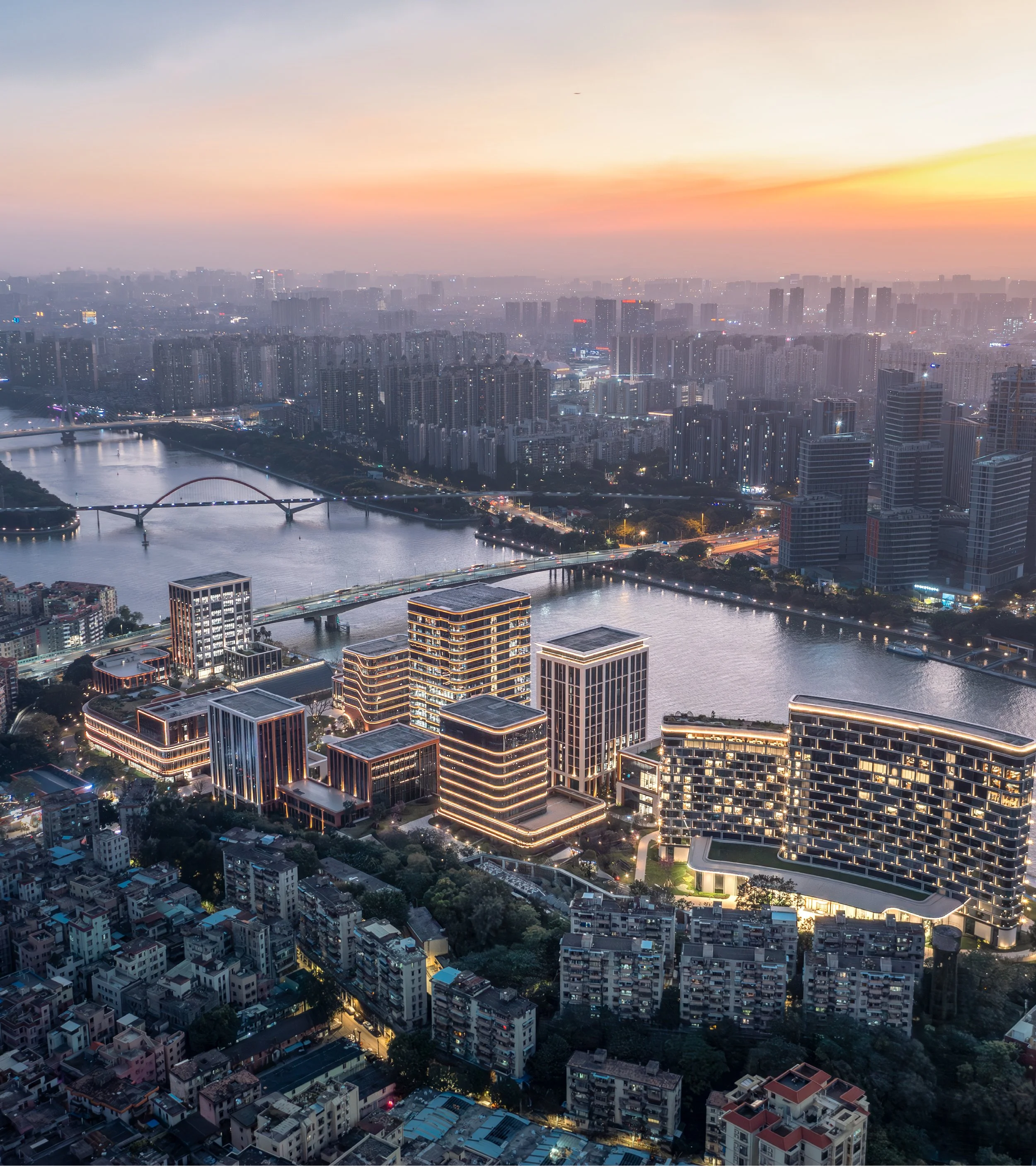
“Organized around a central axis and sunken courtyard, the massing of the components alternates in height, proportion, and texture, forming a layered and varied 600-meter-long city skyline that emulates the client's ambition to regenerate the district.”